


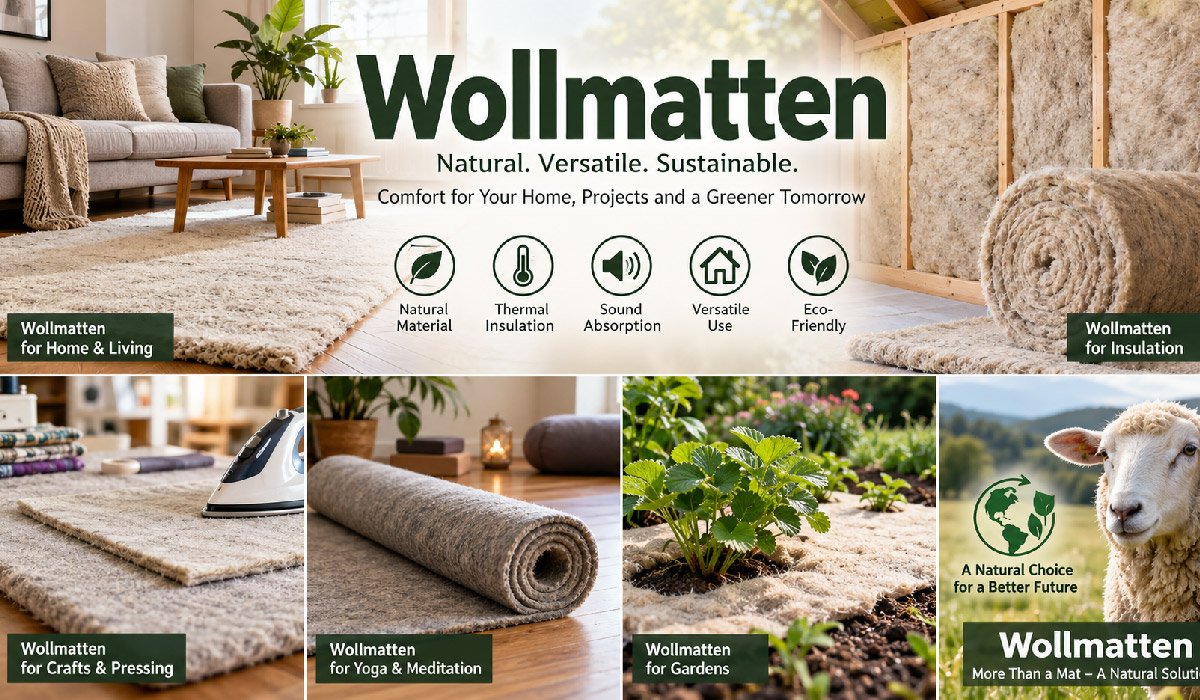
Wollmatten are wool mats made mainly from natural sheep’s wool and used for comfort, insulation, decoration, crafts, gardening, and other practical purposes. The word comes from German, where “Wolle” means wool and “Matten” means mats. Although many people first imagine a soft floor covering when they hear the term, Wollmatten actually describe a wider group of products. Their construction, thickness, density, and intended use can differ significantly depending on whether they are designed for a living room, building wall, sewing table, meditation area, or garden.
Wool has several natural properties that make these mats useful. Its fibers are soft but resilient, can trap air, interact with moisture vapor, and help absorb sound. These qualities allow properly designed wool mats to provide warmth and cushioning while serving specialized purposes such as thermal or acoustic insulation.
This guide explains Wollmatten in detail, including how they are made, how wool works, their main types, uses, benefits, disadvantages, environmental considerations, cleaning requirements, storage, and the important factors to check before buying them.
What Are Wollmatten?
Wollmatten literally means “wool mats” in German. It is a general product description rather than the name of a particular company, technology, or patented material. Most Wollmatten use sheep’s wool as their main fiber, although their exact composition varies. Some are made primarily from natural wool, while other products may contain synthetic fibers, backing materials, binders, dyes, adhesives, or protective treatments. Buyers therefore need to check the actual product composition rather than assuming every item labeled as a wool mat contains only untreated wool.
Wollmatten can also have completely different functions. Decorative varieties are placed on floors to provide warmth, cushioning, and visual texture. Dense felted mats are used for pressing fabric during quilting and sewing. Other products are manufactured specifically for thermal and acoustic insulation in buildings. Biodegradable versions can even be placed over garden soil.
Understanding these differences is important because a decorative Wollmatte should not automatically be used as building insulation or garden mulch. Each product needs to be selected according to its intended purpose.
How Wollmatten Are Made
The production of Wollmatten generally begins with sheep shearing. After fleece is collected, the wool is sorted according to characteristics such as fiber quality and intended use. Raw wool normally contains natural oils, dirt, plant matter, and other material, so processing may include cleaning or scouring. The cleaned fibers can then be carded, aligned, spun, felted, woven, tufted, or otherwise processed depending on the type of mat being manufactured.
Floor Wollmatten may be woven, hand-knotted, tufted, or felted. Woven and knotted products can offer detailed patterns and durable structures, while felted products use compressed fibers to create a dense surface. Wool pressing mats are generally made from densely felted fibers because firmness is important for their purpose.
Insulation and garden products use different manufacturing methods. Insulation wool can be formed into flexible batts, rolls, or mats of controlled thickness and density. Garden mats may use wool fibers compressed into sheets intended to gradually break down. As a result, thickness, density, wool quality, treatments, and construction should always be considered when comparing Wollmatten.
Why Wool Works Well in Mats
The performance of Wollmatten is closely connected to the physical structure of wool. Individual wool fibers have a natural waviness known as crimp. When many of these fibers are placed together, small spaces form between them. These spaces can trap air, and trapped air helps slow heat transfer. This is one reason wool feels warm and why it can be useful in properly designed thermal insulation products.
Wool is also naturally resilient. Quality fibers can bend and recover from normal compression instead of remaining completely flat. This characteristic can help well-made floor mats maintain their texture and shape, although durability also depends heavily on construction, density, traffic, and maintenance.
Another useful characteristic is wool’s interaction with water vapor. Wool can take up moisture vapor and later release it as surrounding conditions change. This behavior contributes to its reputation as a breathable material. However, moisture regulation does not mean Wollmatten are waterproof. Prolonged wetness can still create problems. Wool’s irregular, fibrous structure can also absorb some sound energy, contributing to better acoustic comfort.
Main Types of Wollmatten
There are several types of Wollmatten, and each one is designed around a different purpose. Wool floor mats and rugs are among the most familiar varieties. They are used to add warmth, cushioning, texture, and decoration to indoor spaces. Their construction can range from thin woven mats to dense rugs suitable for frequently used rooms.
Pressing Wollmatten are different. These dense felted pads are mainly used by people who sew or quilt. Wool yoga and meditation mats focus more on warmth and cushioning during floor-based activities. Their grip and firmness can vary, so not every wool mat is suitable for every exercise style.
Building Wollmatten are manufactured for thermal or acoustic insulation. They can be supplied as flexible mats, batts, or rolls for specific construction applications. Garden Wollmatten are another category and can serve as biodegradable mulch materials around plants.
Because these products are not interchangeable, shoppers should first determine the intended application and then compare materials, construction, dimensions, technical specifications, and maintenance requirements within that specific category.
Wollmatten for Flooring and Home Décor
Floor Wollmatten combine practical performance with interior decoration. They are commonly placed in living rooms, bedrooms, home offices, reading areas, guest rooms, hallways, and other indoor spaces. Wool provides a softer surface than wood, tile, laminate, or other hard flooring, which can make areas used for sitting, walking, or relaxation feel more comfortable. A wool mat can also introduce texture and help visually define a seating or working area.
Placement should influence the type of Wollmatten selected. Busy hallways and living areas normally require denser, durable construction because they receive more foot traffic. Bedrooms and quiet reading areas can accommodate softer or thicker mats where comfort is the main concern. Size is equally important because a mat should suit both the room dimensions and furniture arrangement.
Thickness requires practical consideration as well. Very thick Wollmatten can interfere with low doors or furniture. Buyers should also consider shedding, backing, sunlight exposure, cleaning requirements, and whether an underlay or rug pad is recommended for stability and floor protection.
Wollmatten for Thermal Insulation
Wool’s ability to trap air makes it useful as a thermal insulation material. Building-grade Wollmatten can be manufactured as mats, rolls, or batts designed to fit into walls, floors, ceilings, roofs, lofts, and other building cavities. When correctly selected and installed, the fibers and air spaces within the insulation help slow heat transfer between different environments.
During colder periods, thermal insulation can reduce the rate at which indoor heat escapes through the building envelope. During warm weather, it can also slow heat moving inward. However, the actual performance of sheep-wool insulation depends on product thickness, density, thermal specifications, installation quality, building design, and local climate. Wool alone does not guarantee a particular level of energy saving.
Building Wollmatten should therefore be chosen according to technical information rather than appearance or general claims about natural wool. Buyers and installers should examine thermal ratings, fire-performance data, pest protection, moisture requirements, certifications, and installation guidance. Local construction regulations also matter because a decorative wool product is not automatically approved for use as building insulation.
Wollmatten for Sound Absorption
Wollmatten can also contribute to acoustic comfort because wool has a dense and irregular fiber structure. Sound waves can reflect strongly from hard materials such as concrete, tile, glass, and bare walls. Fibrous materials can absorb part of this sound energy instead of allowing all of it to reflect back into a room. Wool floor coverings can therefore help soften the acoustic character of spaces containing many hard surfaces.
On floors, Wollmatten may reduce some impact noise from footsteps and furniture movement while also reducing reverberation within the room. This can be useful in home offices, living areas, studios, bedrooms, hotels, and other spaces where acoustic comfort is desirable.
Specialized acoustic or insulation Wollmatten can also be incorporated into building assemblies. Their effectiveness depends on density, thickness, placement, wall or ceiling construction, and the type and frequency of sound being addressed. A wool rug cannot completely soundproof a room. Sound absorption and soundproofing are different goals, so projects requiring substantial noise isolation should rely on appropriate acoustic design and tested building materials.
Wollmatten for Gardens and Plant Care
Garden Wollmatten offer a different use for sheep wool. These products are generally designed to lie directly over soil and function as a natural mulch layer. When placed around plants, a suitable wool mat can cover exposed soil, reduce the amount of light reaching emerging weeds, and help slow moisture loss from the soil surface. This makes wool an interesting alternative to some plastic-based garden coverings.
Installation is normally straightforward, although product instructions should be followed. Existing large weeds should be removed first, after which the Wollmatten can be laid over prepared soil. Openings can be created around established plants, and exposed edges may need to be secured so wind cannot move the material.
Natural wool can gradually decompose under suitable environmental conditions. Wool contains nitrogen, and nutrients can eventually enter the surrounding system as the fibers break down. However, decomposition speed and garden performance depend on mat thickness, treatments, rainfall, temperature, soil activity, and local conditions. Gardeners should therefore select Wollmatten specifically manufactured for horticultural use rather than placing ordinary treated rugs in soil.
Wollmatten for Pressing, Crafts, Yoga, and Meditation
Dense felted Wollmatten are commonly used as pressing surfaces in sewing and quilting. A wool pressing mat provides a firm textile surface that can hold fabric relatively securely during pressing. Wool’s insulating characteristics also influence how heat behaves around the fabric. These mats are available in different sizes and thicknesses for small craft projects as well as larger quilting work.
Care is necessary when using a pressing mat. Heat and moisture can sometimes reach the table or surface underneath, so users should follow the manufacturer’s directions and use suitable protection when required. A craft mat should also be kept clean because transferred dyes or residues could affect future projects.
Wollmatten are additionally used for meditation, stretching, and certain forms of yoga. Wool provides natural cushioning and can feel warm against the body, particularly during seated or floor-based practices. However, grip, firmness, and stability differ between products. A soft wool surface suitable for meditation may not provide the traction needed for fast or demanding standing exercises, making purpose-specific selection important.
Major Benefits of Wollmatten
Wollmatten offer several benefits because wool combines softness with useful physical properties. One of the most noticeable advantages is comfort. A quality wool surface provides cushioning underfoot and reduces the hard feeling associated with bare flooring. Its ability to trap air also contributes to warmth, making wool particularly attractive in bedrooms, living spaces, meditation areas, and colder environments.
Thermal and acoustic performance provide additional advantages. Properly designed wool insulation can slow heat transfer, while wool’s fibrous structure can absorb sound energy. Wool also interacts with moisture vapor, which contributes to its breathable characteristics. Natural elasticity helps quality fibers recover from normal compression and can support long-term appearance in suitable products.
Sustainability is another reason people consider Wollmatten. Sheep grow new fleece, making wool a renewable fiber, and untreated natural wool can biodegrade under appropriate conditions. Nevertheless, the finished product matters. Backing, synthetic blends, dyes, treatments, farming methods, manufacturing, transportation, durability, and disposal all influence environmental impact. The strongest benefits therefore come from well-made products selected for an appropriate application.
Drawbacks and Limitations of Wollmatten
Despite their useful properties, Wollmatten are not ideal for every environment. Price is one consideration because high-quality natural wool products often have a higher initial cost than many mass-produced synthetic mats. Whether that additional expense provides good value depends on construction, durability, intended use, and how long the product remains in service.
Cleaning also requires attention. Wool generally responds better to gentle maintenance than aggressive washing. Too much water, harsh chemicals, or unsuitable cleaning techniques can affect fibers, dyes, shape, or backing. Some wool products may shed, particularly when new, and prolonged exposure to strong sunlight can cause certain colors to fade. Natural animal fibers can also be vulnerable to textile pests if they are poorly maintained or stored for extended periods.
Wollmatten should not be described as waterproof, stain-proof, mold-proof, or automatically hypoallergenic. Persistent dampness can create problems, and individual sensitivities vary. Building products present additional requirements because fire performance and pest resistance may depend on treatments. Product-specific technical information is therefore more reliable than broad claims about wool.
Wollmatten and Moisture Control
Moisture behavior is one of wool’s most interesting characteristics, but it is also frequently misunderstood. Wool fibers can take up water vapor from surrounding air and release some of that moisture as environmental conditions change. This hygroscopic behavior is one reason wool is described as breathable and can contribute to moisture buffering in suitable indoor applications.
This property does not mean a Wollmatte should be repeatedly soaked. Liquid water and atmospheric water vapor are different conditions. A saturated floor mat may become heavy, take considerable time to dry, develop odors, or suffer changes to its backing or shape. Persistently damp conditions can also support unwanted biological growth in textile materials or nearby surfaces.
Moisture is particularly important when Wollmatten are used as building insulation. The complete wall, roof, or floor assembly needs appropriate moisture management, ventilation, drainage, and vapor control for its climate and construction. Wool insulation should never be expected to correct an existing leak or badly designed building assembly. Proper design and installation remain essential.
Wollmatten vs Synthetic Mats
Wollmatten and synthetic mats each have strengths, so the better choice depends on the intended environment. Wool is naturally warm, soft, resilient, and capable of interacting with moisture vapor. It can also provide useful sound absorption and thermal performance. These characteristics make wool attractive for bedrooms, living rooms, quiet spaces, natural interiors, and specialized insulation applications.
Synthetic mats are commonly made from fibers such as polyester, polypropylene, nylon, or acrylic. Many cost less than quality wool and some are designed to tolerate frequent cleaning, stains, or moisture more easily. These characteristics can make certain synthetic products practical for high-mess locations, although performance varies widely by fiber and construction.
Environmental comparisons also require context. Wool is renewable and can biodegrade when product composition allows it, whereas many synthetic fibers originate from fossil-based resources and persist longer after disposal. Wool production nevertheless has its own agricultural and manufacturing impacts. Instead of assuming either category is always superior, buyers should compare durability, price, composition, cleaning, water exposure, expected lifespan, performance, and end-of-life options.
How to Choose the Right Wollmatten
Choosing suitable Wollmatten begins with identifying exactly what the product needs to accomplish. Someone buying a living-room rug should evaluate different characteristics from a builder selecting insulation or a gardener purchasing mulch mats. Purpose should therefore be established before comparing price, appearance, or thickness.
For floor Wollmatten, measure the available area carefully and consider furniture placement, foot traffic, door clearance, wool percentage, pile, density, backing, construction, cleaning instructions, and color. High-traffic locations usually benefit from stronger and denser construction. Softer, thicker products may be more comfortable in bedrooms or relaxation areas. Buyers concerned about natural materials should check the complete fiber and backing composition rather than relying solely on the word “wool.”
Technical specifications are especially important for insulation. Buyers should examine thickness, thermal performance, acoustic characteristics, fire testing, pest treatment, certifications, and installation requirements. Garden users should consider composition, coverage, thickness, decomposition expectations, and plant spacing. Craft and exercise users should evaluate firmness, heat tolerance, grip, cushioning, and dimensions according to their activity.
How to Clean and Maintain Wollmatten
Proper maintenance helps floor Wollmatten retain their appearance and useful life. Routine cleaning normally begins with gentle vacuuming to remove loose dust, grit, hair, and other debris before these materials become deeply embedded. Vacuum settings and attachments should be appropriate for the particular wool construction because aggressive brushes may not be suitable for every pile or felted surface.
Spills should generally be addressed promptly. Instead of scrubbing the area, carefully blotting with a clean absorbent cloth can reduce the chance of spreading the liquid or damaging fibers. When cleaning products are required, choose one specifically suitable for wool and test it on a hidden section when appropriate. Excessive water and harsh chemicals should be avoided unless the manufacturer’s instructions specifically permit them.
Rotating floor Wollmatten periodically can help distribute wear and sunlight exposure. Any wet wool product should be dried thoroughly. Large, valuable, or heavily soiled rugs may benefit from professional cleaning. Most importantly, product-specific care instructions should take priority over generic advice because wool content, dyes, backing, and manufacturing methods differ.
Common Wollmatten Mistakes to Avoid
Many problems with Wollmatten result from using the wrong product or maintenance method rather than from wool itself. One common mistake is selecting a decorative wool mat for a location that remains regularly wet. Wool can manage moisture vapor, but ordinary floor products are not designed to sit continuously in standing water. Another mistake is assuming every item containing wool is fully natural, even though some products include synthetic backing, blends, adhesives, or treatments.
Cleaning mistakes can also shorten product life. Aggressively rubbing stains, soaking a rug, applying strong chemicals, or leaving it damp may damage fibers, dyes, or backing. Ignoring routine vacuuming allows abrasive dirt to remain within the pile, while continuous strong sunlight can create uneven fading in some products.
Building Wollmatten have different risks. Excessive compression, gaps between insulation pieces, unsuitable moisture design, and failure to check fire or pest requirements can reduce performance or create construction problems. Gardeners should likewise avoid assuming a thin wool layer will instantly eliminate established perennial weeds. Each application requires realistic expectations and correct installation.
Sustainability and Environmental Impact of Wollmatten
Wollmatten are often marketed as environmentally friendly because wool is a renewable natural fiber. Sheep can grow a new fleece after shearing, and natural wool can eventually biodegrade under suitable conditions. A durable wool mat may also remain useful for many years, reducing the frequency with which a floor covering needs to be replaced.
However, environmental performance should be considered across the entire product lifecycle. Sheep farming requires land and other resources and produces environmental impacts. Wool must then be collected, cleaned, processed, manufactured, transported, and eventually disposed of. Dyes, pest treatments, backing materials, adhesives, synthetic blends, packaging, and manufacturing energy can further influence the footprint of finished Wollmatten.
Consumers seeking a more sustainable option can investigate wool origin, fiber composition, manufacturing information, product longevity, repairability, credible environmental certifications, packaging, and end-of-life possibilities. A mat containing synthetic backing may not biodegrade in the same way as untreated wool. For this reason, “natural” and “sustainable” should not automatically be treated as identical terms when comparing products.
How to Store Wollmatten Properly
Correct storage is particularly important when Wollmatten will remain unused for several months. Before storage, a floor mat should be clean and completely dry. Storing dirt with the rug can make later cleaning more difficult, while trapped moisture can contribute to unpleasant odors, staining, or other deterioration during a long storage period.
Large Wollmatten are generally better rolled carefully than sharply folded when their construction allows it. Tight folds can produce creases and pressure marks that may be difficult to correct later. The rolled mat should be kept in a dry, clean area away from leaks, excessive humidity, direct sunlight, and conditions that could physically damage it.
Pest protection also deserves attention because natural animal fibers can attract certain textile insects. Long-term storage areas should be kept clean and inspected periodically. Protective wrapping should be suitable for the specific product and should not trap existing moisture. If a manufacturer provides dedicated storage instructions, those recommendations should be followed because backing, dyes, pile structure, and treatments can change how Wollmatten should be protected.
Are Wollmatten Worth Buying?
Wollmatten can provide good long-term value when their natural characteristics match the buyer’s needs. A well-made wool floor mat can provide warmth, softness, visual texture, acoustic comfort, and durability. For buyers who value natural fibers and are prepared to follow appropriate cleaning practices, these advantages can justify the higher purchase price associated with many quality wool products.
The decision is different for specialized applications. Building-grade Wollmatten should be evaluated according to verified thermal performance, fire requirements, acoustic properties, installation needs, and project cost rather than simply because wool is natural. Garden mats should be compared according to coverage, composition, decomposition behavior, thickness, and growing conditions. Craft and meditation products need to provide the firmness, dimensions, or cushioning required for their intended activity.
Synthetic alternatives may offer better value in locations requiring very frequent washing, strong water tolerance, or a low initial price. Wollmatten are therefore not automatically the best choice for every situation. Their value is greatest when the correct type, quality, and construction are matched to a suitable application.
Final Thoughts
Wollmatten are much more diverse than ordinary wool rugs. The German term broadly refers to wool mats, but modern products include decorative floor coverings, dense pressing mats, yoga and meditation surfaces, thermal and acoustic insulation, and biodegradable garden materials. Each category uses wool’s natural characteristics in a different way and therefore needs its own construction and performance requirements.
The main qualities of wool help explain why Wollmatten have so many applications. Crimped fibers trap air and contribute to insulation, while resilience helps quality wool recover from normal compression. The fibrous structure can absorb sound, and wool’s interaction with moisture vapor contributes to its breathable behavior. At the same time, wool requires sensible care and should not be considered waterproof, mold-proof, stain-proof, or suitable for every environment.
Choosing Wollmatten should ultimately be based on intended use, wool content, construction, quality, maintenance, technical specifications, and price. When the right product is selected and properly maintained, wool mats can provide a practical combination of comfort, durability, insulation, natural texture, and versatility.
(FAQs)
What does Wollmatten mean?
Wollmatten is a German word meaning “wool mats.” “Wolle” means wool, while “Matten” means mats. The term can describe several products, including wool floor coverings, pressing mats, insulation products, meditation mats, and garden mulch mats. It is a general description rather than the name of one specific brand.
What are Wollmatten made from?
Wollmatten are primarily associated with sheep’s wool. However, their exact composition depends on the manufacturer and application. Some contain mostly natural wool, while others may include synthetic fibers, backing, binders, adhesives, dyes, or protective treatments. Checking the complete material specification is important when purity or biodegradability matters.
Do Wollmatten provide thermal insulation?
Yes, wool can provide thermal insulation because its crimped fibers create spaces that trap air and slow heat transfer. Wool floor mats can make hard surfaces feel warmer, while purpose-made building insulation can contribute to the thermal envelope. Building products should always be selected using verified thermal ratings and appropriate installation requirements.
Can Wollmatten get wet?
Wool can interact with moisture vapor, but this should not be confused with waterproofing. Ordinary Wollmatten should not remain soaked or sit in standing water for extended periods. If a floor mat becomes wet, it should be dried correctly and promptly according to its care instructions to reduce the risk of odor or material damage.
Are Wollmatten good for sound absorption?
Wool’s fibrous structure can absorb part of the sound energy inside a room. Floor Wollmatten may help reduce echoes and soften impact noise such as footsteps. Purpose-made acoustic wool products can provide greater sound absorption, although their performance depends on density, thickness, placement, and the complete building assembly.
Can Wollmatten be used in a garden?
Yes, but gardeners should use Wollmatten specifically designed for horticultural purposes. Wool garden mats can cover soil, help suppress some weed growth, and reduce surface moisture loss. Natural wool can gradually break down under suitable conditions, although decomposition speed depends on thickness, treatments, weather, soil conditions, and biological activity.
How should Wollmatten be cleaned?
Floor Wollmatten generally benefit from routine gentle vacuuming and quick treatment of spills. Liquids should normally be blotted rather than aggressively rubbed. Wool-safe cleaning products should be used when necessary, and excessive soaking should be avoided. Because backing, dyes, and construction vary, the manufacturer’s cleaning instructions should always take priority.
Are Wollmatten better than synthetic mats?
Neither material is best for every purpose. Wollmatten are attractive for their warmth, comfort, natural fiber content, moisture-vapor management, and acoustic properties. Synthetic mats are often cheaper, and some tolerate frequent washing or wet conditions more easily. The better option depends on location, budget, expected traffic, cleaning needs, environmental priorities, and intended lifespan.
