


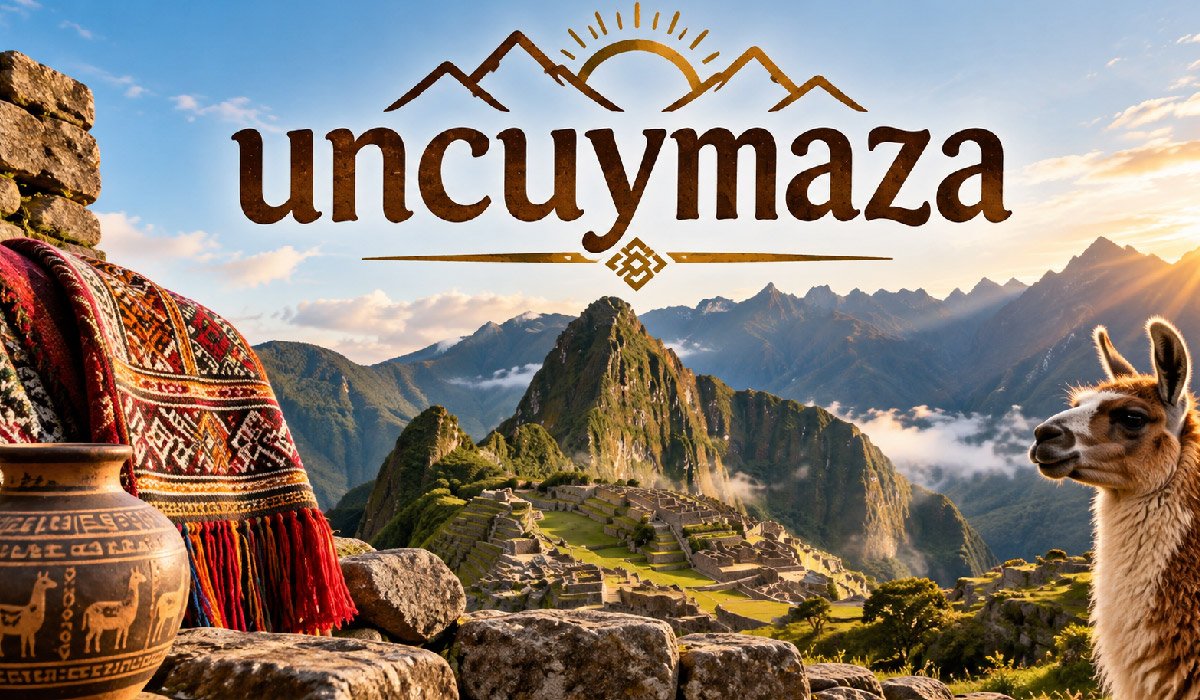
Uncuymaza is an unusual term that has appeared on different websites and online discussions. The word attracts attention because there is no single clear explanation of what it means. Some online pages connect uncuymaza with Andean culture, Quechua traditions, art, spirituality, food, or community life. Other websites use the same term for modern creative, technological, or digital ideas. These very different descriptions make the subject difficult for readers who simply want a reliable definition.
The safest way to understand uncuymaza is as an uncommon online term whose exact meaning and origin have not been firmly established. Its presence on websites shows that people are using and discussing the word, but online use alone cannot prove an ancient or cultural origin. A term needs stronger supporting evidence before researchers can confidently connect it with a particular language, historical period, community, or tradition.
This distinction is important because information can spread quickly online. Once one website gives an unfamiliar word a meaning, other publishers may repeat or expand that explanation. Repetition can eventually make an uncertain definition look established. For this reason, understanding uncuymaza requires looking beyond individual blog posts and examining the evidence behind their claims.
Is Uncuymaza a Real Word?
Whether uncuymaza is a “real word” depends on what that question means. People are clearly writing and searching for the term online, so it exists as a sequence of letters being used in digital content. However, that is different from saying it is a recognized historical word with a documented definition. Established words can normally be traced through dictionaries, books, linguistic records, speakers, communities, or other reliable sources.
The information currently associated with uncuymaza does not provide one settled dictionary meaning. This does not automatically prove that somebody deliberately invented the word. New words appear regularly, and some begin as brand names, usernames, fictional expressions, local vocabulary, creative labels, or internet slang. A newly created term can eventually develop an accepted meaning if a community begins using it consistently.
For uncuymaza, consistency is the main problem. Websites attach unrelated definitions to the same spelling. That makes it difficult to identify a clear linguistic history. Readers should therefore separate two questions: whether the term is currently used online and whether its claimed historical meanings can be independently verified. The first is easy to observe, while the second requires much stronger evidence.
Where Did Uncuymaza Come From?
The exact origin of uncuymaza remains unclear from the information currently available. Several explanations circulate online, but a convincing origin story requires more than an article claiming that the word comes from a certain culture. Researchers normally look for the earliest recorded appearance of a term, dated documents, dictionaries, books, archives, oral records, or statements from the people who created or traditionally used it.
One possibility is that uncuymaza is a relatively new internet expression. Distinctive words are sometimes created for websites, fictional projects, brands, artistic ideas, usernames, or marketing campaigns. A new expression can then appear in search results without having an older linguistic history. Another possibility discussed online is that automated or AI-generated content helped popularize the term. That explanation remains a theory unless an identifiable original output or creation record can be found.
The most useful research question is therefore not simply “What does uncuymaza mean?” but “Where is its earliest verifiable use?” Finding that evidence could reveal whether the term began as a creative name, an accidental construction, a commercial expression, a local word, or something else. Until such documentation is available, a precise origin should not be presented as established history.
Is Uncuymaza a Quechua Word?
A common online claim connects uncuymaza with Quechua, but a linguistic connection requires proper evidence. Quechua refers to a family of Indigenous language varieties spoken in parts of the Andes. Because these languages have documented vocabulary, grammar, regional differences, educational resources, and historical records, a claimed Quechua word can be investigated through appropriate linguistic materials rather than simply accepted from a blog.
To establish uncuymaza as a Quechua expression, researchers would ideally need evidence from recognized dictionaries, documented speakers, linguistic publications, historical texts, educational resources, or recorded regional usage. It would also be useful to identify the specific Quechua variety in which the term supposedly appears. Saying that a word “sounds Indigenous” or breaking its spelling into syllables and assigning meanings to them is not reliable etymological analysis.
Therefore, claims that uncuymaza has a particular ancient Quechua translation should be treated cautiously unless supporting linguistic evidence is provided. This does not deny the possibility of regional or modern usage. It simply separates a demonstrated language origin from an online interpretation. That distinction helps prevent uncertain information from being presented as part of documented Quechua heritage.
Uncuymaza and Andean Culture
Many articles discussing uncuymaza place the term within an Andean setting. They may connect it with community, nature, balance, spirituality, traditional knowledge, agriculture, or Indigenous identity. These themes can make an article sound culturally convincing because the Andes genuinely contain diverse Indigenous societies with long histories and rich cultural practices. However, authentic background information does not automatically establish the unfamiliar term attached to it.
Andean cultures include documented traditions involving textiles, farming, music, dance, oral storytelling, food, ceremonies, craftsmanship, family life, and community organization. Quechua-speaking populations themselves are diverse, with different histories and regional practices. It is therefore inaccurate to treat the entire Andes as one uniform cultural tradition or assume that an unexplained term belongs to all Andean communities.
When uncuymaza is described as an Andean concept, readers should ask which community supposedly uses the word, where that community is located, which language variety contains it, and what historical source records it. Without answers to these questions, “Andean” functions more as an online association than a demonstrated origin. Respectful cultural writing requires preserving this difference between genuine Andean traditions and claims that have not yet been authenticated.
Why Does Uncuymaza Have So Many Different Meanings?
One of the most notable features of uncuymaza is the variety of definitions attached to it. Some websites describe the term through culture or spirituality. Others associate it with artistic expression, decorative design, food, travel, technology, personal development, or digital creativity. When one spelling produces several unrelated explanations, readers have a strong reason to investigate how those definitions originated.
This can happen when an unfamiliar keyword begins receiving online attention before a recognized definition exists. A publisher may create an explanation, and another website may use that page as inspiration. Later articles can add stories, historical details, cultural references, or new interpretations. Eventually, search results contain many detailed pages even though the original definition was never supported by independent evidence.
The number of search results should therefore not be confused with the number of independent sources. Twenty websites can repeat information that originally came from one unsupported article. A stronger method is to trace each major claim back to its earliest identifiable source. If different definitions have completely different origins and no primary documentation, uncuymaza is better understood as a term with competing online interpretations rather than a word with several proven traditional meanings.
Uncuymaza in Art and Creative Design
Another interpretation presents uncuymaza as a creative or artistic idea. Online descriptions may associate the term with geometric forms, natural materials, earthy visual themes, textiles, symbolic patterns, Indigenous-inspired artwork, and storytelling through design. Such usage is possible in a modern context because artists and online communities regularly invent names for styles, projects, collections, and new creative movements.
The important question is whether uncuymaza describes a contemporary aesthetic or an established historical art tradition. These are not the same claim. A modern designer can use traditional Andean influences and give a new project an original name. That would create a legitimate contemporary use of the word, but it would not demonstrate that earlier Indigenous artists historically called their work by the same name.
Readers should therefore examine dates and sources when encountering claims about uncuymaza art. Museum records, art-history publications, historical collections, community documentation, and established cultural institutions would provide stronger evidence of an older tradition. Without that evidence, it is safer to describe artistic uses of the term as modern interpretations. This allows creative uses to be discussed without rewriting cultural history.
Is Uncuymaza a Place in Peru?
Some online material reportedly describes uncuymaza as a destination or hidden village in Peru. Travel-style descriptions can include attractive details about landscapes, traditional food, festivals, architecture, local markets, hiking routes, historical sites, or community life. Such descriptions may sound realistic, but detailed writing alone does not prove that a geographical location exists under a particular name.
A real destination should normally leave multiple independent records. Researchers can look for government geographical information, official maps, municipal records, recognized mapping databases, tourism authorities, transport information, coordinates, local institutions, and references from people who live in or have documented the area. These sources provide a much stronger basis than a collection of travel blogs repeating similar descriptions.
Until a claimed uncuymaza location can be independently identified, travelers should avoid treating detailed online itineraries as geographical confirmation. This is particularly important when planning transport, accommodation, or remote travel. A supposed “hidden” location may genuinely be little known, but obscurity should not be used to explain away the absence of basic evidence. Verification should come before practical travel advice.
Uncuymaza and Food-Related Claims
Food is another area where the meaning of uncuymaza becomes confusing. Some online interpretations connect the term with Andean cuisine or traditional dishes. The Andes certainly have diverse culinary traditions shaped by geography, Indigenous agriculture, local crops, livestock, and centuries of cultural exchange. However, the existence of genuine regional foods cannot by itself verify an unfamiliar dish name.
One possible source of confusion is the recognizable sequence “cuy” within uncuymaza. Cuy is a genuine term associated with guinea pig, an animal that has an established culinary and cultural role in parts of the Andes. Seeing those letters inside a longer unfamiliar word, however, does not establish the etymology of the entire expression. Linguistic relationships cannot reliably be determined from visual similarity alone.
A traditional food claim should be supported through regional cookbooks, culinary histories, cultural institutions, community sources, menus from the relevant area, historical documentation, or other independent evidence. Until such evidence specifically identifies uncuymaza, it is better to describe food-related explanations as claims found online rather than established culinary history. This approach protects readers from confusing real Andean food traditions with unsupported terminology.
Could Uncuymaza Be an AI-Generated Term?
The theory that uncuymaza may have been generated or popularized by artificial intelligence appears partly because websites give the word such different meanings. Modern generative systems can produce plausible descriptions of unfamiliar expressions, particularly when prompted to interpret a term without sufficient context. If those descriptions are published without verification, later websites may repeat them and create an increasingly complicated information trail.
However, unusual or contradictory search results do not prove an AI origin. People have invented words, fictional names, brands, artistic labels, and accidental spellings since long before generative AI existed. To demonstrate that artificial intelligence actually created uncuymaza, researchers would need stronger evidence, such as the original generated text, a dated conversation, a creator’s account, publication records, or another traceable creation event.
A more careful conclusion is that AI generation is one possible explanation, not an established fact. The same principle applies to claims that the term was intentionally created for SEO. Both theories may deserve investigation, but neither should be converted into certainty without evidence. The unknown origin is itself an important part of understanding the keyword accurately.
How to Research Uncuymaza Properly
A careful investigation of uncuymaza should begin by separating claims into categories. If the claim concerns language, researchers should consult linguistic dictionaries, academic publications, educational materials, and documented speakers. If it concerns history, archives, books, museums, scholarly research, and dated records become more useful. Geographical claims require maps and official place records, while cultural claims should ideally include community or institutional documentation.
The next step is source tracing. Readers should determine whether several websites independently researched a claim or whether they copied, summarized, or expanded an earlier article. Publication dates can help identify which version appeared first, although an older publication is not automatically accurate. Archived web pages can also be valuable when trying to understand how the meaning of a term changed over time.
Finally, researchers should keep confirmed information separate from interpretation. A statement such as “several websites associate uncuymaza with Andean culture” describes observable online usage. Saying “uncuymaza is an ancient Andean tradition” makes a historical claim requiring separate evidence. Keeping these two forms of information apart produces a clearer, more trustworthy explanation.
How to Recognize Weak Claims About Uncuymaza
Readers can identify questionable explanations by examining how evidence is presented. A weak article may claim that uncuymaza has existed for centuries while providing no dated source. It may refer vaguely to “ancient people,” “local experts,” or “Indigenous wisdom” without identifying a community, scholar, document, dictionary, or historical record. Specific-sounding details should receive more scrutiny, not less, when their source is missing.
Another warning sign is an invented-looking etymology. An article may divide uncuymaza into several pieces and assign a convenient meaning to each part without demonstrating that native speakers actually form or interpret words that way. Similar spelling is not enough. Genuine etymological work considers pronunciation, grammar, historical forms, language change, regional usage, and documented examples.
Contradictions between sources also matter. If one page identifies the term as an ancient philosophy while another describes it as software and another treats it as a village, readers should not automatically combine those stories into a single definition. Instead, the disagreement should become part of the analysis. Recognizing uncertainty is more informative than hiding it behind a confident explanation.
Why Uncuymaza Matters in Modern Online Content
The story surrounding uncuymaza illustrates an important feature of modern search behavior. People often assume that a term appearing across many websites must have a settled meaning. Search engines, however, organize pages from publishers with different levels of expertise and evidence. Visibility in search results does not by itself establish historical, linguistic, scientific, cultural, or geographical accuracy.
Unfamiliar keywords are especially vulnerable to confusion because readers have little existing knowledge against which to compare claims. If the first few articles offer speculative definitions, those explanations can influence later content. A cycle develops in which websites cite, paraphrase, or imitate one another. The quantity of information increases while the underlying evidence remains unchanged.
For publishers, uncuymaza also demonstrates why useful content requires more than repeating competing pages. A genuinely informative article should identify contradictions, investigate original sources, explain evidence limitations, and avoid fabricating missing details. Search-focused writing becomes more valuable when it answers the reader’s real question instead of merely filling space around a keyword. Accuracy, clarity, source quality, and useful context are stronger foundations for lasting informational content.
What Is the Most Accurate Meaning of Uncuymaza?
Based on the conflicting information surrounding the term, the most careful current description is that uncuymaza is an uncommon online expression with an unclear origin and no single reliably established meaning. It has been interpreted in different contexts, including culture, art, spirituality, food, travel, technology, creativity, and digital identity. Those interpretations show how the term is being used online, but they do not establish a shared historical definition.
This does not mean uncuymaza is meaningless forever. Language constantly changes. Newly invented expressions can gain clear meanings when communities, businesses, creators, or audiences begin using them consistently. Many familiar modern terms started as new constructions. If one particular use of uncuymaza eventually becomes dominant and widely documented, dictionaries or other reference sources could potentially recognize that usage in the future.
For now, readers should distinguish modern use from claimed ancient origins. There is a major difference between saying that people currently use uncuymaza as a creative concept and saying that it has been part of Quechua or Andean culture for centuries. The latter statement requires historical and linguistic evidence that the supplied material does not establish.
Final Thoughts
Uncuymaza is interesting mainly because of the uncertainty surrounding it. The word has developed a noticeable online presence, yet websites provide substantially different explanations of what it represents. Cultural, linguistic, artistic, culinary, geographical, technological, and spiritual interpretations have all appeared around the term. Instead of proving that uncuymaza has many ancient meanings, these contradictions demonstrate why its origin needs careful investigation.
The most responsible approach is to work from evidence. Claims about Quechua language require linguistic documentation. Claims about Andean heritage need cultural and historical sources. A supposed Peruvian location requires geographical evidence, while claims about traditional food or art should be supported by appropriate community, institutional, historical, or scholarly records. Modern creative usage can be discussed without presenting it as ancient history.
At present, uncuymaza is best understood as an uncommon and evolving online term whose precise origin and established definition remain unclear. That answer may be less dramatic than the stories found on some websites, but it gives readers something more useful: a clear distinction between what can presently be observed, what has been claimed, and what still requires reliable evidence.
(FAQs)
What does uncuymaza mean?
Uncuymaza does not currently have one clearly established meaning. Different online sources connect it with Andean culture, art, spirituality, food, technology, and modern creative ideas.
Is uncuymaza a Quechua word?
The material reviewed does not establish uncuymaza as a recognized Quechua word. Claims about a Quechua origin require stronger linguistic evidence, such as dictionaries, historical texts, or documented speaker usage.
Where did uncuymaza originate?
The exact origin of uncuymaza remains unclear. It may be a modern creative or internet term, but theories about AI generation or deliberate keyword creation have not been conclusively established.
Is uncuymaza a place in Peru?
Some online pages describe uncuymaza as a Peruvian location, but such claims need independent geographical evidence. Official maps, government records, coordinates, or reliable local sources would be needed for verification.
Why are there different meanings of uncuymaza online?
Different websites have attached unrelated interpretations to uncuymaza. This can happen when an unfamiliar keyword spreads online, and later publishers repeat or expand earlier explanations without establishing an original authoritative definition.
