


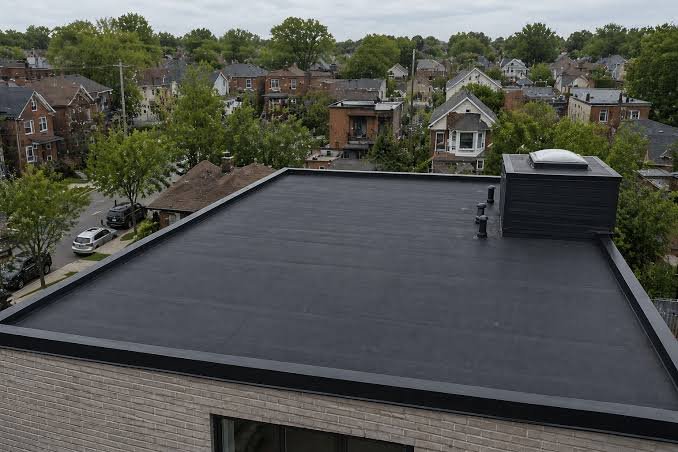
Low-slope architecture is a defining characteristic of both residential and commercial properties across the Greater Toronto Area. From modern townhouse additions and urban row houses to large-scale commercial plazas, flat roofing offers significant functional value. It optimizes indoor living volume, simplifies the installation of heavy mechanical equipment like HVAC units, and opens up possibilities for functional outdoor living spaces such as green roofs or elevated decks.
However, low-slope roofs operate under vastly different structural demands than traditional pitched roofs. Gravity cannot immediately clear standing water or heavy snowpack from a flat surface, meaning the entire building relies on specialized waterproofing membranes, precision-welded seams, and engineered drainage. Hiring a dedicated, highly trained flat roofer is critical to protecting your building envelope from Southern Ontario’s demanding weather cycles.
The Severe Environmental Demands on Toronto Flat Roofs
Toronto’s climate puts continuous stress on building envelopes. Understanding these local environmental factors helps property owners appreciate why specialized skills are required during low-slope installation, maintenance, and repair.
┌───────────────────────────────────────────────────────────────────────────┐
│ TORONTO ENVIRONMENTAL CLIMATE STRESS │
├───────────────────────────────────────────────────────────────────────────┤
│ Rapid Freeze-Thaw Cycles ──► Ice Expansion at Seams and Perimeter Joints │
│ Heavy Snow & Ice Accumulation ──► Continuous Static Load & Melt Traps │
│ Extreme Summer Heat & UV ──► Thermal Expansion & Accelerated Membrane Aging│
└───────────────────────────────────────────────────────────────────────────┘
- Frequent Freeze-Thaw Cycles: During late winter and early spring, rapid temperature shifts cause standing meltwater to freeze and expand inside micro-gaps, putting immense stress on lap seams and flashings.
- Sustained Snow Loads and Ponding: Accumulated winter snowpack creates continuous static pressure. As snow thaws, any blocked drains or minor depressions lead to “ponding”—standing water that lingers longer than 48 hours and degrades surface adhesives.
- Thermal Shock and Intense UV: Dark roof surfaces absorb solar heat in summer, causing thermal expansion that pulls on perimeter flashings and dries out un-reinforced sealants over time.
- Primary Low-Slope Roofing Systems
A qualified contractor will evaluate your building’s specific structural framing, foot-traffic demands, and energy efficiency goals to recommend the appropriate membrane technology:
2-Ply SBS Modified Bitumen (Mod-Bit)
Modified Bitumen consists of asphalt reinforced with tough fiberglass or polyester mats. Installed in two multi-ply layers via torch-application or cold-applied adhesives, SBS Mod-Bit provides exceptional puncture resistance and redundant waterproof protection, making it a reliable standard for high-density residential properties in Toronto.
Thermoplastic Single-Ply Membranes (TPO and PVC)
Thermoplastic Polyolefin (TPO) and Polyvinyl Chloride (PVC) are flexible, light-colored single-ply membranes. Their seams are hot-air welded to fuse sheets into a single continuous sheet. TPO and PVC are highly reflective, significantly reducing air conditioning costs during peak summer heat while offering strong chemical resistance against industrial fallout or kitchen exhaust.
EPDM Rubber Systems
Ethylene Propylene Diene Monomer (EPDM) is a durable, highly elastic synthetic rubber membrane. EPDM performs exceptionally well in bitter cold weather without cracking, though lap joints must be meticulously sealed using specialized tapes and bonding adhesives to ensure a watertight seal.
- Five Essential Standards for Choosing a Qualified Contractor
Distinguishing a true low-slope specialist from a general steep-slope shingle installer requires evaluating concrete technical credentials and diagnostic capabilities:
[Diagnostic Scanning] ──► [Verification of Credentials] ──► [System Warranties]
- Specialized Low-Slope Training: Low-slope systems require specialized technical skills, including hot-air seam welding, open-flame torch work, and tapered insulation layout. Ensure your contractor focuses specifically on flat roof assemblies rather than treating them as an occasional secondary service.
- Advanced Diagnostic Tools: Top contractors use non-destructive inspection tools—such as infrared thermal scanners and moisture meters—to detect hidden moisture trapped beneath membrane layers without tearing up sound material unnecessarily.
- Safety Certifications and Insurance: Working on flat roofs involves working at heights and often using heavy equipment or open flames. Verify that the company maintains active Workplace Safety and Insurance Board (WSIB) clearance, comprehensive commercial general liability coverage, and Working at Heights training for every crew member.
- Manufacturer Certifications: Major membrane manufacturers require rigorous training before granting certified installer status. Hiring a certified team guarantees your project qualifies for comprehensive manufacturer-backed material and system workmanship warranties.
- Comprehensive Drainage Assessment: A professional contractor evaluates structural slope and drainage pathways before installing a new system, integrating tapered insulation boards or enlarged scuppers to permanently eliminate standing water.
- Structural Comparison: General Contractor vs. Specialized Flat Roofing Contractor
Working with dedicated low-slope professionals offers significant advantages over hiring generalist home builders or shingle installers.
| Feature / Metric | General Residential Installer | Specialized Flat Roofing Contractor |
|---|---|---|
| Primary System Expertise | Asphalt shingles, siding, and general carpentry. | 100% Low-Slope Systems: SBS, TPO, PVC, and EPDM. |
| Seam Joining Technique | Basic lap sealant, caulking, or plastic cement. | Structural Fusion: Hot-air welded or torch-fused lap joints. |
| Moisture Diagnostics | Visual ground check and visual guessing. | Instrumented Scans: Infrared thermal imaging and moisture mapping. |
| Warranty Options | Standard limited contractor labor warranty. | Complete manufacturer-backed system warranties. |
- Proactive Maintenance Best Practices
To ensure your flat roof reaches its full operational lifespan and stays leak-free:
- Keep Drainage Pathways Clear: Clear internal drain strainers, scuppers, and perimeter downspouts every autumn to prevent ice damming and water backup during the spring thaw.
- Protect the Surface from Foot Traffic: Restrict roof access to essential service personnel only. Ensure HVAC technicians and contractors use designated rubber walkway pads to prevent tool punctures.
- Schedule Regular Inspections: Partner with a reputable local team, such as flatroofstoronto.ca, to conduct semi-annual visual audits (spring and fall) to identify minor seam stress or perimeter flashing gaps before water reaches the building interior.
Conclusion: Protecting Your Building Envelope
A low-slope roof is a critical long-term investment in your property’s structural health. By choosing a dedicated, fully insured flat roofing specialist who understands local building codes and modern membrane technologies, property owners can ensure decades of reliable, leak-free protection against Toronto’s challenging weather.
