


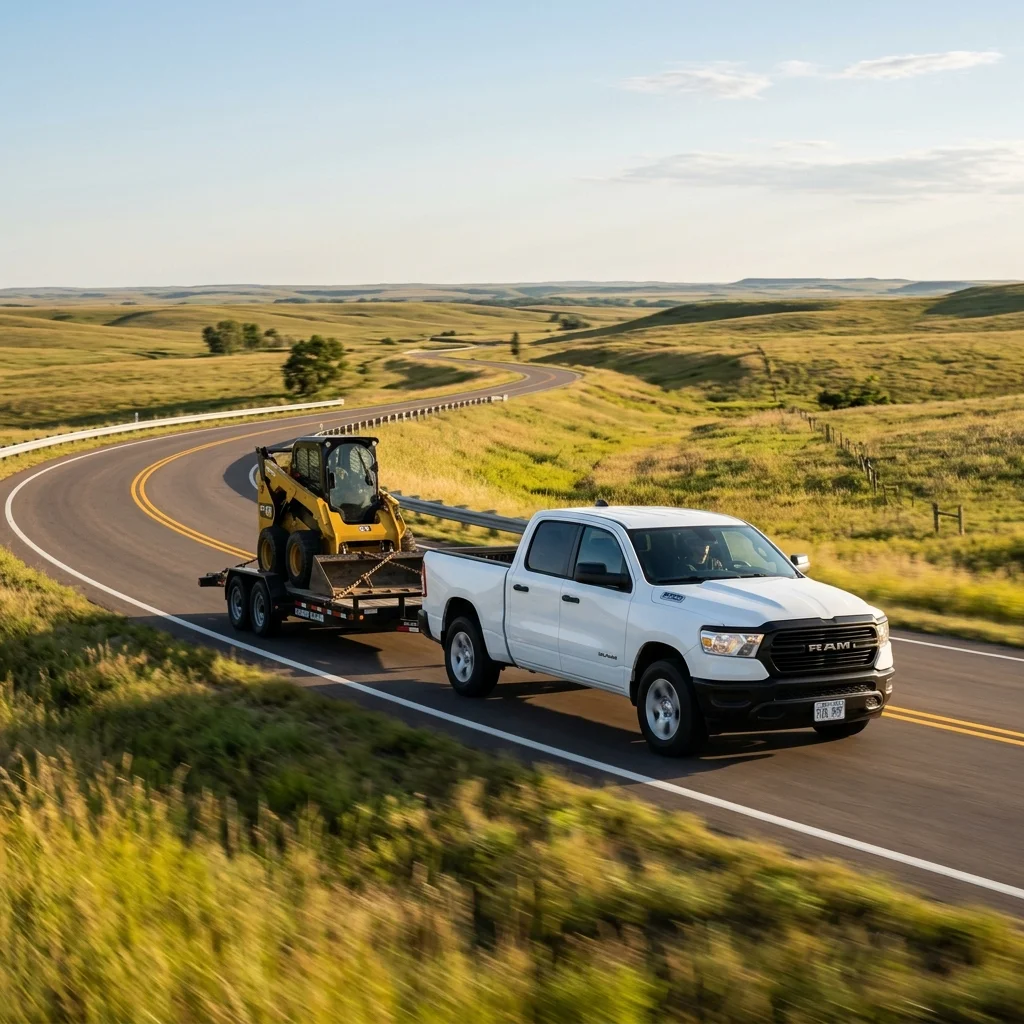
Choosing a used truck to pull a boat, camper, or equipment trailer is less about paint and trim and more about math, metal, and heat. The wrong match can mean brake fade on a downhill grade, a transmission that hunts gears on every incline, or a setup that sways the moment crosswinds hit. Before you fall for chrome and upholstery, verify the truck’s actual tow and payload capability, inspect its towing hardware, and road test with towing in mind. The goal is simple: confirm that the specific pickup in front of you can safely handle your trailer’s weight, tongue load, and real-world driving conditions without strain.
-
Confirm the Real Tow and Payload Ratings on the Truck You’re Buying
Start at the driver’s door jamb. The yellow Tire and Loading Information label lists payload, and the white certification label shows GVWR and GAWR for each axle. Together with the manufacturer’s GCWR for that exact drivetrain, these numbers define how much trailer you can pull and how much weight the truck can carry once tongue weight, passengers, and cargo are aboard. Use the VIN to look up the truck’s build data, including axle ratio and factory tow package. A dealer listing, such as one from Gregg Young Ford of Newton, will typically include the VIN, which you can use to verify specs through manufacturer resources before scheduling a test drive.
Do not rely on a brochure’s “max tow” headline. Two trucks with the same model badge can differ widely due to axle ratio, cab configuration, wheelbase, bed length, and whether a heavy-duty cooling package is installed. A numerically higher axle ratio (for example, 3.73 vs. 3.31) usually improves low-speed pull and helps the transmission keep the engine in its torque band, but it often trades away highway fuel economy. Longer wheelbases add stability when a trailer starts to push the truck around, while shorter wheelbases are easier to park but can feel more unsettled with heavy tongue weight.
-
Inspect the Towing Hardware and Wiring Already Installed
Crawl under the rear bumper and check the hitch receiver. Look for a factory Class III or IV receiver with clean, uniform welds and solid attachment points to the frame rails. Bent safety chain loops, elongated hitch pin holes, or a hitch that hangs off a thin aftermarket crossbar are red flags that the truck may have towed beyond its rating. Measure the receiver opening (commonly 2 inches on half tons, 2.5 inches on some three-quarter tons) and verify it matches the drawbar and weight-distributing equipment you plan to use.
Next, assess the wiring. A 7-pin RV blade connector is essential for electric trailer brakes and charge lines; a 4-pin flat connector covers only lights. Open the connector cover to check the terminals for corrosion and the wire strain relief for brittle insulation. Inside the cab, look for an integrated trailer brake controller or a cleanly installed aftermarket unit. Frayed wires under the dash, Scotchlok taps, or a hanging controller indicate cut corners. If possible, plug in a simple tester or trailer to confirm the brakes and turn signals work before you commit.
-
Powertrain and Cooling: Signs a Truck Can Pull Without Strain
A healthy towing truck manages heat and keeps the engine in its torque band without constant downshifts. Check for a transmission cooler tucked in front of the radiator, an auxiliary engine oil cooler, and a robust fan shroud. On the road test, engage tow/haul mode to change the shift strategy and see whether the gearbox holds lower gears on climbs instead of shifting repeatedly. Listen for torque converter shudder, which often shows up as a subtle vibration at steady speeds under light load.
The engine’s character matters as much as its peak horsepower. Turbocharged gas engines and diesels often produce strong low to mid-range torque, which helps launch a trailer and maintain speed on rolling grades. Naturally aspirated gas engines may need shorter gearing or more frequent downshifts to achieve the same result. Verify the final drive ratio on the axle tag or build sheet, and check 4×4 models for a proper transfer case and locking or limited-slip differential, which improve traction when pulling a trailer up a wet ramp or across a gravel lot.
-
Frame, Suspension, and Brakes: Evidence of Overloading or Heavy Use
Look along the frame rails for deep scale rust, fresh undercoating that could be hiding repairs, or stress marks near the rear crossmember. Inspect leaf spring packs and shackles for cracks, flattened overload leaves, or broken center bolts. Hard towing can leave clues like deformed bump stops from frequent bottoming, damp shock absorbers with oil streaks, or a hitch that sits slightly skewed. Tires should carry an appropriate load rating; for heavier trailers, many owners upgrade to an E-rated tire with a higher load index and a stiffer sidewall. Check DOT date codes to avoid aging rubber that can overheat under load.
Brakes tell a story, too. Heat-checked rotors, a pronounced lip at the rotor edge, or a soft pedal can point to hard use while towing in hilly areas. During the drive, make several medium stops from neighborhood speeds to feel for pulsation or pull, and verify that electronic stability control and trailer sway control indicators behave normally when you make controlled steering inputs. If you are a contractor who routinely carries palletized materials in the bed, prioritize a truck whose rear suspension sits level with a full crew aboard and whose brakes show even, recent wear. If you tow a midsize travel trailer on weekends, prioritize wheelbase, cooling capacity, and a hitch receiver that accepts your weight-distributing setup.
Conduct a Focused Road Test and Plan the First Setup
Drive the truck the way you will use it. Choose a route with a steady incline, a short highway stretch, and a few tight turns. With tow/haul mode on, watch engine speed and shift timing as you climb; the transmission should pick a gear and hold it rather than hunt. On descents, confirm that grade braking engages to help control speed. Pay attention to steering on crosswinds or when passing large vehicles, since light rear suspensions can feel nervous even without a trailer. Listen for a rear differential whine under light throttle, and check the temperature gauge or transmission temperature readout if your truck has one.
Once you buy, the next stage is setup and maintenance. Match the ball mount drop to keep the trailer level, set up a weight-distributing hitch if your tongue weight is substantial, and calibrate trailer brake gain in an empty lot so the trailer brakes contribute without locking. Plan routine towing checks: verify tire pressures to the load spec, torque lug nuts, inspect the breakaway cable battery, and carry spare fuses for trailer lighting. Fresh transmission fluid and differential gear oil help manage heat under load, and mirrors or extensions that cover the trailer’s width improve lane changes. A little prep here often matters more than peak horsepower on paper.
Buying a used pickup for towing means matching real-world requirements to the exact truck in front of you. Verify ratings on the door labels, confirm the presence and condition of hitch hardware and wiring, evaluate cooling and gearing on the road, and read the frame, suspension, and brakes for clues about past use. With those checks complete, you can pick a truck that pulls steadily, stops confidently, and stays cool as the grade steepens and the wind picks up.
