


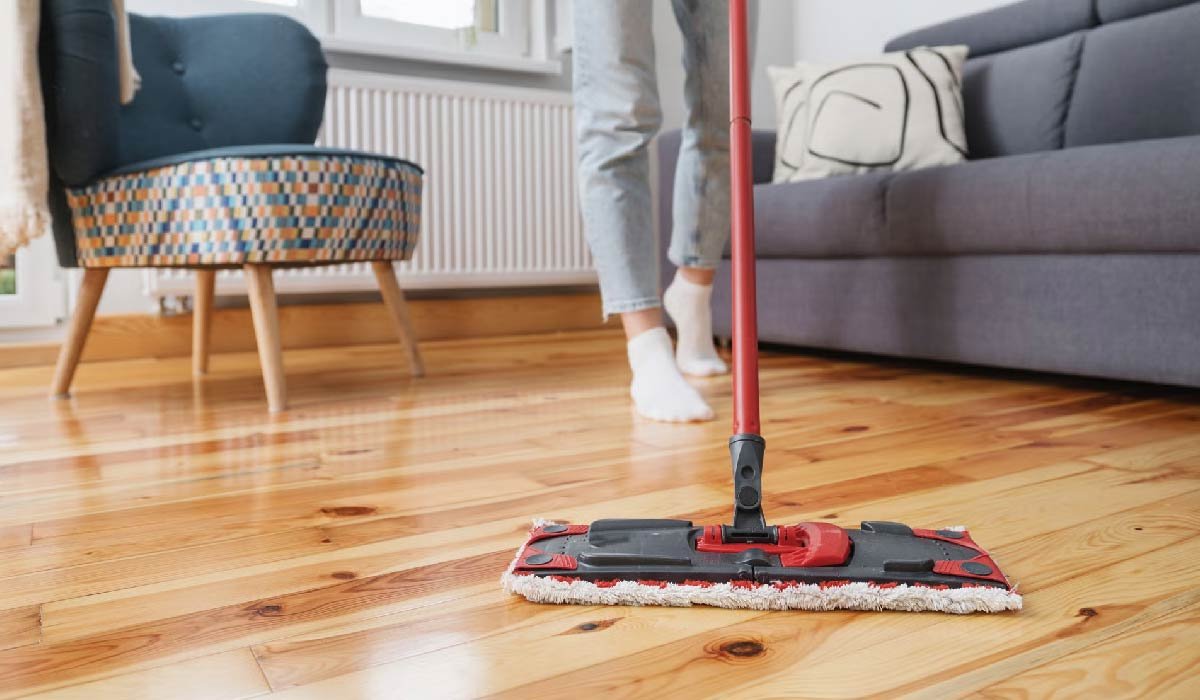
Although the hard floor in your facility may appear to require only routine cleaning, the labor hours associated with its care often equal or exceed those of other maintenance functions. Much of that labor, however, could be avoided if appropriate decisions were made prior to the situation that requires cleaning. Thus, instead of focusing on how to clean harder and faster, it is wise to develop methods to eliminate steps and rework, as well as to match your equipment and flooring chemicals to the flooring that you have.
We delve into the nitty-gritty of how to control soil to diminish the amount of hard floor maintenance needed, review the decision factors for floor care equipment and floor care chemicals, explore various floor care methods to provide information on their efforts versus results and share with you the habits of effective floor maintenance to prevent the need for floor restoration.
Stop soil before it reaches the floor
Most soil enters a building through the entrance points. Capturing that soil as it enters the building means that instead of having to dissolve, suspend and remove it from the floor surface later, it is removed from circulation. Matting at the entrance points is the cheapest form of labor. It is typically under-sized.
One entrance system is not going to meet everyone’s expectations, so here is a good model for a functional entrance system, start with a good scraper mat outside the entrance, followed by a good length of transition mat which has a high absorbency for the bulk of the moisture carried in by foot traffic, followed by an absorbent wiper section that is long enough so that a person can take several full strides to dry their feet off before they leave the entrance area. It takes more than three steps of contact to make such a system function well.
Dry soil removal first, always
Wet mopping over unswept grit is one of the hardest ways to clean a floor and can soon deteriorate the surface. Removing the grit by means of a dusting action prior to wetting, whether by means of a dusting mop or vacuum cleaner fitted with a brush, reduces the amount of work that needs to be done in the wet stage.
Match the method to the substrate
The fastest way to create a lot of extra work for yourself is to misuse cleaning solutions on your floors. Natural stone such as Marble, Limestone and Travertine are all Calcium based and will etch with the use of acidic cleaning solutions such as those found in most bathroom cleaners and even vinegar. Unsealed concrete absorbs any solution that is put on it and should be cleaned with a solution that is designed for such a floor. Luxury Vinyl Plank floors are generally very water tolerant but are negatively affected by the solvents found in most floor strippers.
Cleaning solutions, Choose neutral pH cleaners (7-9) for the majority of cleaning of sealed floors such as hardwood, vinyl, laminate, porcelain and sealed stone. Choose alkaline cleaners for kitchen and grease laden floors. Choose acidic cleaners for descaling and grout cleaning and always rinse after use.
Dilution discipline
Many daily cleaning issues occur because people overdose their floor cleaner. Surfactants, when left behind, can create a sticky residue that attracts even more soil to the floor and therefore needs to be cleaned more frequently. Use a cleaning floor dispenser that helps you accurately measure out the correct amount of cleaner for the job.
Choose tools that reduce passes
A floor is covered many times by a cleaning tool before it is cleaned. Thus, effort to clean a floor is directly proportional to the number of times a cleaning tool goes over a square foot of floor. String mops hold a lot of water and spread it unevenly. As a result, much time is spent in cleaning a floor with a string mop by making many passes and then spending time in drying the floor after it has been cleaned.
For moisture-sensitive surfaces where fast drying matters, a microfiber spin mop system is worth considering, since it controls how much water reaches a medium-sized floor and lets it dry in under a minute. Such floors require no secondary pass to remove streaks. Larger open floors are best cleaned using a walk-behind scrubber that cleans and recovers in one pass.
| Method | Typical coverage per hour | Best application | Main limitation |
| String mop and bucket | Low | Small washrooms, spot work | Redeposits soil, long dry times |
| Flat microfiber with pads | Moderate | Offices, corridors, retail | Pad changes and laundry logistics |
| Spin or wringer microfiber | Moderate to high | Mixed areas, moisture-sensitive floors | Single solution tank for the area |
| Walk-behind autoscrubber | High | Open floors above a few thousand square feet | Capital cost, edge work still manual |
Build maintenance that prevents restoration
Most expensive floor work is deep. That means stripping, refinishes, grout restorations and sandings. All very expensive to do and often preventable by most interim maintenance work.
- Burnish or spray buff resilient floors on a set interval rather than waiting for visible scuffing.
- Reapply sealer to grout and porous stone before water stops beading, not after staining appears.
- Address spills within minutes, since most staining is a function of dwell time rather than the spill itself.
- Replace microfiber pads on a count-based schedule, since laundered fibers lose grabbing power well before they look worn.
A simple audit routine
- Walk the floor under raked light to find residue, swirl marks, and scratch patterns.
- Test pH on a damp area to confirm rinse adequacy.
- Check mat condition and placement at every entrance.
- Review dilution settings and pad inventory against actual usage.
Thoughtful entrance control, the proper floor cleaning chemicals, floor cleaning tools that allow you to complete floor cleaning in the shortest amount of time possible and routine floor maintenance to prevent expensive restoration work.
