


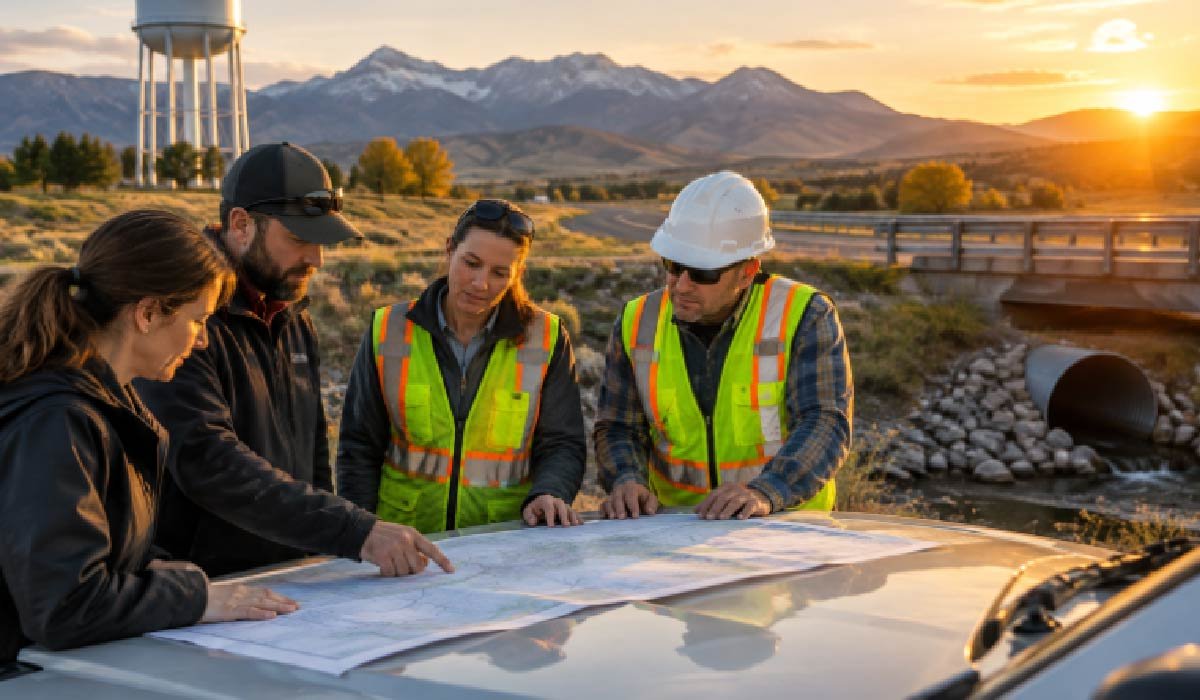
From mountain towns and agricultural communities to growing Treasure Valley neighborhoods, Idaho communities depend on infrastructure that works in every season. Water systems, roads, drainage facilities, bridges, sidewalks, and emergency routes must serve residents during ordinary daily use as well as during heavy runoff, wildfire response, power outages, and rapid growth. Working with experienced engineering firms in Idaho can help local leaders connect these needs into one practical, achievable plan.
Strong infrastructure planning is not simply a list of construction projects. It is a long-term approach to protecting public health, maintaining access, managing limited budgets, and reducing avoidable disruptions. For Idaho cities, counties, utility districts, and rural communities, the most durable plans begin with clear information about existing assets and the risks that could affect them.
Why Idaho Infrastructure Planning Requires a Broader View
Idaho’s varied geography creates very different infrastructure conditions from one community to another. A drainage concern in a fast-growing valley subdivision may differ greatly from a culvert issue along a rural road, a water-storage need in a high-desert community, or winter access challenges in a mountain town. Yet each example shows why isolated decisions can create broader problems.
A road reconstruction project may be the best time to replace aging water or sewer lines beneath the pavement. A new development may affect traffic, drainage, fire access, and utility capacity simultaneously. A pump station also depends on electrical service and accessible roads for maintenance. Planning these systems together helps communities identify conflicts early and make each dollar go further.
Start With a Clear Asset Inventory
The first step is to document what the community owns, where it is located, its condition, and the service it provides. A basic inventory does not need to be perfect before it becomes useful. It should be updated as crews inspect facilities, complete repairs, and gather better records over time.
Information to Collect
- Water mains, wells, storage tanks, pumps, valves, and treatment equipment.
- Wastewater pipes, lift stations, lagoons, treatment facilities, and control systems.
- Roads, bridges, culverts, sidewalks, trails, signs, and guardrails.
- Storm drains, ditches, channels, ponds, and other drainage features.
- Emergency routes, alternate access points, and locations with recurring closures.
- Known repair histories, inspection notes, operating costs, and repeat problem areas.
For water and wastewater utilities, the asset-management guidance for local water and wastewater officials reinforces the value of knowing which assets are most important, their condition, and how they will be funded over time. Good records shift decisions away from reacting to the loudest emergency and toward planned, defensible maintenance.
Rank Risks Before Ranking Projects
Not every aging asset needs immediate replacement. A practical plan evaluates both the likelihood of failure and the consequences if failure occurs. A rough road surface may be frustrating, but a damaged bridge, an undersized culvert, a failing sewer lift station, or a water line serving a hospital can pose more serious safety and service concerns.
A Simple Risk Review
- Identify the asset and the service it supports.
- Estimate its chance of failing based on age, condition, inspections, and repair history.
- Consider the effects on health, safety, property, mobility, businesses, and emergency response.
- Compare options such as maintenance, rehabilitation, replacement, or a phased project.
- Assign a high, medium, or low priority and document the reason for the decision.
This approach is especially helpful for smaller communities with limited staff. It creates a repeatable process that can be explained to elected officials, residents, funding agencies, and future staff members.
Plan Water and Wastewater Systems for Continued Service
Water and wastewater improvements need more than a construction budget. Local leaders should also consider treatment capacity, energy use, operator staffing, replacement parts, backup power, changing demand, regulatory obligations, and the cost of maintaining the completed facility. A project that is affordable to build but difficult to operate may create future pressure on rates and budgets.
Questions Local Leaders Should Ask
- Can the system meet peak demand during hot, dry, or high-use periods?
- What happens if a pump, control panel, well, or power source fails?
- Does the utility have enough storage, redundancy, and emergency response capability?
- Can routine maintenance be funded after construction is complete?
- Could shared services or regional cooperation improve reliability or lower costs?
Build Transportation and Drainage Systems That Support Daily Life
Transportation infrastructure connects Idaho residents to jobs, schools, health care, recreation, and essential services. Planning should look beyond vehicle travel alone by considering sidewalks, crossings, trails, transit access where available, freight routes, and safe emergency access. Coordinating transportation projects with underground utility work can limit the need for repeated excavation and reduce disruption to residents and businesses.
Drainage deserves equal attention. Heavy rain, snowmelt, blocked inlets, and undersized culverts can damage roads, restrict access, and direct water toward homes or businesses. The Federal Highway Administration provides culvert asset-management resources that underscore the importance of tracking these often-overlooked components of transportation networks.
Practical Stormwater Tools
- Inspect and clear inlets, ditches, and culverts on a regular schedule.
- Improve roadside drainage and replace failing culverts where analysis shows a need.
- Use detention areas, planted drainage features, or permeable surfaces when site conditions and maintenance capacity support them.
- Protect natural drainage paths and avoid directing runoff toward vulnerable properties.
- Review drainage impacts whenever streets, development, or utility systems are expanded.
Make Funding, Maintenance, and Public Input Part of the Design
Funding should be discussed before a project reaches final design. A realistic plan includes planning, permitting, design, land needs, construction, operations, maintenance, future replacement, and emergency reserves. Communities can also look for opportunities to combine related projects, such as water-main replacement and street reconstruction, to reduce mobilization costs and neighborhood disruption.
Residents should be involved early, before all major choices are locked in. They can identify streets that flood, crossings that feel unsafe, seasonal access problems, and facilities that are difficult to reach. Short surveys, open houses, interactive maps, meetings with neighborhood groups, and clear project updates can make participation more useful. Trust grows when residents can see how their feedback shaped a priority, route, schedule, or design feature.
A Practical Idaho Infrastructure Planning Checklist
- Define the service problem and the people affected.
- Confirm the asset’s location, condition, capacity, and maintenance history.
- Review health, safety, environmental, permitting, and emergency-access needs.
- Compare repair, replacement, and phased alternatives.
- Estimate full life-cycle costs rather than focusing only on the initial bid.
- Identify local revenue, grants, financing, and long-term operating commitments.
- Coordinate with utilities, agencies, property owners, and affected residents.
- Set measurable goals for service reliability, safety, cost, and schedule.
- Document maintenance responsibilities before construction begins.
- Review the results upon completion and carry the lessons into the next project.
Conclusion: Plan for Service, Not Just Construction
Reliable infrastructure planning in Idaho means preparing for the full life of a system, not simply completing the next visible project. Communities that combine asset data, risk-based priorities, coordinated design, realistic funding, routine maintenance, and resident input can make better choices with the resources available. The result is infrastructure that supports safer travel, dependable water and wastewater service, stronger emergency access, and healthier communities for years to come.
