


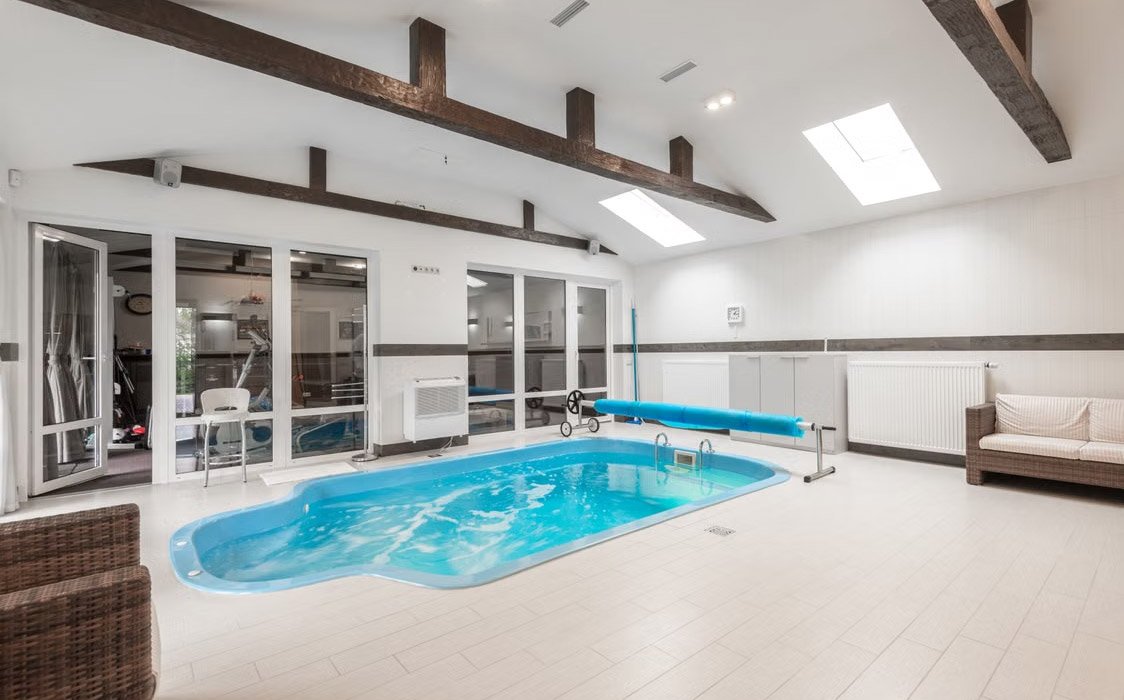
Step into an poorly managed indoor pool room, and you’re immediately hit with a wall of heavy, damp air that smells like too much chlorine. It takes about thirty seconds for your clothes to feel sticky and your eyes to start watering. Beyond the discomfort, that relentless moisture actively attacks concrete, rusts steel joists, and breeds rot in places you can’t see.
Keeping an aquatic space dry and fresh requires way more than pushing air around with standard overhead fans. You need a dedicated equipment plan designed to fight continuous evaporation.
The first major strategy involves upgrading to high-performance dehumidification loops built specifically for high-moisture environments. Regular residential or commercial heating units just can’t clear water out of the air fast enough to stop condensation on glass and cold walls. Bringing in a certified indoor pool HVAC and dehumidifier technician ensures your environmental controls are custom-sized and properly calibrated. Specialists who live and breathe refrigeration and air-conditioning know how to balance coil temperatures so your system pulls gallons of moisture out of the air without burning through massive amounts of energy.
Another essential tactic is setting up modern pool enclosure vapor barriers and negative air pressure systems. Negative pressure sounds complicated, but the core idea is simple: you want to keep pool air inside the pool room. By carefully balancing exhaust and intake blowers, you prevent humid, chemical-laden air from pushing its way into adjacent hallways, lobbies, or living quarters.
Water management under the surface matters just as much as air movement up above. When floor drains clog or back up, standing water on tile decks spikes humidity levels right back up. Maintaining heavy-duty drainage, backflow prevention, and continuous line pressure requires skilled hands. Whether you’re managing a massive commercial facility or troubleshooting complex residential piping similar to what you’d see from a licensed plumber in New Tecumseth, keeping feed and drain lines completely leak-free is your first line of defense against structural rot.
Next, consider switching to heat-recovery ventilation (HRV) units. Throwing away warm, moist air and replacing it with cold outside air burns through energy budgets fast. Modern HRV equipment captures thermal energy from the stale exhaust air and transfers it to the fresh incoming air stream. You get crisp, clean air circulation while keeping your heating costs under control.
Finally, integrating smart dynamic sensors across your entire mechanical floor makes a world of difference. Instead of setting a manual humidistat on a wall and hoping for the best, networked digital sensors track dew point, ambient air temperature, and water evaporation in real time. When a crowd jumps into the water on a weekend afternoon, the system automatically ramps up exhaust and dehumidification cycles before moisture starts running down the windows.
Taking care of an indoor pool room isn’t about constant damage control. With the right mechanical setup, crisp air and dry surfaces become the default.
Read More: How Viper Wire Performs Under the Conditions That Break Conventional Rope
