


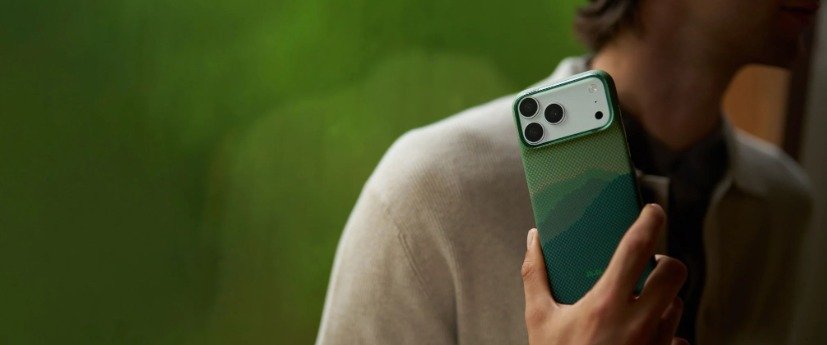
For a large-screen iPhone, choose a slim case by checking hand comfort before chasing the smallest thickness figure. A large phone already asks more of the hand; added width, awkward lower edges and a bulky accessory stack can make ordinary use less comfortable.
An aramid fiber phone case can suit someone who wants a close-fitting shell. For a Pro Max owner, PITAKA’s aramid fiber iphone 17 pro max case collection keeps the search tied to the correct device rather than a smaller Pro version.
Start with the part of the phone your hand supports
A large phone often rests against the little finger while the other fingers hold the back. The bottom edge therefore deserves a close look. A small ridge in the wrong place may become more noticeable during extended reading than a difference in rear-shell thickness.
Inspect these areas in product images and, where possible, during a permitted fit check:
- The lower corners where the hand curves around the phone.
- The edge beside the charging opening.
- The sidewall where the thumb moves during typing.
- The camera surround where an index finger may rest.
A comfortable outline should give the hand a natural place to settle.
Judge width and depth separately
Sidewalls add to the distance the fingers have to span. A rear panel adds depth. A tall camera ring adds depth locally. These dimensions affect different parts of handling, so one headline measurement cannot describe the whole experience.
A buyer bothered by reaching across the screen should pay particular attention to the sides. A buyer bothered by pocket bulk should look at the overall rear profile, including the camera area.
The same distinction applies to protection. A slim back can coexist with more substantial sides, while another design may use minimal edges throughout. Compare the shapes rather than assuming every slim case makes the same compromise.
Count everything attached to the back
A wallet, grip or stand may be useful enough to keep, but it belongs in the carrying calculation. The full setup is what ends up in a trouser pocket or small bag.
- Add the mass of accessories to the case mass.
- Check clearance between a large attachment and the camera surround.
- Consider whether the accessory can be removed for pocket carrying.
- Assess the charger with the actual case-and-accessory arrangement.
Magnetic compatibility is one part of this check. Physical clearance and the dimensions of the accessory still matter.
Balance a slim shape with your drop concerns
A bigger phone can be awkward to manage while carrying bags or using public transport. If it feels insecure, a grip or more substantial side structure may be more useful than saving a little bulk. Two-handed use can also be the more comfortable choice for long messages or reading.
Look for the surfaces you want covered and the corner structure you are willing to carry. A case should make the phone easier to live with through the day, rather than win a thickness comparison while leaving the owner uneasy whenever it is picked up.
Product-family references are model-specific; no dimensions or drop-test claims from another Pro or Pro Max model are applied to iPhone 17 Pro Max here.
