


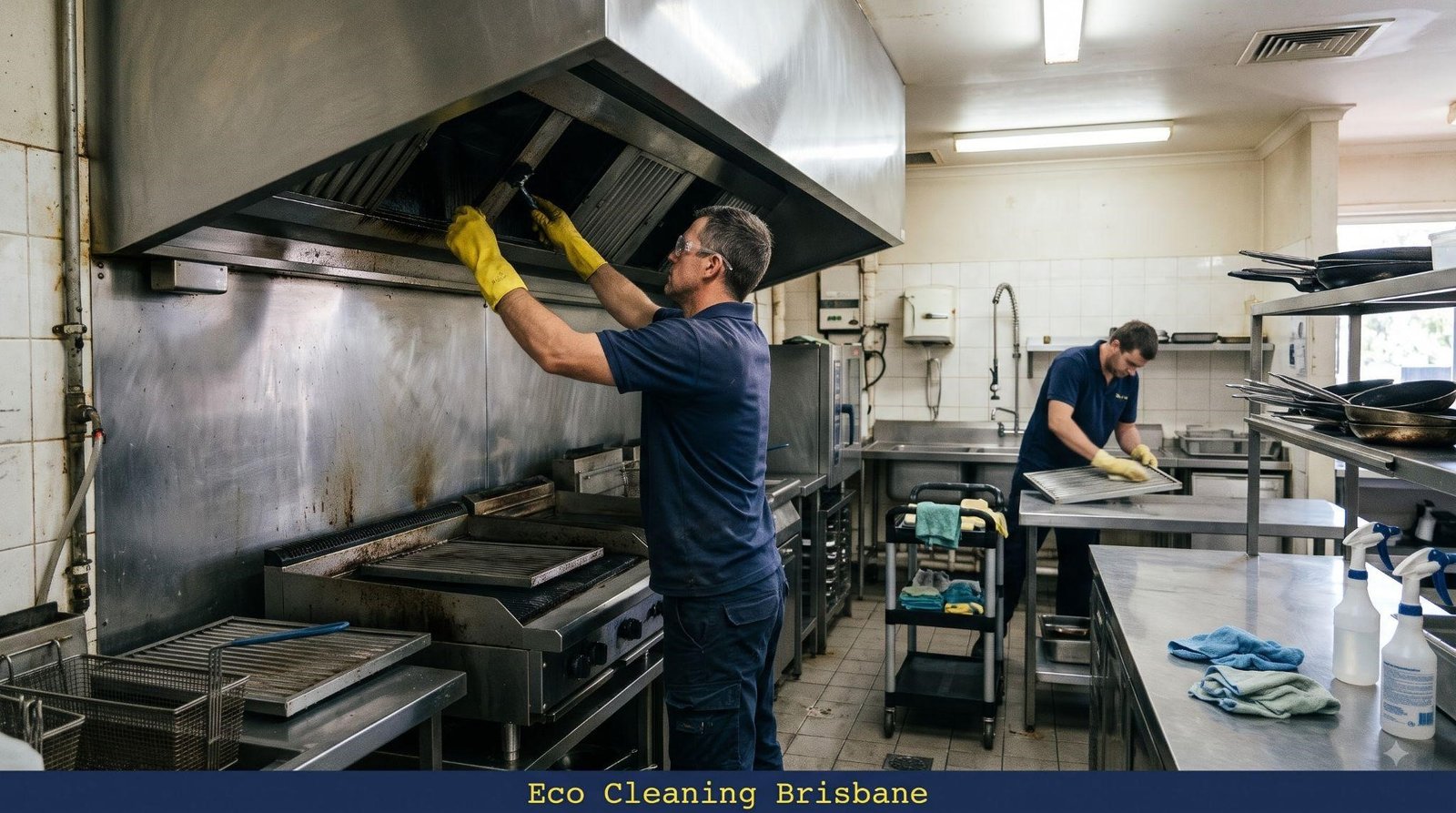
Grease buildup inside an exhaust system is one of the biggest fire risks in a busy Brisbane kitchen. AIRAH (Australian Institute of Refrigeration, Air Conditioning and Heating) warns that grease inside ductwork adds fuel once cooking heat reaches it. This is why routine cleaning sits at the centre of AS 1851, the Australian standard for fire safety servicing.
Many owners think a quick wipe of the rangehood counts as commercial kitchen exhaust cleaning. But a proper commercial kitchen exhaust cleaning service covers more than that. It reaches the filters, the plenum (the chamber above the filters), the ductwork, and the rooftop fan.
What Counts as a Proper Exhaust Service
A proper kitchen exhaust service covers the canopy, filters, plenum, ductwork, and the fan in one visit. The scope of work for such cleaning should never stop at the parts a chef can see from the cooking line.
Grease collects at every stage of the system, not just on the hood. So, a technician needs to check and clean each part in turn. Thus, the canopy, the filters inside it, the plenum chamber, the duct run, and the rooftop fan all get attention on the same visit during a full kitchen exhaust system cleaning.
Tasks a Proper Exhaust Service Includes
Commercial kitchen exhaust cleaning includes more than a wipe-down of the hood. The full job breaks down into these stages.
Canopy and Rangehood Cleaning
Commercial rangehood and canopy cleaning removes grease from the hood interior, edges, and light fittings, where residue accumulates over daily service.
Grease Filter Cleaning
For commercial kitchens, Grease filter cleaning strips grease from the baffle filters that sit inside the canopy. A bent or poorly fitted filter lets grease pass straight through to the duct. Thus, a professional should check the filter condition at every visit.
Plenum Cleaning
Plenum cleaning covers the chamber between the filters and the duct. This area sits out of sight above the canopy. So, it gets missed by anyone doing a surface-level clean.
Duct Cleaning
Exhaust duct cleaning reaches the metal walls behind the filters through access panels along the run. AIRAH’s guide sets a system-wide grease limit of 0.2mm (200 microns), with a post-clean reading below 50 microns confirming a proper job.
Exhaust Fan Cleaning
Exhaust fan cleaning for commercial kitchens covers the blades, housing, and belt drive, since grease-coated blades throw the fan off balance. Rooftop kitchen exhaust fan cleaning also protects the surrounding roof surface from dripping grease around the discharge point.
Compliance Report and Documentation
A proper exhaust cleaning report lists every section cleaned, the grease readings taken before and after, and the recommended date for the next service.
What Happens When You Skip Exhaust Care
A missed clean rarely causes trouble straight away. That is exactly why it gets pushed down the list. Grease keeps building quietly until one of these problems shows up.
- Fire risk rises as grease-laden ductwork becomes a fuel source behind the wall
- Airflow drops, so smoke and heat linger longer in the kitchen
- The fan works harder and wears out faster under a heavier grease load
- Insurance claims face extra scrutiny when maintenance records are incomplete.
How Often Should Brisbane Kitchens Be Cleaned
Cleaning frequency depends on two things:
- How much grease a kitchen produces, and
- How many hours it cooks each day.
AIRAH’s best practice guide sets out cleaning intervals based on both factors. A high-grease kitchen running more than sixteen hours a day should clean every two months. A solid-fuel kitchen at that same usage level needs a clean every month. A light-grease cafe running under six hours a day can often go a full year between services. AS 1851 sets the framework for routine servicing, and the actual schedule for a kitchen should be based on real usage within those regulatory parameters.
Signs Your Kitchen Needs a Clean Now
A schedule is a starting point, not the full picture. These signs mean a kitchen needs attention before the next booked date.
- Grease dripping from the hood, plenum, or roof discharge point
- Smoke or heat lingering in the kitchen despite normal equipment use
- A fan sounding louder or vibrating more than usual
- Filters loading up well before the next scheduled wash
- A recent jump in cooking volume or menu changes involving heavier grease.
Final Thoughts
A proper kitchen hood and duct cleaning service protects a kitchen from fire risk and keeps fire safety records in order. Every stage, from the filters to the rooftop fan, plays a role in keeping grease under control.
Eco Cleaning Brisbane has served commercial kitchens across Brisbane for more than 20 years. They clean canopies, ducts, and fans to the standard a kitchen actually needs. Book a full exhaust clean and keep your commercial kitchen safe and compliant.
