


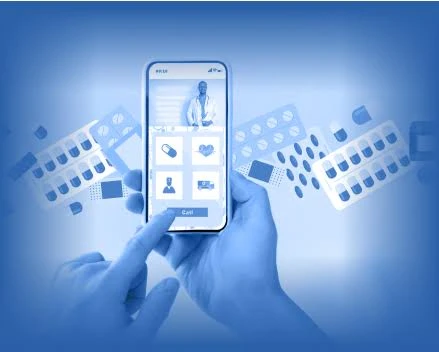
Healthcare is becoming increasingly digital, with patients, doctors, hospitals, pharmacies, laboratories, and insurance providers relying on software to make healthcare services more accessible and connected. For businesses planning to enter this market, healthcare mobile app development company expertise is important because healthcare applications involve more than attractive interfaces—they require secure data handling, reliable backend architecture, integrations, privacy controls, and careful consideration of applicable regulations. Modern healthcare apps can support everything from appointment booking and telemedicine to remote monitoring, electronic health records, medication management, and AI-assisted workflows.
What Is Healthcare App Development?
Healthcare app development is the process of designing and building mobile applications that support patients, healthcare professionals, medical organizations, pharmacies, laboratories, insurers, or other healthcare-related businesses.
Unlike a standard consumer application, a healthcare app may process highly sensitive information. This can include medical records, prescriptions, laboratory results, appointment information, health measurements, and other personal data.
A healthcare application therefore needs to combine:
- User-friendly mobile interfaces
- Secure authentication
- Encrypted data transmission
- Reliable backend infrastructure
- Healthcare-system integrations
- Privacy controls
- Appropriate consent management
- Auditability and monitoring
- Regulatory compliance where applicable
The exact requirements depend on the application’s purpose, target market, data flows, and whether it performs functions that may fall under medical-device or healthcare regulations.
Why Healthcare Apps Matter for Businesses in 2026
Healthcare organizations increasingly need digital channels that allow patients and healthcare professionals to access services outside traditional facilities.
A well-designed application can allow patients to perform tasks such as:
- Book appointments
- Consult healthcare professionals
- View prescriptions
- Receive medication reminders
- Access laboratory results
- Make payments
- Communicate with providers
- Monitor selected health measurements
- Receive appointment notifications
For providers, applications can also reduce administrative friction by connecting patients, clinicians, and backend systems.
However, the value of a healthcare app depends on the problem it solves. Businesses should begin development with a clearly defined healthcare workflow rather than simply creating an application because mobile healthcare is growing.
Types of Healthcare Apps Businesses Can Develop
There is no single type of healthcare application. The appropriate product depends on the target users and business model.
Patient Healthcare Apps
Patient-facing applications provide consumers with direct access to healthcare services.
Common features include:
- Patient registration
- Profile management
- Appointment booking
- Doctor search
- Teleconsultation
- Prescription management
- Medical records
- Payment processing
- Notifications
- Health tracking
These applications can act as a digital front door for hospitals, clinics, healthcare networks, and specialized providers.
Telemedicine Apps
Telemedicine applications connect patients with healthcare professionals remotely.
A typical telemedicine solution may include:
- Doctor and patient accounts
- Appointment scheduling
- Video consultations
- Audio calls
- Secure messaging
- Digital prescriptions
- Consultation history
- Payment integration
- Notifications
The backend needs to handle scheduling, user authentication, communication, and potentially integration with clinical systems.
Businesses should also understand that technical telemedicine functionality does not automatically make an application compliant with every healthcare regulation. Requirements vary by jurisdiction and service model.
Doctor and Healthcare Professional Apps
Healthcare professionals can use mobile applications to access relevant information and manage workflows.
Potential functionality includes:
- Appointment management
- Patient profiles
- Clinical notes
- Prescription management
- Secure communication
- Laboratory results
- Notifications
- Task management
- Availability management
The interface should be designed around professional workflows rather than simply adapting a patient application for doctors.
Remote Patient Monitoring Apps
Remote patient monitoring applications can collect health-related measurements from supported devices or allow patients to enter information manually.
Depending on the use case, this could involve:
- Heart rate
- Blood pressure
- Blood glucose
- Weight
- Oxygen saturation
- Activity
- Sleep information
When Apple’s HealthKit is involved, applications must request appropriate user permissions for individual health-data types. Apple provides fine-grained authorization, meaning users can control what health information an application can read or share.
Medication Management Apps
Medication applications can help users organize their treatment schedules.
Features may include:
- Medication lists
- Dosage reminders
- Refill reminders
- Medication history
- Prescription information
- Notifications
- Caregiver access
Businesses developing these applications should carefully distinguish between informational reminders and features that provide clinical recommendations or potentially regulated medical functions.
Hospital Management Apps
Hospitals and large healthcare organizations can develop applications for both patients and internal teams.
A hospital application may include:
- Appointment scheduling
- Department information
- Doctor directories
- Patient communication
- Laboratory results
- Billing
- Pharmacy information
- Admission information
- Notifications
For enterprise healthcare applications, integration with existing hospital systems is often one of the most important technical considerations.
Key Features of a Modern Healthcare App
The features required depend on the application’s purpose, but several capabilities are commonly important.
Secure User Authentication
Healthcare applications should provide appropriate authentication mechanisms to protect accounts.
Depending on the application, authentication can include:
- Email and password
- Mobile number verification
- One-time passwords
- Biometric authentication
- Multi-factor authentication
- Device authentication
Sensitive applications should also consider session management, account recovery, suspicious-login detection, and access controls.
Appointment Scheduling
Appointment booking is one of the most common healthcare-app functions.
A comprehensive scheduling system can allow patients to:
- Search for a healthcare professional.
- Select a service.
- View available time slots.
- Book an appointment.
- Receive confirmation.
- Get reminders.
- Reschedule or cancel when permitted.
The backend must synchronize availability accurately to prevent double bookings.
Telehealth
Video and audio consultation functionality can expand access to healthcare services.
A production-ready implementation should consider:
- Secure communication
- Appointment-based access
- Connection quality
- Waiting rooms
- Call notifications
- Session management
- Consultation records
- Emergency disclaimers or workflows where appropriate
The application’s telehealth workflow should also be designed around the clinical service being delivered.
Health Records
Some applications may need to provide access to health records.
Apple’s HealthKit supports clinical records in FHIR format from supported healthcare institutions. Applications requesting this functionality need additional configuration and permissions, and Apple requires appropriate privacy-policy information for apps accessing clinical records.
FHIR can be particularly valuable because it provides a standardized approach to representing and exchanging healthcare information.
Push Notifications
Notifications can be useful for:
- Appointment reminders
- Medication reminders
- Test-result availability
- Prescription updates
- Payment notifications
- Teleconsultation reminders
Healthcare applications should avoid unnecessary notifications and should ensure sensitive information is not exposed through notification previews.
Healthcare App Development for the Qatar Market
Businesses targeting the Gulf region also need to consider market-specific requirements.
For organizations planning a healthcare application for Qatar, working with a mobile app development company in Qatar can help address local product requirements, integrations, language considerations, and market-specific workflows.
A Qatar-focused healthcare application may need to support:
- Arabic and English interfaces
- Local healthcare workflows
- Appointment management
- Secure patient communication
- Payment services
- Healthcare-provider directories
- Integration with relevant systems
- Appropriate data-protection requirements
Localization should not be limited to translating buttons and menus. Healthcare applications need culturally appropriate content, date and time formats, language support, accessibility, and workflows that make sense for the target healthcare environment.
Healthcare App Security and Privacy
Security is one of the most important parts of healthcare app development.
Healthcare businesses should consider security throughout the entire application lifecycle rather than adding security after development.
Important areas include:
Encryption
Data should be protected during transmission, and sensitive information should be stored using appropriate security controls.
Access Control
Users should only be able to access information relevant to their role and permissions.
For example, a patient should not have access to another patient’s records, while a healthcare professional may have access based on their clinical relationship and authorization.
Secure APIs
Mobile applications commonly communicate with backend systems through APIs. These APIs need strong authentication, authorization, validation, monitoring, and rate-limiting mechanisms.
Audit Logs
For healthcare systems, maintaining appropriate logs can help organizations understand who accessed or changed particular information.
Secure Authentication
Multi-factor authentication and appropriate session management can reduce the risk associated with compromised credentials.
Compliance Considerations for Healthcare Apps
Healthcare compliance is not a single checklist that applies universally.
The relevant requirements depend on:
- Country
- State or region
- Type of organization
- Type of data
- Intended users
- Healthcare service
- Data processing activities
- Whether the application performs regulated medical functions
For example, in the United States, HIPAA may apply to covered entities and business associates, but not every health application is automatically subject to HIPAA. HHS provides resources specifically for mobile health developers because the applicable privacy and security requirements depend on the product and business relationships.
Businesses should therefore involve legal, compliance, and security professionals when determining their regulatory obligations.
Apple HealthKit Integration
For iOS healthcare applications, HealthKit can provide an important integration point for health and fitness information.
HealthKit acts as a centralized repository for supported health and fitness data. Applications can request permission to read or write specific types of information.
Supported data categories can include different activity, nutrition, body, heart, and other health measurements. Apple provides separate data types and authorization mechanisms for these categories.
However, developers cannot simply collect HealthKit data for any purpose.
Apple states that HealthKit data must be used for permitted health, fitness, or related services, and health information obtained through HealthKit cannot be sold to advertising platforms, data brokers, or information resellers.
This makes privacy architecture an important part of iOS healthcare development.
Artificial Intelligence in Healthcare Apps
AI is becoming an important technology area for healthcare software, but it should be implemented carefully.
Potential applications include:
- Medical document summarization
- Patient-service chatbots
- Appointment assistance
- Administrative automation
- Medical literature search
- Personalized wellness recommendations
- Clinical workflow assistance
- Image-analysis support in appropriate regulated contexts
However, AI-generated healthcare information requires additional safeguards.
Businesses should consider:
- Accuracy
- Human oversight
- Data privacy
- Bias
- Explainability
- Model monitoring
- Appropriate disclaimers
- Clinical validation where necessary
An AI chatbot answering general administrative questions has a different risk profile from software making diagnostic or treatment recommendations.
Healthcare App Development Process
A structured development process helps reduce technical and regulatory risks.
Discovery and Research
Start by defining:
- Target users
- Healthcare problem
- Business objectives
- Core workflows
- Required integrations
- Geographic markets
- Compliance requirements
UX/UI Design
Healthcare interfaces should prioritize clarity and accessibility.
Designers should make important actions easy to understand and avoid unnecessary complexity.
Backend Development
The backend manages:
- User accounts
- Healthcare data
- Appointments
- APIs
- Notifications
- Payments
- Integrations
- Security controls
A scalable cloud architecture may be appropriate depending on the application and regulatory requirements.
Mobile Development
Developers then build the iOS or Android application according to the approved architecture and designs.
For iOS applications, technologies can include Swift, SwiftUI, HealthKit, and relevant Apple frameworks.
Integration
Healthcare applications frequently need integrations with:
- EHR/EMR systems
- FHIR APIs
- Payment gateways
- Laboratory systems
- Pharmacy systems
- Wearable devices
- Identity providers
Testing
Healthcare apps require extensive testing.
Testing can include:
- Functional testing
- API testing
- Security testing
- Performance testing
- Device testing
- Accessibility testing
- Usability testing
- Integration testing
Security testing is particularly important when sensitive patient information is involved.
Deployment and Monitoring
After launch, businesses should continuously monitor:
- Application crashes
- API performance
- Security events
- User feedback
- Feature usage
- Infrastructure performance
Healthcare applications should also have a structured maintenance and update process.
How Much Does Healthcare App Development Cost?
There is no single fixed price for healthcare app development.
The cost depends on factors such as:
- Number of platforms
- Application complexity
- UI/UX requirements
- Backend architecture
- Telemedicine functionality
- Health-device integrations
- EHR/FHIR integrations
- AI features
- Payment systems
- Security requirements
- Compliance requirements
- Development team location
- Ongoing maintenance
A simple appointment-booking application will generally require a different development investment from a healthcare platform combining telemedicine, electronic records, remote monitoring, payments, AI, and multiple enterprise integrations.
Businesses should therefore obtain estimates after preparing a detailed feature and integration specification rather than relying on a generic per-app price.
Common Mistakes to Avoid
Building Too Many Features Initially
Trying to launch every possible feature can increase development time and complexity.
Start with the workflows that provide the most value.
Treating Security as an Afterthought
Security needs to be considered during architecture, development, testing, deployment, and maintenance.
Ignoring Healthcare Integrations
A healthcare application may need to communicate with existing systems. Ignoring integration requirements early can create expensive architectural changes later.
Poor UX
Healthcare users may include patients of different ages, technical abilities, and accessibility needs. Complex interfaces can create unnecessary friction.
Collecting Unnecessary Data
Businesses should carefully evaluate what information they actually need. Collecting sensitive health data creates additional privacy and security responsibilities.
Assuming One Regulation Applies Everywhere
Healthcare regulation varies by market and application type. A compliance strategy should be based on the actual business model, users, data, and jurisdictions involved.
Final Thoughts
Healthcare app development in 2026 is no longer limited to appointment booking or basic patient portals. Businesses can build sophisticated platforms combining telemedicine, health records, remote monitoring, medication management, wearable integrations, AI, payments, and healthcare-provider workflows.
At the same time, healthcare applications require a higher level of planning than ordinary consumer apps. Privacy, security, authentication, integrations, regulatory requirements, accessibility, and clinical workflows should be considered from the beginning.
For iOS healthcare applications, Apple’s HealthKit and related technologies provide powerful capabilities, but developers must follow Apple’s privacy and authorization requirements when handling health information.
Ultimately, the best starting point for a healthcare app is not the technology itself. Businesses should first identify the healthcare problem, understand their users and regulatory environment, define the minimum viable feature set, and then select the appropriate architecture and development approach.
