


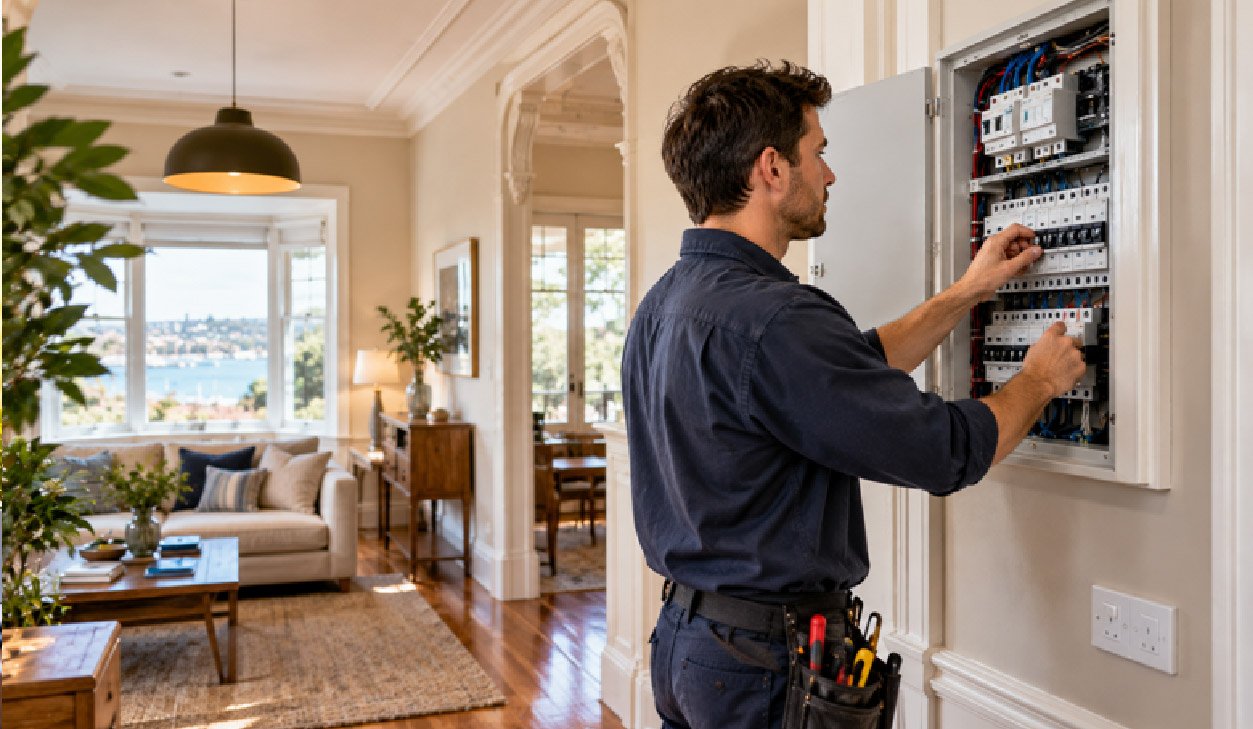
Neutral Bay is full of homes with real character. But plenty of them were wired long before anyone owned a smartphone, ran ducted air conditioning, or set up a home theatre. If your place is still relying on its original electrical system, chances are it’s working harder than it should. And in some cases, an aging system isn’t just inconvenient – it’s a safety risk.
Knowing which upgrades to tackle first makes it easier to spend your budget wisely, protect your family, and look after the value of your home. Here’s what older properties around the area are worth thinking about.
Why Safety Upgrades Should Come First
Convenience and efficiency are nice, but they can wait. The first thing to sort out is anything that could put your home at risk. A lot of older Neutral Bay houses still have aluminium or cloth-insulated wiring. It was standard back in the day, but it breaks down over time, and that degradation raises the risk of electrical fires.
Swapping that old wiring for modern copper is one of the smartest moves you can make in an older home. It’s worth doing alongside a switchboard and circuit breaker upgrade, too, so your system can actually cope with the power demands of a modern household instead of buckling under them.
Then there are safety switches and earth leakage protection. These catch electrical faults and cut the power fast, before anyone gets a shock or your home takes damage. If selling is on the horizon, compliant electrical work isn’t just tidy housekeeping – insurers often require it, and it can hold up a building inspection if it’s not in order. A professional electrician in Neutral Bay can go through your wiring and point out compliance issues while they’re still cheap to fix.
Modernising for Everyday Convenience
Once the safety side is handled, you can start thinking about how the house actually works day to day. Older homes were built with far fewer power points than we need now. Add a few outlets to the kitchen, bathrooms, and living spaces, and you’ll finally be free of the extension cords and power boards snaking across the floor.
USB charging outlets are a small but genuinely handy addition. No more hunting for adapters, and your benchtops and bedside tables stay clear. Thinking about smart home tech later on? Putting in smart-ready points now saves you the pain of retrofitting down the track.
Lighting tends to be another weak spot. Moving from incandescent or halogen bulbs to LEDs trims your energy bills, and it also unlocks dimmable, layered lighting that completely changes how a room feels. One more thing: if you’re running big-draw appliances like ducted air conditioning, an electric oven, or an EV charger, dedicated circuits keep them running safely without tripping breakers or overloading everything else.
Improving Energy Efficiency Over Time
With safety and convenience covered, efficiency upgrades are where you keep saving well after the work is done. Motion sensors and programmable timers, for instance, quietly cut power use without asking you to change a single habit.
Good insulation, paired with sensible circuit management, can also shave money off your bills – especially in older homes that leak heat. And if you like knowing exactly where your power goes, energy monitoring systems give you live data, which makes it much easier to spot a wasteful habit or a faulty appliance.
Getting Started on Your Upgrade Journey
Older Neutral Bay homes are worth preserving, but character shouldn’t come at the cost of safety or efficiency. Whether you’re clearing overdue safety concerns, adding some modern comfort, or chasing lower bills, working through these upgrades in order of priority gives you the best return.
Not sure where things stand? Book an electrical safety inspection. It’ll show you what needs attention now and what can wait, so you can plan the rest with a clear head.
