


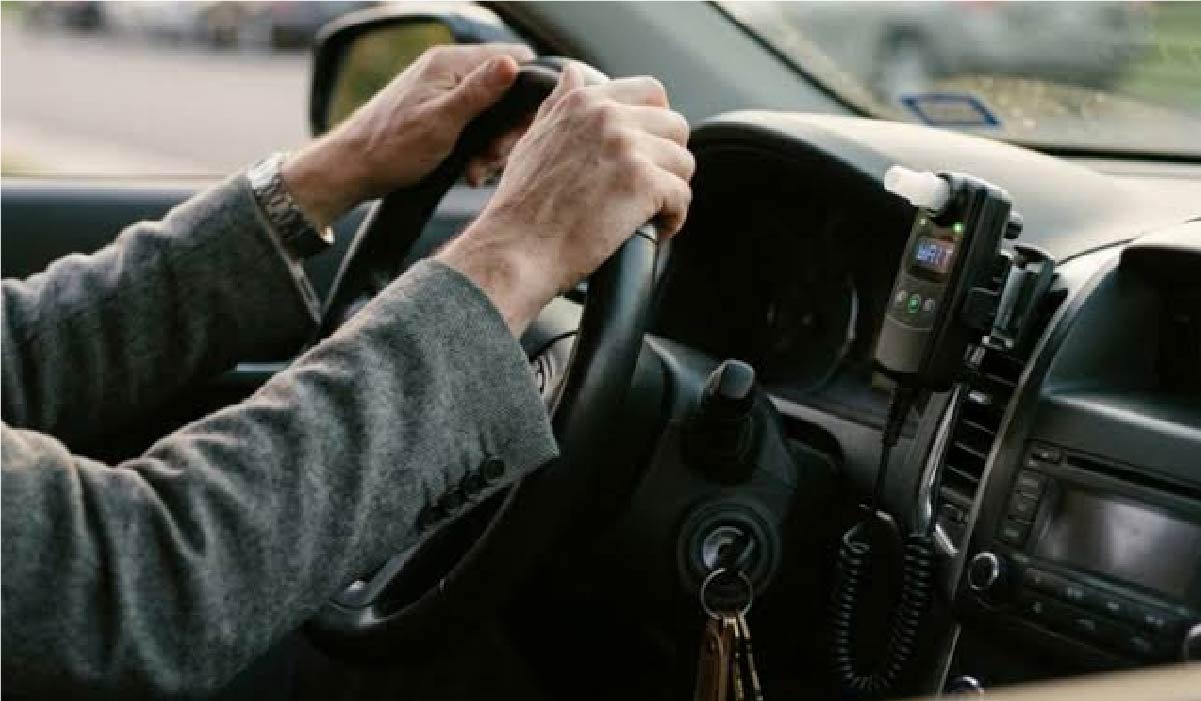
Many people falsely assume that an Interlock only restricts the driver of the vehicle, but it actually controls the vehicle of everyone who uses it. And the person using it has to get it serviced on a schedule, which can be harder to coordinate than work or family commitments. Note that service requirements can vary by state and by the authority who issued the order, so it’s crucial to get an exact reading of requirements against the specific terms of a court order and a particular monitoring service and licensing authority.
What changes the moment the device is wired in
Note that for cold starts, some monitors require a brief period to warm up prior to attempting a start test (which will be demanded by the monitor as the first test).
The rolling retest and what it actually requires
Once the vehicle is started, the ignition interlock requires further breath tests at regular intervals during the trip. The following is an example of what a typical trip may look like.
- Power on, wait for the unit to reach operating temperature.
- Deliver the start sample using the exact blow and hum pattern the manufacturer specifies.
- Drive, then respond to the first retest prompt within the allotted window, usually a few minutes.
- Pull over if conditions make a safe sample impossible, since a missed prompt is logged as a refusal in most programs.
- Repeat at irregular intervals for the duration of the trip.
A failed retest does not shut down the engine. Rather, it sounds an alarm, records the event, and in many cases immediately requires a service visit within a specified time frame.
Selecting an installer and confirming compatibility
Note that to legally satisfy the court or state’s licensing requirement to install an ignition interlock in a driver’s car, a driver must have the work done by a unit-approved and a state agency-listed service center. Most auto electricians are not approved to install or maintain devices required to be monitored by an interlock, and even if they are in one state, interlocks from that state generally are not transferable to other states.
Settle these before the vehicle goes on the lift
- Written consent from the registered owner if the driver does not hold title.
- Compatibility with push-button start, hybrid drivetrains, and automatic stop-start systems.
- Whether the manufacturer warranty is affected and how the shop documents the wiring work.
- Expected shop time, which commonly runs two to four hours including training.
- Whether the unit has a camera and how image capture is handled for passengers.
The service calendar and where it breaks down
The nature of ongoing compliance is often misunderstood by the driving public in relation to how often they can miss a requirement. A single missed time span is sufficient to render an otherwise straightforward matter a violation. Drivers in northern Virginia tend to have the smoothest experience when they book car breathalyzer installation in Alexandria at a state-listed shop that also handles the monthly recalibrations, since one location keeps the whole service history together.
| Stage | Typical timing | What happens | Common failure point |
| Installation | One appointment | Wiring, calibration, driver training | No owner consent on file |
| Routine service | Every 30 to 60 days | Data download, recalibration, lockout reset | Appointment missed, vehicle locks out |
| Violation recall | Within days of the event | Early download and review | Driver unaware of the shortened window |
| Removal | End of program term | Final report, decommissioning, wiring restored | Removal before written authorization |
Daily adjustments drivers have to make
Rather, people need to anticipate and leave some extra time for their daily commutes. This also is true for owners who park their cars in a garage that is located in a parking structure with poor or no reception for cell phones. In such a case, they will need to know whether the ignition interlock device stores all test information locally on the device or whether all information automatically is transmitted in real time.
Readings that surprise people
Mouthwashes, breath fresheners, cough and cold medicines, fermented foods, and some types of gas can all create a positive test reading when no consumption of alcohol has taken place. To get around such situations, drivers must rinse their mouths with water, wait fifteen minutes and retest. Similarly, hot drinks and tobacco smoke in the breath stream can also cause false readings.
This presents new challenges when others use the vehicle. Simple arrangements can be made with valet parking, car washes and repair shops to have the Ignition Interlock service lockout bypassed for a single service.
Reporting, records, and defending the file
Every event, including time, is logged to reporting that is sent to the monitoring authority on a regular basis. Typically the client would not see these reports before they are sent.
Documentation habits worth building
- Keep every service receipt and calibration certificate in one place.
- Report suspected device malfunctions to the provider in writing, same day.
- Note the circumstances of any failed or missed test immediately, while details are fresh.
Keeping a clean record simply means having a paper trail to refer back to when necessary, and this can be as simple as the note you wrote when the reading occurred and the service history on your interlock.
