


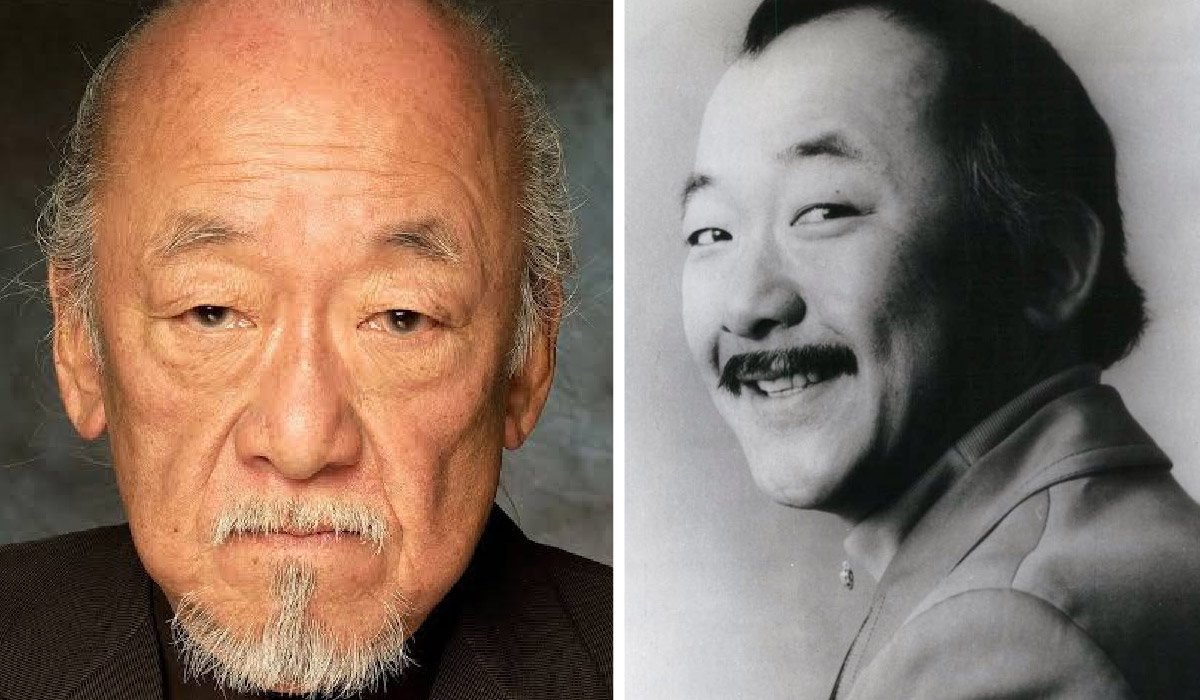
Tamaru Morita is best known as the father of Noriyuki “Pat” Morita, the actor who played Mr. Miyagi in The Karate Kid. Unlike his famous son, Tamaru lived outside the entertainment world and devoted much of his life to work, business, and family responsibilities.
His story includes immigration, racial discrimination, wartime incarceration, financial hardship, and the difficult process of rebuilding life after World War II.
Although few personal records about Tamaru are widely available, verified details about the Morita family reveal how his efforts helped shape Pat’s childhood, values, humor, and path toward success.
Early Life in Japan
Tamaru Morita was born in 1897 in Kumamoto Prefecture, located on the Japanese island of Kyushu. Public information about his parents, schooling, and childhood is limited because he lived before detailed personal records were commonly shared online.
He grew up during a period when many Japanese people faced limited economic opportunities and began looking overseas for work.
Like other young immigrants of his generation, Tamaru eventually decided to leave Japan and seek a more secure future in the United States. His journey placed him among the early Japanese immigrants who helped build farming and small-business communities across California.
Immigration to California
Tamaru reportedly immigrated to California in 1915, when he was approximately eighteen years old. Starting a new life in America would have required courage because Japanese immigrants faced language barriers, harsh working conditions, and laws that restricted land ownership and citizenship.
Many first-generation Japanese immigrants found jobs in farming, fishing, railway work, domestic service, or small family businesses.
Tamaru’s early employment is not fully documented, but his family later worked in agriculture before entering the restaurant business. His experience reflects the larger story of Japanese immigrants who worked long hours while trying to create better opportunities for their children.
Marriage to Momoe Morita
Tamaru married Momoe Morita, whose name is sometimes written as Momoye in biographical accounts. She was born in 1903 and had arrived in California from Japan in 1913, two years before Tamaru’s reported arrival.
Together, the couple established a home and raised their children while adjusting to life in a country that often treated Japanese immigrants unfairly.
Their marriage was built around work, family duty, and cultural traditions. Although little has been published about their personal relationship, their shared experiences suggest that both parents carried major responsibilities while supporting their family through illness, displacement, and financial uncertainty.
Tamaru Morita’s Children
Tamaru and Momoe had two known sons. Their older son, Hideo Morita, also known as Harry, was about twelve years older than Noriyuki. Their younger son, Noriyuki Morita, was born on June 28, 1932, in Isleton, California.
Noriyuki later adopted the professional name Pat Morita and became an internationally recognized actor and comedian.
The large age difference between the brothers meant that they experienced family life in different ways. Hideo spent more of his childhood with the family, while Pat spent much of his early life inside hospitals because of a serious spinal illness.
Pat Morita’s Serious Childhood Illness
When Pat Morita was about two years old, he developed spinal tuberculosis, also known as Pott disease. The condition affected his spine and left him unable to walk. He spent most of the following nine years in hospitals and medical facilities in Northern California.
For long periods, Pat was placed inside a full-body cast and was told that he might never walk again.
This must have been an extremely difficult period for Tamaru and Momoe. They had to continue earning a living while their young son remained separated from them and received long-term medical treatment.
The Morita Family During World War II
After the United States entered World War II, Japanese immigrants and Japanese-American citizens on the West Coast were forcibly removed from their homes. The Morita family was among the thousands of families affected by this government policy.
Tamaru, Momoe, and their older son were sent to an incarceration camp while Pat was still receiving hospital treatment.
When Pat was released at approximately eleven years old, he was taken directly from the hospital to join his family at the Gila River camp in Arizona. The family was later transferred to the Tule Lake center in Northern California.
Reuniting With Pat Inside the Camp
Pat’s reunion with his family did not take place in the comfort of their home. After spending years in hospitals and finally learning to walk again, he entered a guarded camp surrounded by fences and watchtowers.
The sudden change was emotionally overwhelming, and Pat later recalled feeling confused and deeply unhappy after arriving.
For Tamaru, the reunion likely brought mixed feelings. He finally had his younger son with him, but the family remained imprisoned without being charged with a crime. This painful experience became an important part of Pat Morita’s understanding of identity, loss, and survival.
Starting Over After the War
When World War II ended, the Morita family returned to California with limited money and few possessions. Like many Japanese-American families, they discovered that years of incarceration had damaged their financial security and interrupted their working lives.
The family reportedly returned to agricultural labor and settled near Fairfield before eventually moving to Sacramento.
Rebuilding required patience and steady work. Tamaru had to support his wife and children while facing the discrimination that continued after the war. Despite these difficulties, he eventually saved enough money to purchase a small restaurant and create a new source of income.
Tamaru Morita’s Sacramento Restaurant
In 1948, Tamaru reportedly purchased a small restaurant in Sacramento called Ariake Chop Suey. The business served Chinese-American food even though it was operated by a Japanese family.
Pat later humorously described it as a Japanese family running a Chinese restaurant in a diverse neighborhood.
The restaurant welcomed Black, Filipino, Japanese, and other local customers who often faced exclusion elsewhere. It was more than a source of income for the Moritas. It also became a community space where people could eat, gather, and enjoy Pat’s growing talent for comedy and entertaining guests.
Pat Morita’s Work in the Family Business
After graduating from Armijo High School in 1949, Pat became deeply involved in the family restaurant. He served customers, helped manage group dinners, and entertained visitors by telling jokes and acting as a master of ceremonies.
These informal performances allowed him to develop confidence in front of an audience.
Tamaru’s restaurant, therefore, played an unexpected role in Pat’s future career. While the business was created to support the family, it also gave Pat a place to test his humor. The positive reactions he received from customers helped reveal that he had a natural gift for entertainment.
Tamaru Morita’s Influence on His Son
Few surviving interviews directly explain Tamaru’s personality or parenting style. However, his life shows determination, responsibility, and a strong commitment to rebuilding after hardship.
He crossed the Pacific as a young immigrant, raised a family, survived forced wartime incarceration, and later opened a restaurant despite serious financial barriers.
Pat’s own career was also defined by persistence. He survived illness, discrimination, professional rejection, and limited roles for Asian-American actors. It is reasonable to see a connection between Tamaru’s example and Pat’s ability to continue working through difficult circumstances without abandoning his goals.
Tamaru Morita’s Death
Tamaru Morita’s life ended suddenly in 1956. According to published biographical accounts, he was killed in a hit-and-run accident while walking home after attending an all-night movie.
The loss placed new emotional and financial pressure on Momoe and Pat, who were still connected to the restaurant.
After Tamaru’s death, Pat and his mother continued operating Ariake Chop Suey for another three or four years. Keeping the restaurant open allowed them to protect the business Tamaru had created, but it also required Pat to delay other plans while helping support his family.
Pat Morita’s Journey Into Entertainment
Pat eventually left the restaurant business and entered the corporate world before choosing stand-up comedy. His decision was risky because Asian-American comedians had very few opportunities in mainstream American entertainment during that period.
He performed in nightclubs and gradually built a reputation through humor, impressions, and storytelling.
Pat later appeared in television programs such as MASH*, Sanford and Son, and Happy Days. His breakthrough came when he played Mr. Miyagi in the 1984 film The Karate Kid, earning an Academy Award nomination for Best Supporting Actor.
Connection to the Mr. Miyagi Legacy
No verified statement confirms that Mr. Miyagi was based directly on Tamaru Morita. The character was shaped by the film’s writing, Pat’s performance, and several cultural influences.
However, Pat brought parts of his Japanese-American background and personal history into the role.
Mr. Miyagi represents patience, discipline, dignity, grief, and survival. These themes strongly connect with the experiences of the Morita family, including immigration, wartime incarceration, loss, and rebuilding. Pat also worked carefully to bring authentic cultural details to the character, making Miyagi more human than a simple movie stereotype.
Tamaru Morita’s Legacy
Tamaru Morita never became a public figure, yet his life forms an important part of Pat Morita’s story. His restaurant gave the family financial stability and provided Pat with one of his earliest places to perform before an audience.
His determination also offered an example of how to rebuild after a major hardship.
Today, Tamaru can be remembered as an immigrant father, wartime survivor, worker, and small-business owner. His legacy lives through Pat Morita’s achievements and through the continuing popularity of Mr. Miyagi, one of the most respected mentor figures in modern film history.
Final Thoughts
Tamaru Morita’s story is not filled with Hollywood awards or public appearances. Instead, it is a story about immigration, family responsibility, forced displacement, hard work, and the effort to begin again after losing almost everything.
He worked to provide his children with stability in a country where Japanese families often faced unfair treatment.
Although many personal details about Tamaru remain unavailable, the known facts show that he played a meaningful role in the environment that shaped Pat Morita. Behind the beloved Mr. Miyagi was a family history built on survival, sacrifice, humor, and hope.
(FAQs)
Who was Tamaru Morita?
Tamaru Morita was the father of actor Noriyuki “Pat” Morita, who became famous for playing Mr. Miyagi in The Karate Kid films. He was a Japanese immigrant, a hardworking restaurant owner, and a devoted family man who helped shape the values that influenced his son’s life and career.
What did Tamaru Morita do for a living?
Tamaru Morita worked in farming after arriving in California before becoming the owner of the Ariake Chop Suey restaurant in Sacramento. His restaurant supported the Morita family for many years and became the place where Pat Morita first entertained customers with his humor.
Was Tamaru Morita affected by World War II?
Yes. During World War II, Tamaru Morita and his family were among the thousands of Japanese Americans who were forcibly removed from their homes and incarcerated in government camps. After the war, they returned to California and worked hard to rebuild their lives and business.
How did Tamaru Morita influence Pat Morita?
Although Tamaru stayed out of the public eye, his determination, work ethic, and commitment to family had a lasting impact on Pat Morita. Growing up in a hardworking household and helping in the family restaurant gave Pat valuable life lessons that later shaped both his career and his personal values.
When did Tamaru Morita die?
According to published biographical sources, Tamaru Morita died in 1956 after reportedly being struck in a hit-and-run accident. His unexpected death was a major loss for the Morita family, and Pat helped his mother continue running the family restaurant afterward.
What is Tamaru Morita remembered for today?
Tamaru Morita is remembered as the father of Pat Morita and as a resilient Japanese immigrant who overcame many hardships. His life reflects the experiences of many Japanese-American families who endured discrimination, wartime incarceration, and financial struggles while building better futures for the next generation.
