


From late fall through New Year’s Eve, invitations start to carry a line many men dread: “Black tie.” Then comes the occasional “white tie” or “black tie optional,” and the questions pile up. Does a dark suit count? Is a long tie acceptable? What about shoes?
Formal dress codes can seem fussy, but they follow a fairly clear logic. Once you understand the basic pieces and the rules behind them, getting dressed for a gala, wedding or holiday party becomes much simpler, and far more enjoyable.
What The Dress Codes Actually Mean
Formal invitations usually fall into a few categories, each with different expectations.
White tie is the most formal dress code. It calls for a black tailcoat, matching trousers, a white piqué waistcoat, a stiff-fronted white shirt with a wing collar, a white bow tie and formal shoes. It’s rare today, mostly reserved for state dinners, certain balls and very formal ceremonies.
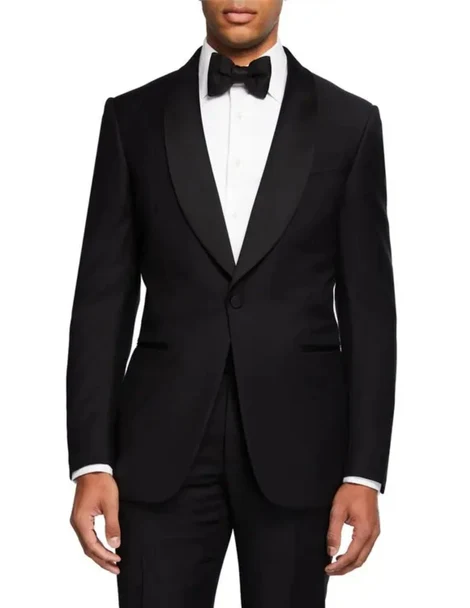
Black tie is the standard for evening galas, formal weddings and charity events. It means a tuxedo, often called a dinner jacket, with a white formal shirt, a black bow tie and polished formal shoes.
Black tie optional gives guests a choice. A tuxedo is welcome, but a well-fitted dark suit with a conservative tie is also acceptable.
Cocktail attire is a step down, usually a suit, often in a darker color, with or without a tie depending on the setting.
When in doubt, it’s better to be slightly overdressed than underdressed. A host rarely minds a guest who took the invitation seriously.
The Tuxedo Itself
The tuxedo jacket is the centerpiece of black tie, and two small details shape its personality more than anything else: the lapel and the facing.
Peak lapels point upward toward the shoulders. They look sharp and structured, and they tend to make the shoulders appear broader.
Shawl collars have a smooth, rounded edge with no notch. They feel softer and slightly more classic, with a touch of old-Hollywood elegance.
Lapels are usually faced in satin or grosgrain silk, which gives the jacket its subtle evening sheen. The trousers typically carry a matching stripe of silk down the outer seam and are worn with suspenders instead of a belt, so the waist stays clean.
Black remains the safest choice. Midnight navy is a traditional alternative that can look especially rich under evening light. For the man who wants to stand out, dinner jackets in jacquard or brocade fabrics, in shades like red, ivory, gold or silver, have become a popular choice for holiday parties and less rigid events, usually paired with black trousers.
The Shirt, Tie And Waist
The details under the jacket matter just as much as the jacket.
A formal shirt is usually white, with a turndown collar for black tie. Some have a textured bib front in piqué or a fine dobby weave. Others have a fly front, which hides the buttons behind a placket for a cleaner look, while stud-front shirts use decorative studs in place of buttons. French cuffs, fastened with cufflinks, are standard.
The bow tie should be black and ideally self-tie, made in satin or grosgrain to match the lapels. A pre-tied bow tie works in a pinch, but a hand-tied one looks more natural and is easier to learn than many people think.
To cover the waistband, black tie traditionally uses either a cummerbund or a low-cut evening waistcoat. Both serve the same purpose, so the choice comes down to personal style. A cummerbund feels classic and light. A waistcoat offers a slightly more polished, layered look and keeps the shirt neat when the jacket comes off.
Shoes Finish The Look
Formal shoes are often the most overlooked part of the outfit. Everyday office shoes can look out of place with a tuxedo, especially under bright event lighting.
Patent leather is the traditional choice, with a high-gloss finish that catches the light.
Highly polished calfskin offers a slightly more understated shine.
Velvet loafers bring a relaxed, luxurious touch, often seen at holiday parties.
Evening pumps, low-cut slippers often trimmed with a grosgrain bow, are a very traditional option for formal evenings.
Laced oxfords tend to feel more formal, while loafers feel a little more relaxed. Either works for black tie, as long as the shoes are clean and polished.
Accessories With A Purpose
Formal wear leaves less room for flashy accessories, which makes the few that do appear more noticeable. Shirt studs and matching cufflinks add a quiet point of interest. A white silk or linen pocket square in a simple fold gives the jacket a finished look. Suspenders keep trousers hanging properly through a long evening of standing, sitting and dancing.
Keep the overall look restrained. Black tie is about harmony and proportion, not loud statements.
Fit Is Everything
A tuxedo that fits poorly will never look formal, no matter how fine the fabric. Shoulders should sit cleanly without pulling or drooping. Sleeves should show a little shirt cuff. Trousers should break lightly over the shoes or not at all.
For many men, working with a tailor or a formal style advisor makes the process much easier. Shoppers comparing men’s designer formal wear often find that the real value lies in a proper fitting and expert guidance on details like lapel style, shoe choice and waistcoat versus cummerbund. Custom and made-to-measure options also help men with less standard builds achieve a clean silhouette.
Rent Or Own
Renting a tuxedo makes sense for a single event. For men who attend several formal occasions each year, owning one usually pays off quickly. An owned tuxedo is tailored to the wearer, fits better than a rental and can be ready on short notice when an invitation arrives.
A simple, classic black tuxedo can last for many years, while a colored dinner jacket can be added later for variety.
A Quick Formal Checklist
Read the invitation’s dress code carefully.
Choose a black or midnight navy tuxedo for black tie.
Pick peak or shawl lapels based on personal style.
Wear a white formal shirt with French cuffs.
Use a black bow tie, ideally self-tied.
Add a cummerbund or evening waistcoat.
Wear suspenders, not a belt.
Finish with patent, polished or velvet formal shoes.
Schedule fittings well before the event.
Dressing For The Occasion
Formal dress codes exist to mark an occasion as special. Dressing for them is a way of honoring the host and the moment. With the right tuxedo, a good fit and a few well-chosen details, black tie season becomes less about worry and more about enjoying the evening.
