


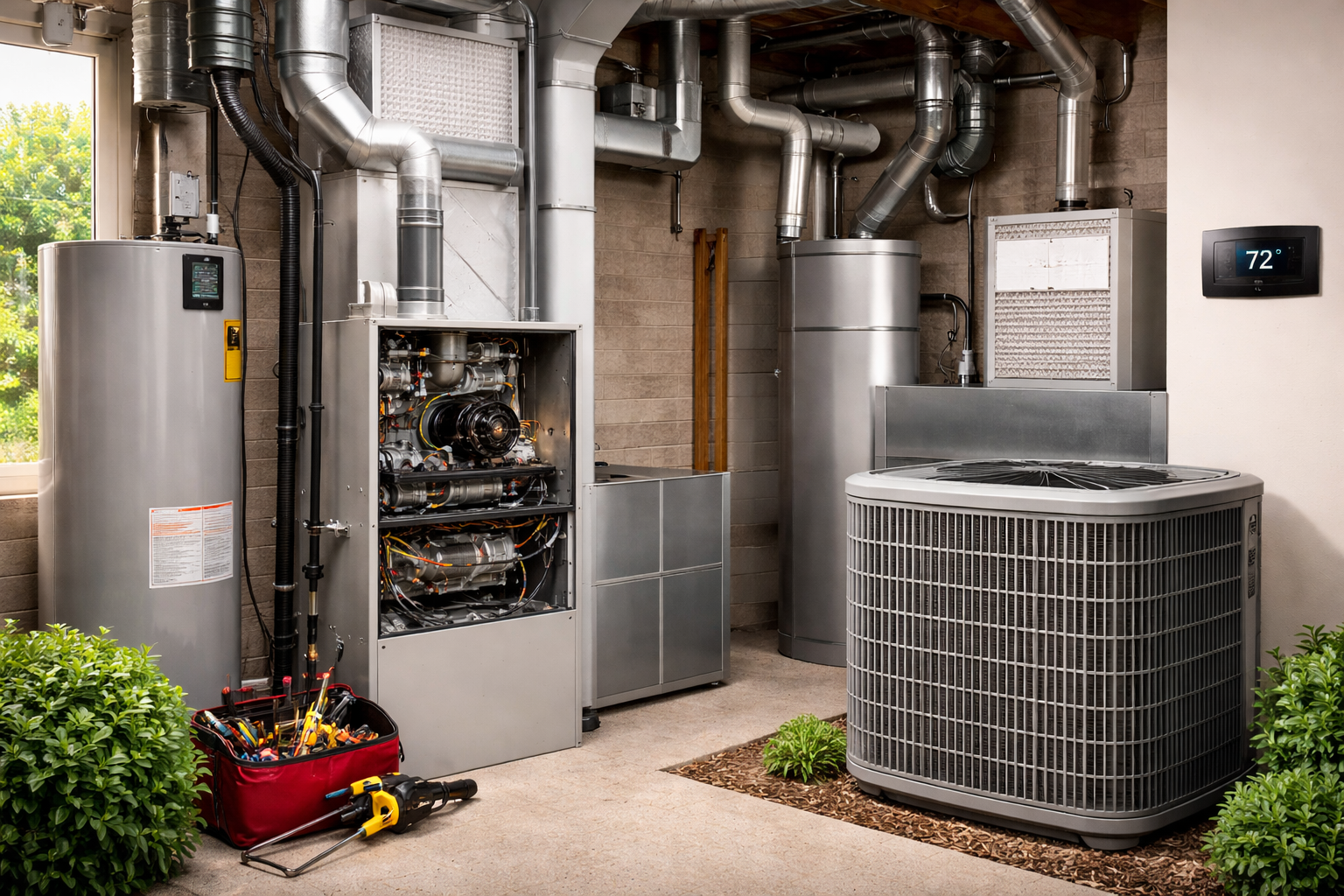
When heat waves arrive, an air conditioner that looked fine on paper can stumble in real homes. Real-world comfort depends on details that never show up on a quote: room-by-room load calculations, duct layout and sizing, total external static pressure, refrigerant charge, filtration strategy, and how the thermostat and blower are programmed to run together. In regions with hot, dry summers and occasional smoke, those details separate a system that coasts through peak afternoons from one that short cycles, ices up, or pushes dusty air into bedrooms. Whether you are planning a replacement or troubleshooting a finicky unit, focusing on these fundamentals pays off in durability and day-to-day comfort.
-
Start with the load: room-by-room calculations, not rules of thumb
Right-sized equipment starts with a proper heat-load calculation (often referred to as Manual J). The calculation considers window area and orientation, shading, insulation levels, air leakage, ceiling height, and internal gains. Oversized cooling may knock the edge off temperature quickly but can leave rooms clammy and short-cycle during mild evenings, while undersized systems run nonstop and fail to maintain setpoint during the hottest hours. The solution is not just “bigger” equipment but the right capacity for the envelope and the distribution system it will serve. For heat pumps, a companion selection step (Manual S) ensures the indoor coil and outdoor unit deliver the intended capacity across expected conditions.
Homeowners comparing options for Expert HVAC repair & installation can ask bidders to provide their load assumptions and show how each room’s supply airflow and register size were determined. That simple request reveals whether the proposal is engineered for your rooms or based on a square-foot rule of thumb that ignores hot lofts, glass-heavy living rooms, or bonus rooms over garages.
-
Airflow and static pressure: the hidden limits inside your ducts
Even the best equipment cannot perform if the duct system cannot move the required cubic feet per minute (CFM) of air at an acceptable total external static pressure (TESP). Undersized returns, long flex runs with tight bends, and restrictive grilles add resistance, choking airflow. The result can be warm supply air in one wing of the house, evaporator coil freezing in the other, and loud registers throughout. A Manual D duct design and a static-pressure test with a manometer will reveal whether the blower can actually deliver its target CFM per ton. Often, improving a starved return path or replacing a crushed run does more for comfort than upsizing the outdoor unit.
Consider a common scenario: a bedroom that never cools because it has a single small supply run and no dedicated return. The system’s thermostat is satisfied by the living area, so the bedroom never gets the airflow it needs. Adding a properly sized return, opening balancing dampers, and relieving pressure with undercut doors can fix the room without touching the equipment. Conversely, slapping in a larger condenser on the same restrictive ductwork raises static pressure and can shorten equipment life.
-
Refrigerant circuit and coil matching: getting the capacity you paid for
Capacity and efficiency ratings depend on matched indoor and outdoor components with the correct metering device. An air handler with the right coil and a thermostatic expansion valve (TXV) paired to its condenser, documented by an AHRI match, helps ensure the system can meet its published SEER2 performance. On installation, the technician should evacuate the line set to deep vacuum, confirm the system is clean and dry, and charge by measured subcooling or superheat according to manufacturer specifications. A few ounces off can show up as poor humidity control, low capacity, or icing.
Placement matters too. A condenser crammed into a tight alcove or set beneath a deck can recirculate its own hot discharge air, raising head pressure and lowering capacity exactly when you need it most. If a replacement reuses an old line set, kinks, contamination, or incorrect diameter can also compromise performance. These are installation details that do not appear on the box but make or break performance on the patio and at the supply register.
-
Filtration and indoor air quality during smoke and dust
Wildfire smoke and dusty conditions stress HVAC filters. Upgrading to a higher MERV rating can help capture fine particulates, but filtration is a trade-off with airflow. A dense 1-inch MERV 13 filter may spike static pressure and starve the blower, especially on older systems. Many homes benefit from a deeper media cabinet with a 4- to 5-inch filter that achieves high capture efficiency with lower pressure drop. Sealing bypass around the filter rack and improving return-side ducting protect indoor air quality without sacrificing CFM to the coil.
During a smoky week, filters can clog in days rather than months. Symptoms include reduced supply airflow, longer run times, and, in extreme cases, a frozen evaporator coil. A practical approach is to keep spare filters on hand during fire season, visually inspect them more frequently, and consider a temporary setback in blower speed only if the equipment manufacturer allows it. Portable HEPA units in sleeping areas can offload the central system and reduce the need for aggressive filter upgrades that the duct system cannot accommodate.
Controls and commissioning: from thermostat staging to verification
Controls tie the system together. A two-stage or variable-speed unit needs a thermostat and blower profile that actually use those stages. Factory dip-switch settings may not match your duct system’s static profile, leading to noise, poor dehumidification, or uneven temperatures. Commissioning should document TESP, supply and return temperatures, delivered CFM, and refrigerant charge. Condensate drains should be trapped as required, sloped correctly, and protected with float switches to prevent ceiling damage when lines clog.
After installation or a major repair, ask for a copy of the commissioning readings and a quick orientation on thermostat modes, fan settings, and filter change access. Before summer, a tune-up that includes washing the outdoor coil with low-pressure water, checking TESP, verifying delta-T across the coil, clearing the condensate drain, and inspecting electrical connections can catch early failure points. Warning signs worth scheduling a check include short cycling, warm supply air under load, visible ice on the suction line, or musty odors from a wet drain pan.
Comfort in extreme heat is not luck. It is the result of careful sizing, ducts that breathe, a clean and correctly charged refrigerant circuit, smart filtration that respects airflow, and controls that are set up for how you live. If you ask contractors to show their math, measure static pressure, document coil matches, and share commissioning data, you gain confidence that the system will hold setpoint without drama. Those same principles guide solid repair work too: fix root causes in airflow and charge first, and components last. That is how an HVAC system stays steady when the temperature spikes.
