


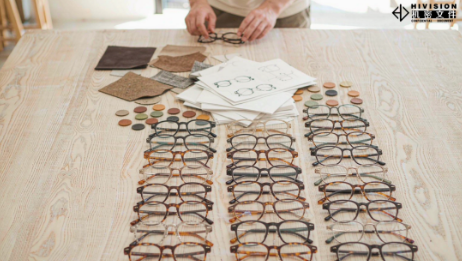
A successful eyewear collection is rarely created by selecting attractive frames from a catalogue and adding a logo. Optical brands and retail chains need products that fit their customers, match their price positioning, reflect their identity and remain commercially viable when manufactured at scale.
This is where eyeglass frame manufacturers become more than production suppliers. The right manufacturing partner can help transform a brand concept into a complete collection—from the first design direction to samples, production specifications and finished products ready for distribution.
Understanding this development process helps buyers avoid a common mistake: choosing frames based on appearance before evaluating whether the collection can actually be manufactured, differentiated and sold profitably.
A collection begins with the buyer’s market, not the factory catalogue
Before developing new frames, manufacturers and buyers need to establish what the collection is supposed to achieve.
An independent eyewear brand may want distinctive shapes, unusual acetate patterns or recognizable design details. An optical retail chain may prioritize reliable replenishment, broad customer appeal, accessible pricing and consistent sizing across multiple stores.
These differences influence almost every development decision.
For example, a European private-label collection might combine contemporary acetate optical frames, lightweight metal styles and selected titanium models. A children’s collection would require a different approach to proportions, flexibility, durability and fit.
Experienced optical eyeglass frame manufacturers should therefore begin with questions about target customers, retail price, material preferences, expected quantities and the intended sales channel—not simply ask which catalogue products the buyer likes.
From existing designs to exclusive eyewear collections
Most custom eyewear projects follow one of three development routes.
ODM development: The buyer starts with existing manufacturer designs and modifies selected elements, such as colour, material, logo, temple details or packaging. This can reduce development complexity and make collection planning more efficient.
OEM development: The buyer provides its own design specifications, drawings or reference samples, and the manufacturer produces frames according to the agreed requirements.
Fully custom development: The project starts with a concept, sketch or design direction and progresses through technical development, sampling and approval.
For many buyers, ODM provides a practical starting point. However, brands seeking stronger differentiation may prefer custom shapes, exclusive colour combinations or distinctive structural details.
The important question is not whether a supplier claims to offer OEM or ODM. It is whether its design and engineering team can translate the brief into a manufacturable product without compromising the intended appearance.
Material selection shapes both collection identity and manufacturing cost
Material selection is one of the earliest decisions affecting the collection.
Acetate eyeglass frame manufacturers are particularly relevant for brands seeking rich colour patterns, substantial frame profiles and distinctive surface finishes. Metal frames can provide thinner constructions, different styling possibilities and lightweight design options. Titanium can be considered where weight, material characteristics and product positioning justify its use.
Some buyers prefer to work with eyeglass frame manufacturers in china that operate multiple material production lines, allowing them to develop acetate, metal and injection-moulded styles within one sourcing relationship.
However, material flexibility should not be confused with expertise. Buyers should evaluate actual samples, construction quality and production capabilities for each category.
What separates the best eyeglass frame manufacturers from ordinary suppliers?
The best eyeglass frame manufacturers are not necessarily those with the largest catalogue. Their value becomes clearer when a project moves from concept to production.
Look for manufacturers that can demonstrate:
- Design and technical development capability
- Clear communication during sampling
- Consistent frame dimensions and construction
- Material and colour control
- Reliable hinge fitting and finishing
- Documented quality inspection procedures
- Transparent MOQ, pricing and production schedules
When comparing american eyeglass frame manufacturers with overseas suppliers, buyers should evaluate the complete sourcing model rather than assume manufacturing location alone determines quality. Domestic development, overseas production and integrated sourcing arrangements can each work, depending on the brand’s requirements.
Likewise, independent eyeglass frame manufacturers may offer flexibility and closer collaboration, while larger manufacturers may provide broader production resources. Neither structure automatically guarantees better results.
Sampling is where a collection becomes commercially real
A design that looks impressive on a computer screen may not perform well as a physical frame.
Sampling allows buyers to assess proportions, wearing comfort, frame weight, hinge movement, lens fitting, colour accuracy and finishing. It also exposes potential manufacturing problems before bulk production begins.
A disciplined approval process should include:
- Reviewing initial design concepts or existing styles.
- Confirming material, dimensions, colours and branding.
- Evaluating physical samples and requesting revisions.
- Approving final specifications and a reference sample.
- Confirming production quality requirements before bulk manufacturing.
This is especially important for retail chains ordering multiple styles or colours. Without controlled specifications, small differences between samples and bulk production can become expensive problems.
Building a collection with Hivision Eyewear
For buyers looking for a Chinese development partner, Hivision describes itself as an integrated eyewear manufacturer offering design, development and production across acetate, metal, titanium and injection materials.
Its product portfolio includes optical frames, sunglasses, reading glasses and other eyewear categories. This gives brands a starting point for developing collections across different materials and product segments.
Hivision also states that its ODM team supports customization of styles and colours, while its published custom-order MOQ guidelines begin at 150–200 pieces per colour for metal and acetate frames. Actual requirements depend on the selected model and project.
Explore Hivision’s optical frame collections or review its manufacturing and development capabilities.
The real objective: a collection that works beyond the first order
The value of top eyeglass frame manufacturers is not limited to producing attractive samples. A capable partner should help buyers establish a repeatable development and manufacturing process that supports future collections, replenishment and product improvements.
For optical brands and retail chains, successful collection development requires three things to work together: a clear commercial strategy, a manufacturable design and controlled production quality.
When these elements align, a manufacturer becomes more than a supplier of frames. It becomes a development partner helping the brand turn product ideas into a consistent, differentiated eyewear business.
