


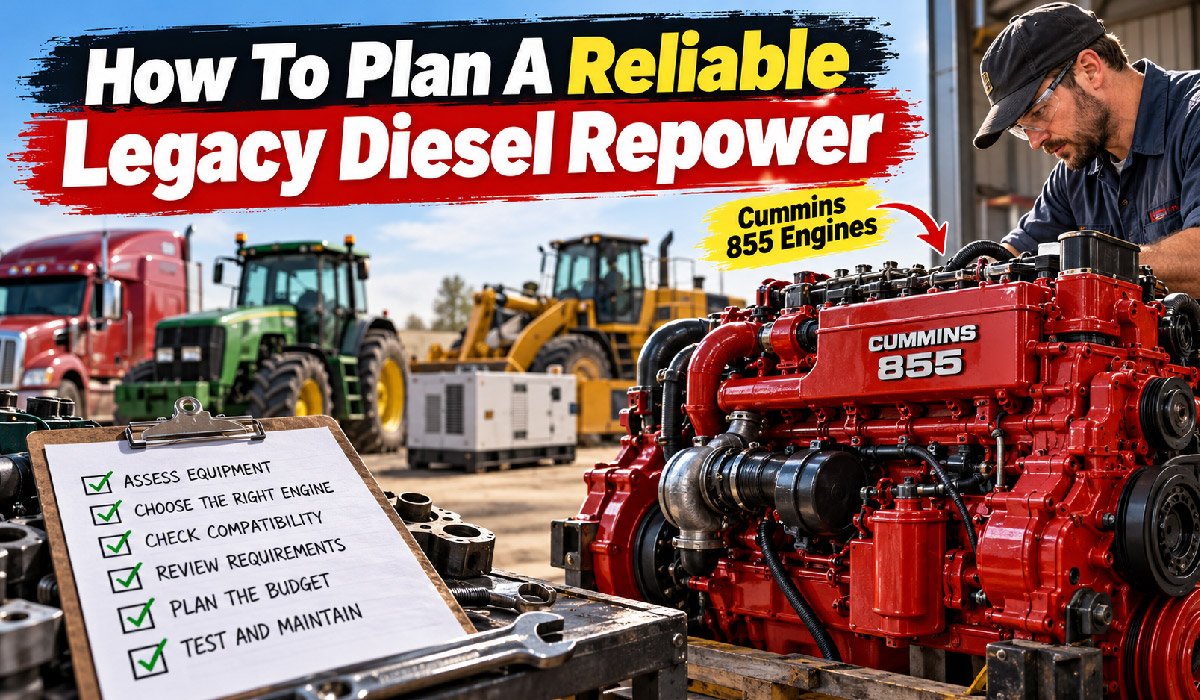
Older trucks, agricultural machines, generators, construction equipment, and industrial units can remain productive long after their original engines have worn out or become difficult to support. A carefully planned repower can extend the useful life of a machine with a sound chassis, workable controls, and serviceable connected systems. For operations evaluating proven large-displacement platforms, Cummins 855 engines may be part of the conversation, but the engine model should always follow a full equipment assessment.
A replacement engine is not a cure for every mechanical problem. Installing an engine based solely on purchase price, advertised power, or immediate availability can lead to costly issues with mounting, cooling, wiring, exhaust routing, or drivetrain durability. The best repower is the one that matches the machine’s real job and can be maintained reliably after it enters service.
Define the Equipment’s Real-World Job
Begin by documenting how the machine actually works. A highway truck, irrigation pump, loader, standby generator, and field tractor may all use diesel power, but their load patterns and installation needs can be very different.
- Record average operating hours per day and expected annual use.
- Identify steady-load, variable-load, and peak-load operating periods.
- Note idle time, travel speed, working speed, and normal engine speed.
- List trailers, PTO-driven accessories, hydraulic pumps, attachments, or driven equipment.
- Consider altitude, ambient heat, cold starts, dust, moisture, and seasonal workloads.
This information helps determine whether the project needs more low-speed torque, a different governed-speed range, greater cooling capacity, or a power level close to the original specification. It also helps prevent overbuilding a machine for a duty cycle it rarely sees.
Inspect the Machine Before Choosing an Engine
A repower makes sense only when the rest of the equipment can reasonably provide additional years of service. Inspect the frame, engine mounts, crossmembers, transmission or torque converter, axles, final drives, clutch components, brakes, and driveline joints. Look for corrosion, cracks, prior overheating, oil contamination, vibration damage, and signs that a connected component is nearing the end of its usable life.
Pay close attention to the cooling package, electrical system, hydraulic pumps, PTO arrangement, accessory drives, intake path, and exhaust routing. Measure the available engine bay space before committing to a long block or a complete package. A replacement that physically fits may still require changes to the oil pan, fan location, radiator, charge-air plumbing, or service access.
Choose Between Repair, Rebuild, Repower, and Replacement
- Repair: Best when the engine has a contained failure, and the rest of the engine remains in good condition. Ask whether the repair will restore dependable operation rather than merely temporarily return the machine to service.
- Rebuild: Suitable when internal wear is the primary issue and the existing engine platform, parts availability, and machine integration remain practical.
- Repower: Worth considering when the machine is structurally sound but its current engine is obsolete, severely worn, unsupported, or poorly matched to present work.
- Replace the equipment: Often, the better choice is to replace the equipment when major structural, driveline, hydraulic, control, and engine problems all need attention at once.
Compare these options by total installed cost, planned downtime, maintenance risk, remaining machine life, and expected resale or operational value. The lowest engine price can become the highest project cost if it requires extensive fabrication or causes long delays waiting for adapters and controls.
Match Power, Torque, and Duty Cycle
Peak horsepower is only one part of the decision. Review the engine’s torque characteristics, governed speed, expected operating range, fuel demand, and ability to hold speed under the machine’s normal load. A substantially more powerful engine can overload a transmission, clutch, torque converter, axle, cooling system, or driveline designed for lower output.
Extra output may also increase heat, vibration, traction demands, and wear on older components. In many applications, an engine with a conservative rating and a suitable torque curve will perform better than a higher-rated option that forces the machine outside its original design limits.
Confirm Physical and Mechanical Compatibility
Questions to Resolve Before Purchase
- Do the engine mounts align with the frame, or will engineered brackets be required?
- Will the flywheel, clutch, bellhousing, torque converter, or adapter work together correctly?
- Can the radiator, fan, shroud, and airflow path remove the expected heat load?
- Will the intake, exhaust, fuel supply, and return systems support the replacement?
- Do the oil pan, starter, alternator, compressor, and accessory drives clear the chassis?
- Can existing gauges, sensors, wiring, throttle controls, and shutdown systems be integrated safely?
- Are PTO, hydraulic pump, and auxiliary-drive requirements covered?
Review Emissions and Regulatory Requirements
Requirements can differ depending on whether equipment is used on-road, off-road, marine, rail, or stationary. Confirm the rules that apply to the equipment’s location, intended use, engine configuration, and registration status before work begins. Retain engine identification details, invoices, certification information, installation records, and any required inspection documentation.
Funding may also affect planning. The EPA’s 2026 DERA program describes eligible diesel emissions-reduction activities and funding conditions for qualifying applicants and projects. Operators should review program terms carefully because eligibility, timing, and required equipment configurations can vary.
Because diesel technology and policy continue to change, following diesel industry news can help fleet managers monitor developments that could affect fuel systems, emissions equipment, parts availability, and replacement decisions.
Build a Complete Budget and Installation Plan
Include the engine, mounts, brackets, adapters, fabrication, cooling upgrades, fuel and air-system work, exhaust parts, wiring, sensors, gauges, fluids, filters, transport, labor, and testing. Set aside a contingency for repairs found during teardown, such as damaged hoses, worn couplers, weak engine mounts, or failing electrical connectors. Include lost revenue or rental costs if the equipment will be unavailable during installation.
Reduce downtime by photographing the original installation, labeling every wire and hose, ordering special components before teardown, and keeping removed parts organized. Schedule time for alignment, plumbing, wiring, startup checks, and load testing rather than treating installation as a simple engine swap.
Test, Document, and Maintain the Repower
After installation, verify oil pressure, coolant temperature, charging voltage, fuel delivery, throttle response, governed speed, exhaust condition, and fastener security. Test the transmission, PTO, hydraulic functions, safety controls, and driven equipment under light, medium, and normal working loads. Record baseline readings so future technicians have a reference point.
Conclusion
A successful diesel repower depends on more than installing a replacement engine. Assess the equipment’s condition, match the engine to its workload and connected systems, confirm applicable requirements, and budget for installation and testing. With careful planning, documentation, and ongoing maintenance, a sound repower can extend the equipment’s useful service life.
