


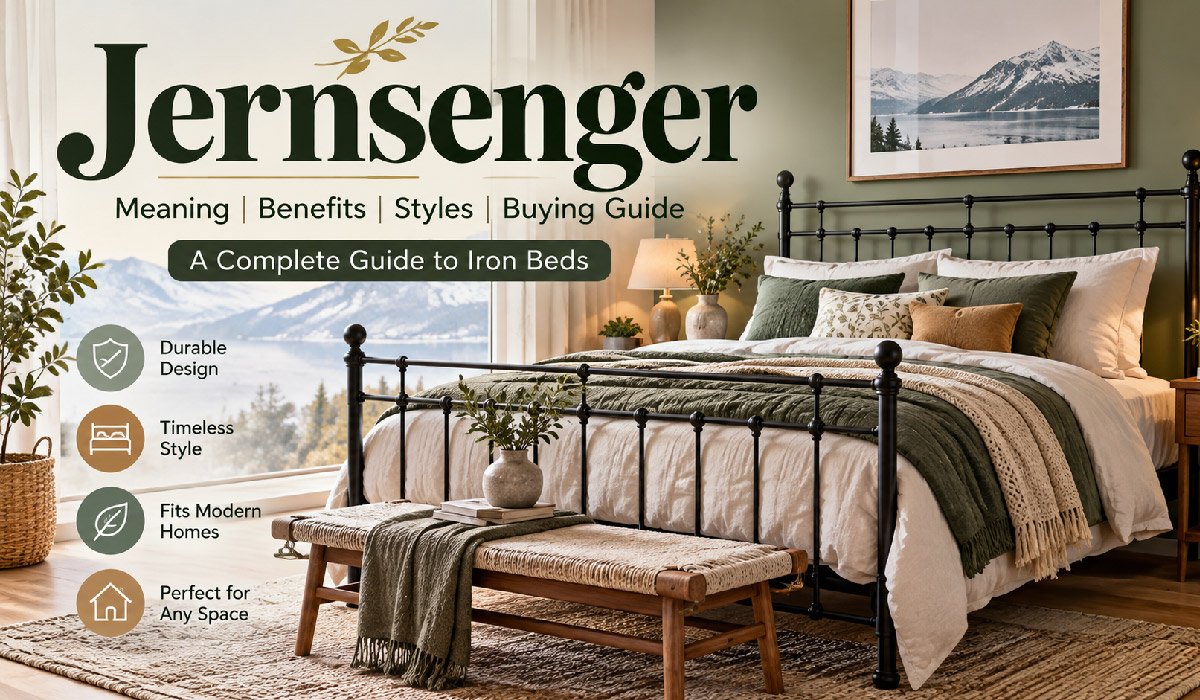
Jernsenger may be an unfamiliar word to English-speaking readers, but the idea behind it is simple: iron beds. These metal bed frames combine strength, open design, and a distinctive appearance that can work in both traditional and modern bedrooms. Their appeal is not limited to one decorating trend.
Interest in jernsenger also connects with a wider preference for furniture that feels practical and visually timeless. Instead of using a large upholstered structure, an iron bed can create a defined sleeping area while keeping much of the wall visible. This often gives a bedroom a lighter appearance.
However, choosing an iron bed requires more than finding an attractive headboard. Construction quality, mattress support, dimensions, finish, stability, and maintenance all matter. Understanding these details helps explain what jernsenger are, where they came from, and whether this type of bed is suitable for your home.
What Does Jernsenger Mean?
The word jernsenger refers to iron beds. The related singular word jernseng describes a bed with an iron frame. In English, people are more likely to use terms such as “iron bed,” “metal bed,” or “iron bed frame” when searching for similar furniture.
The meaning is important because jernsenger does not describe one specific appearance. An iron bed can feature straight minimalist bars, curved traditional details, decorative finials, or an industrial-style frame. Different models can therefore look completely different while still belonging to the same broad furniture category.
The term should also not automatically be interpreted as the name of a particular furniture manufacturer. Context determines whether someone is discussing iron beds generally or a business using the term commercially. For furniture research, understanding its basic meaning provides the clearest starting point.
Where Did Iron Beds Come From?
Metal beds became important as manufacturing methods made iron and steel furniture increasingly practical to produce. Their strong frames and relatively straightforward construction made metal suitable for domestic bedrooms as well as institutional settings where durability and practical maintenance were especially valuable.
Norway has its own documented history of iron-bed manufacturing. Christiania Jernseng- og Jernvarefabrik began operating in Oslo in 1904. Its early production included hospital beds and ship beds, demonstrating that metal bedsteads had practical applications beyond ordinary household furniture.
Norwegian metal-furniture production later developed alongside modern design. Christiania Jernseng- og Jernvarefabrik produced furniture designed by architect Herman Munthe-Kaas around 1930, while other Norwegian manufacturers also moved into steel-tube furniture. This history gives jernsenger a genuine connection to Nordic manufacturing rather than simply modern decorating terminology.
Why Are Jernsenger Still Relevant?
One major advantage of an iron bed is its visual structure. Metal rails and bars can create a clearly defined frame without requiring large solid surfaces. In a compact bedroom, this can make the bed appear less dominant than some heavily upholstered or solid-panel alternatives.
Iron beds are also remarkably flexible from a decorating perspective. A simple black frame can support an industrial look, while a softly curved frame can feel traditional. Pale finishes, simple bedding, and natural textures can move the same basic furniture concept toward a Scandinavian-inspired bedroom.
Longevity is another reason people remain interested in metal furniture. A properly engineered frame can provide years of service, although metal alone does not guarantee durability. Welds, fasteners, side rails, center supports, finish quality, mattress foundations, and everyday use all influence how well a particular bed performs.
Main Types of Jernsenger
Traditional jernsenger usually place greater emphasis on decorative details. Curved headboards, vertical bars, rounded shapes, and finial-style features can give the frame a classic character. These beds work particularly well when the surrounding room uses vintage, cottage, heritage, or traditionally inspired furniture.
Modern iron beds take a different approach. Instead of ornamentation, they often rely on straight lines, geometric forms, and simple finishes. This restrained appearance works well in contemporary apartments and minimalist bedrooms because the frame contributes structure without introducing unnecessary visual complexity.
Industrial designs typically expose the strength and geometry of metal more deliberately. Scandinavian-inspired arrangements, meanwhile, can soften a simple iron frame with light bedding, wood, wool, and natural textures. This flexibility demonstrates why jernsenger should be considered a furniture category rather than one fixed interior style.
Benefits of Choosing an Iron Bed
A good metal frame can provide a strong sleeping foundation when its structural components are properly designed. Metal does not experience the same expansion, contraction, or warping behavior as timber, although joints and hardware still require attention to keep the entire frame stable.
Cleaning can also be relatively simple. Open frames provide fewer large fabric-covered surfaces than fully upholstered beds. Dust can generally be removed from accessible metal components with a soft cloth, although owners should always follow the care instructions provided for the particular painted, plated, or powder-coated finish.
Another advantage is decorating freedom. Because many iron beds have relatively neutral structures, homeowners can transform their appearance without replacing the furniture. Changing sheets, cushions, throws, rugs, lamps, or bedside furniture can move the room from minimalist to traditional, colorful, industrial, or relaxed.
Are There Any Disadvantages?
Metal beds can develop noise when connections become loose or components move against each other. Squeaking does not affect every frame, but buyers should consider connection design and assembly quality. Correctly installing and periodically checking hardware can help prevent unnecessary movement in suitable frames.
Damage to the protective finish can also matter. Iron-containing materials are vulnerable to corrosion when exposed metal repeatedly encounters moisture. A quality finish provides protection, but scratches or chips should not simply be ignored. Care recommendations from the manufacturer should be followed when repairing surface damage.
Comfort is another commonly misunderstood issue. The frame material itself does not determine how comfortable a bed feels. Mattress quality, foundation design, slat spacing, support, sleeping position, and personal preference play much larger roles. A beautiful frame cannot compensate for an unsuitable mattress or inadequate support system.
Jernsenger and Scandinavian Interior Design
Iron beds can work particularly well in Scandinavian-inspired rooms because their open structures complement interiors built around simplicity and practical use. A straightforward metal frame can provide visual definition without introducing the bulk of an oversized headboard or heavily decorated furniture piece.
To achieve this look, restraint matters more than adding obviously “Nordic” decorations. Consider white, cream, gray, beige, or muted bedding alongside natural wood. Linen, cotton, wool, woven rugs, and warm lighting can soften the harder visual character of the metal frame.
The room should remain functional rather than empty for the sake of minimalism. A useful bedside table, suitable lighting, comfortable bedding, and adequate storage matter more than following a rigid aesthetic formula. Jernsenger work best when the bed supports the overall room rather than becoming unnecessary decoration.
How to Choose the Right Jernsenger
Start with dimensions rather than appearance. Measure the mattress as well as the available bedroom space, because size labels can differ between markets and manufacturers. Remember that decorative headboards, footboards, rails, and external frame components may make the bed larger than the mattress itself.
Next, examine how the mattress is supported. Look for information about slats, spacing, center rails, support legs, maximum recommended loads, and foundation requirements. Mattress manufacturers may specify particular support conditions, so compatibility should be confirmed instead of assuming every mattress works with every metal frame.
Finally, evaluate practical ownership details. Check assembly instructions, hardware, finish, warranty terms, replacement-part availability, delivery dimensions, and return conditions. These details may seem less exciting than styling, but they provide much more useful evidence about whether a jernsenger is appropriate for long-term everyday use.
Jernsenger vs Wooden Beds
Iron and wooden beds both have advantages, so neither material is automatically superior. Metal frames often provide a slimmer, more open appearance. Wooden beds can create greater visual warmth because grain, texture, and natural variation become part of the furniture’s overall character.
Their maintenance needs also differ. Metal frames require attention to connections and surface finishes, especially if moisture could encourage corrosion. Wooden furniture can be affected by scratches, moisture, humidity, joint movement, or changes in the material depending on the wood species, construction, and finish.
The better choice therefore depends on construction quality and personal priorities rather than material alone. Choose Jernsenger when you prefer an open metal aesthetic and suitable frame construction. Choose wood when its texture, visual weight, and character better suit the bedroom you want to create.
Are Jernsenger Good for Small Bedrooms?
Jernsenger can be especially appealing in smaller bedrooms because many designs use thin rails and open headboards. Being able to see the wall through the frame reduces visual blockage, which can make the furniture feel less imposing even when the mattress occupies the same floor area.
That visual advantage should not be confused with actual space savings. A metal king-size bed still requires substantial floor space. Some decorative frames may even extend beyond mattress dimensions, so the product’s complete width and length should always be checked before ordering.
Measure walking space as well as furniture. Wardrobe doors and drawers need room to open, while occupants need comfortable access around the bed. Also consider stairs, hallways, doorways, and elevators. A frame that technically fits the bedroom still needs a practical route into the room.
How to Style Jernsenger
For a calm contemporary bedroom, start with a simple iron frame and quiet bedding. White, cream, stone, or light gray textiles create an understated base. Add wood through a bedside table or bench so the room contains warmer natural texture alongside the metal.
For an industrial look, darker metal frames can work with timber, exposed architectural materials, textured fabrics, and simple lighting. Avoid filling every surface with decorative objects. The strongest industrial rooms generally allow structural materials and carefully selected furniture to create most of the visual character.
Traditional jernsenger can support a softer approach. Layered bedding, patterned textiles, warm lamps, vintage-inspired tables, and rugs can complement curved metalwork. Regardless of style, maintain visual balance. An elaborate frame generally needs quieter surroundings, while a very simple frame leaves greater freedom for expressive accessories.
What to Check Before Buying Jernsenger
Check exactly what the manufacturer means by “iron” or “metal.” Modern furniture descriptions can cover different metals, tubing, components, and manufacturing methods. Product specifications are more informative than marketing language, so investigate the actual construction whenever reliable technical details are available.
Pay particular attention to structural connections. Side rails, brackets, bolts, welds, center beams, support legs, and slats collectively determine stability. A frame should also suit the intended mattress. If the mattress manufacturer specifies maximum slat spacing or foundation requirements, follow those instructions.
Delivery and after-sales support deserve equal attention. Large furniture can be expensive or inconvenient to return. Before purchasing, understand packaging dimensions, assembly requirements, warranty coverage, missing-part procedures, replacement hardware, and return costs. Good purchasing decisions consider ownership after delivery, not merely attractive product photography.
How to Maintain an Iron Bed
Routine maintenance begins with gentle cleaning. Dust the frame regularly using a soft cloth and use only cleaning methods appropriate for its finish. Abrasive cleaners or rough tools may damage protective coatings, so manufacturer-specific instructions should take priority over generic internet cleaning recommendations.
Inspect connections periodically, particularly if the bed begins moving or making noise. Loose bolts can allow components to shift and may cause squeaking. Tighten hardware according to the assembly instructions, but avoid uncontrolled modifications that could damage components or interfere with warranty coverage.
Also monitor the finish for chips, deep scratches, or signs of corrosion. Keep prolonged moisture away from exposed metal and address damage using an appropriate manufacturer-approved method. Basic preventive care can preserve both the appearance and structural condition of a quality metal bed.
Common Mistakes to Avoid
The first mistake is buying entirely by appearance. A decorative headboard may look impressive online, but it tells you little about mattress support or structural stability. Study the complete frame, including parts that disappear beneath the mattress once the bed is assembled.
Another mistake is assuming all metal frames are equally durable. Material descriptions alone cannot establish quality. Thin components, weak connections, poor welding, unsuitable supports, or low-quality hardware can undermine a frame regardless of how strong “iron” sounds in advertising.
Finally, do not overlook practical compatibility. Verify mattress measurements, bedroom dimensions, support requirements, assembly, delivery access, weight recommendations, warranty conditions, and return rules. These checks reduce the chance of purchasing a jernsenger that looks attractive but fails to meet everyday needs.
The Nordic History Behind Jernsenger
Jernsenger have a real place in Norwegian industrial history. Christiania Jernseng- og Jernvarefabrik was founded in Oslo in 1904 and produced beds and other furniture. Its output included specialized hospital and ship beds, demonstrating the practical importance of metal-bed manufacturing.
The company later participated in broader developments in Norwegian furniture design. Around 1930 it manufactured steel-tube pieces associated with architect Herman Munthe-Kaas. Other Norwegian factories also entered steel-tube furniture production as functionalist ideas influenced twentieth-century furniture and industrial design.
This history makes the modern interest in jernsenger more meaningful. Iron beds are not merely a recently invented Scandinavian aesthetic. They belong to a much longer relationship between metal manufacturing, functional furniture, institutional requirements, domestic interiors, and changing approaches to Nordic furniture design.
Final Thoughts
Jernsenger are best understood simply as iron beds, but the furniture category offers far more variety than the definition suggests. From decorative traditional frames to restrained modern designs, metal beds can adapt to bedrooms with very different sizes, functions, and visual identities.
Their appeal comes from a useful combination of structure and flexibility. A quality frame can provide dependable support while an open design can feel visually lighter than bulkier furniture. Bedding and surrounding materials can then completely change the mood without requiring replacement of the bed itself.
The key is to judge jernsenger by more than appearance or marketing claims. Examine dimensions, support, connections, materials, finish, mattress compatibility, warranty, and maintenance requirements. When these practical considerations match your needs, an iron bed can become a functional and enduring part of the bedroom.
(FAQs)
What does jernsenger mean?
Jernsenger refers to iron beds. The related singular term is jernseng, meaning an iron bed or a bed with an iron frame. In English-language furniture shopping, similar products are usually described as iron beds, metal beds, or metal bed frames.
Are jernsenger suitable for modern bedrooms?
Yes. Iron beds are not limited to traditional interiors. Simple frames with straight lines and restrained finishes can suit minimalist, Scandinavian-inspired, industrial, and contemporary bedrooms. The final appearance depends greatly on the bedding, lighting, furniture, colors, and textures surrounding the frame.
Are iron beds strong and durable?
A well-designed metal bed can be very durable, but the material alone does not guarantee strength. Frame thickness, welds, fasteners, side rails, center supports, slats, hardware, finish quality, intended load, assembly, and maintenance all contribute to long-term performance.
Do jernsenger make noise?
Some metal beds can squeak or rattle if connections loosen or components move against each other. Proper assembly and periodic hardware checks may help. Persistent noise should be investigated according to the manufacturer’s instructions rather than assuming that every iron bed naturally squeaks.
Are jernsenger good for small rooms?
They can be. Open headboards and slim metal components often make iron beds appear visually lighter than bulky solid or upholstered frames. However, buyers must still check the complete external dimensions because visual openness does not reduce the actual floor area required by the bed.
What should I check before buying a jernsenger?
Confirm mattress and external frame dimensions, mattress-support requirements, slat spacing, center support, construction quality, finish, recommended load, assembly instructions, delivery access, warranty, returns, and replacement-part availability. These practical specifications are generally more useful than choosing an iron bed based on photographs alone.
