


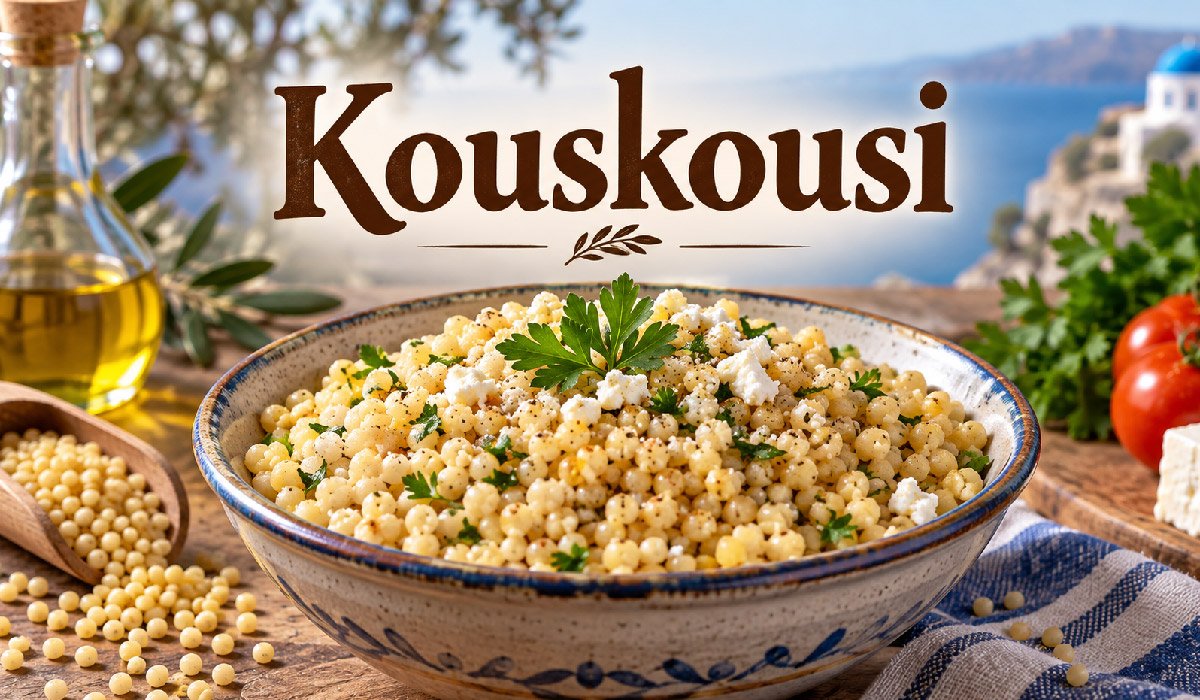
Kouskousi is a small wheat-based pasta connected with traditional Greek cooking, especially the food culture of Thrace. It usually appears as tiny round or slightly uneven pieces. Because of this shape, people often compare it with couscous, pastina, or other very small pasta varieties. However, Greek Kouskousi is generally prepared and eaten more like pasta than traditional North African couscous.
The exact ingredients can change according to the producer or household recipe. Wheat flour or semolina forms the base of many versions, while traditional preparations may also include milk, eggs, water, or salt. These differences can affect both flavor and texture.
Kouskousi is useful because its small pieces absorb surrounding flavors easily. It can cook in broth, tomato sauce, vegetable dishes, or meat juices. The result is a simple but satisfying ingredient that fits soups, stews, side dishes, salads, and many everyday meals.
Where Does Kouskousi Come From?
Kouskousi has a particularly strong connection with Thrace, a historical region that includes part of northeastern Greece. Traditional food in this area developed around ingredients that families could grow, raise, preserve, or store. Wheat products became important because dried foods could remain available long after their original preparation.
Making small dried pasta was a practical way to preserve basic ingredients. Once dried, Kouskousi could be stored and later cooked whenever a family needed a filling addition to soup, vegetables, or meat. This made it useful during colder months and at other times when fresh ingredients were more limited.
Its history also belongs to the wider tradition of Greek homemade pasta. Different areas developed their own shapes, names, and recipes. This means there is not always one completely standardized version. Regional cooking methods and family traditions can produce differences in size, ingredients, texture, and the dishes in which the pasta is served.
Kouskousi and the Food Culture of Thrace
Thracian cuisine includes a broad mixture of wheat products, dairy foods, vegetables, meat, soups, pastries, and preserved ingredients. Kouskousi fits naturally into this style of cooking because it uses basic ingredients while providing a convenient way to make meals more substantial. A relatively small amount can spread throughout a pot of soup or stew.
Traditional rural cooking often depended on ingredients that could be preserved between seasons. Dry pasta was particularly useful because it did not require complicated storage. Families could prepare pasta, dry it carefully, and keep it available for later meals. It could then be combined with whatever vegetables, meat, or broth were available.
This practical background helps explain why Kouskousi remains interesting today. Although modern kitchens have refrigeration and packaged foods, small pasta is still convenient. It cooks relatively quickly, works with inexpensive ingredients, and carries the flavors of broth, herbs, olive oil, vegetables, and sauces throughout a finished dish.
Why Kouskousi Is Often Confused With Couscous
The confusion between Kouskousi and couscous comes mainly from their names and appearance. Both can look like collections of very small wheat pieces. Someone seeing them in a bowl without a package may find it difficult to identify which product is being served. Their culinary backgrounds and preparation methods, however, can be quite different.
Traditional North African couscous consists of small semolina granules. Traditional preparation involves steaming those granules, while many modern instant varieties have already been steamed and dried. Instant couscous can therefore often be prepared simply by adding hot water or broth and allowing it to rest.
Greek pasta-style Kouskousi is normally treated more like other pasta. It is placed in boiling water, broth, or another cooking liquid and cooked until tender. The easiest way to avoid confusion is therefore to examine the ingredients and cooking directions instead of deciding what the food is from its appearance alone.
Kouskousi vs Traditional Couscous
Kouskousi and traditional North African couscous can contain similar wheat ingredients, but their physical structure and culinary use distinguish them. Couscous is traditionally created by working semolina into tiny granules. These granules are associated with the cuisines of North Africa, including Morocco, Algeria, Tunisia, and neighboring areas. They are traditionally cooked through steaming.
Kouskousi in the Greek pasta sense is formed as tiny pieces of pasta. Depending on the recipe, its ingredients can include semolina or flour together with water, milk, eggs, or other basic additions. Dry pieces are then cooked in liquid much as other small pasta shapes are cooked.
Their finished textures are also different. Well-prepared couscous is usually light and separated into small fluffy granules. Kouskousi has a more recognizable pasta bite. Both absorb surrounding flavors well, but cooks should not automatically use the same preparation method because incorrect cooking can produce hard pasta or overly soft couscous.
What Is Kouskousi Made From?
Wheat is the central ingredient in most traditional forms of Kouskousi. Depending on the recipe, producers may use wheat flour, durum wheat semolina, or a combination suitable for forming small pasta pieces. Water can provide the moisture needed to bring the ingredients together before the pasta is shaped and dried.
Some traditional versions are richer. Milk and eggs may be included in certain household or regional recipes. Egg can affect both texture and color, while milk can contribute a mild richness. Because recipes developed within different households and communities, expecting every Kouskousi product to contain exactly the same ingredients can lead to mistakes.
Commercial products may use simpler formulas designed for consistent production and storage. Buyers should therefore read the ingredient list whenever the exact composition matters. This is especially important for people managing food allergies. Wheat is particularly important because conventional versions contain gluten, while milk and eggs may also need consideration depending on the individual product.
How Traditional Kouskousi Is Made
Traditional Kouskousi begins by preparing a wheat-based mixture that can be turned into tiny pieces. The exact technique differs between recipes. Flour or semolina is combined with the required liquid, which may include water, milk, or egg. The mixture is worked until the correct consistency develops for creating the characteristic small pasta form.
The next stage is shaping. Unlike industrial pasta, handmade pieces do not always have identical dimensions. Small irregular balls or grains are therefore not necessarily a sign of poor quality. Their handmade appearance can be part of the traditional character of the food. Slightly rough surfaces can also hold broth, sauce, and other flavorful liquids effectively.
After shaping, the pasta is dried. Removing moisture makes the pieces firm and suitable for storage. This stage was especially useful before modern food-storage systems because households could prepare wheat foods when ingredients were available and keep them for later use. The dried pasta could then be cooked whenever needed.
What Does Kouskousi Taste Like?
Kouskousi has a mild wheat-based flavor that provides a neutral foundation for stronger ingredients. It does not normally dominate a dish. Instead, it takes on characteristics from the liquid and ingredients around it. Cooking it in vegetable, chicken, or meat broth can therefore create considerably more flavor than cooking it only in plain water.
Versions containing eggs or milk may have a slightly richer taste than very simple wheat-and-water varieties. However, texture is often one of the most noticeable characteristics. Correctly cooked pieces become tender while maintaining enough structure to give the meal a pleasant pasta-like bite. Excessive cooking can remove this quality and create a softer texture.
Its mild character allows Kouskousi to work with many Mediterranean ingredients. Olive oil, tomato, garlic, lemon, parsley, mint, vegetables, legumes, cheese, and meat can all provide contrasting flavors. This flexibility makes the pasta suitable for both lightly seasoned meals and richer winter dishes.
How to Cook Kouskousi Properly
The most reliable cooking method begins with checking the package because the size, ingredients, and manufacturing process can affect cooking time. For pasta-style Kouskousi, water or broth is generally brought to a boil before the dry pasta is added. Salt can be added according to the dish and the saltiness of the other ingredients.
Stirring during the early cooking stage helps keep the small pieces from settling and sticking together. The heat should maintain steady cooking without causing excessive evaporation. Because the pieces are small, their texture can change quickly near the end. Tasting the pasta is often more useful than depending only on a general cooking time.
Once tender, Kouskousi can be drained when it is intended for salads or dry side dishes. When it is cooked directly in soup, stew, or sauce, draining is unnecessary. Instead, the pasta absorbs some of the surrounding liquid and contributes thickness and body to the complete meal.
Cooking Kouskousi in Soups and Broths
Soup is one of the most practical ways to use Kouskousi. The tiny pieces spread throughout the liquid, allowing almost every spoonful to contain pasta. Chicken broth, vegetable stock, tomato soup, bean soup, and meat-based broths can all provide a flavorful cooking environment. The pasta absorbs some of these flavors while becoming tender.
Quantity matters when adding Kouskousi directly to soup. Small dry pasta may initially look insufficient, but it expands and absorbs liquid during cooking. Adding too much can turn a light soup into a very thick dish. Starting with a moderate amount and keeping additional broth nearby gives the cook better control over the final consistency.
The same absorption continues after cooking. Soup containing Kouskousi may become noticeably thicker while resting or during refrigeration. When reheating leftovers, adding a little stock or water can restore the desired consistency without requiring extra oil or sauce.
Best Foods and Dishes to Serve With Kouskousi
Kouskousi works with vegetables, legumes, poultry, meat, seafood, and cheese because its own flavor is relatively gentle. A simple meal can combine the pasta with tomato, onion, garlic, zucchini, peppers, spinach, or leafy greens. Cooking these ingredients together allows their juices and seasoning to become absorbed by the small pasta pieces.
Beans and chickpeas are useful partners for meat-free meals. They provide a contrasting texture while making the dish more substantial. Olive oil, lemon juice, parsley, mint, oregano, and other herbs can add freshness. Feta or another salty cheese can be added when a richer and sharper finish is wanted.
For meat dishes, Kouskousi can accompany chicken, beef, lamb, or slow-cooked preparations with plenty of cooking juices. It can also work with fish or seafood when lighter seasoning is preferred. Its main advantage is adaptability rather than dependence on one specific recipe or combination.
Using Kouskousi in Cold and Warm Salads
Kouskousi can be used in salads when it is cooked carefully and allowed to cool. The pasta should remain tender but firm enough to hold its shape. Overcooked pieces can become sticky or overly soft after cooling, so checking the texture before draining is particularly important when preparing a salad.
Fresh vegetables provide useful contrast. Chopped cucumber, tomatoes, roasted peppers, onions, olives, spinach, or other greens can be mixed through the pasta. Chickpeas or beans can add more substance, while feta provides saltiness and richness. Fresh parsley and mint can give the finished salad a brighter Mediterranean character.
A simple dressing of olive oil and lemon juice works particularly well because it adds moisture without hiding the mild wheat flavor. Garlic, black pepper, or herbs can provide additional seasoning. Because the pasta pieces are small, ingredients should generally be chopped into manageable pieces so flavors and textures remain evenly distributed throughout the salad.
Kouskousi vs Orzo and Pastina
Orzo and Kouskousi are both small pasta products, but their shapes create different textures. Orzo, known as kritharaki in Greek cooking, resembles large grains of rice. Its smooth, elongated shape gives soups and baked dishes a different mouthfeel from the tiny rounded or irregular pieces associated with Kouskousi.
Pastina is another useful comparison, although pastina does not refer to one single pasta shape. The Italian term is commonly associated with very small pasta varieties designed for soups and simple dishes. Kouskousi performs some similar culinary roles, particularly when it is added to broth and allowed to absorb surrounding flavors.
Substitution is sometimes possible, but cooking times and liquid requirements should be adjusted. Replacing orzo with a much smaller pasta can change how quickly liquid disappears and how thick a dish becomes. Cooks should therefore monitor consistency and texture rather than assuming equal quantities of different pasta shapes will behave identically.
Kouskousi Compared With Rice and Quinoa
Kouskousi may visually resemble rice or tiny grains, but it belongs to a different food category when discussing the Greek pasta form. Rice is a cereal grain that is cooked whole after processing. Kouskousi is produced from wheat ingredients that are shaped into pasta pieces before drying and cooking.
Quinoa is different again. It is a seed that is commonly prepared and served in ways similar to cereal grains. One important dietary distinction is gluten. Plain rice and quinoa are naturally gluten-free, whereas conventional Kouskousi made from wheat or semolina contains gluten. This difference is important for people who medically need to avoid gluten.
These foods also create different textures in meals. Rice remains recognizable as individual grains, quinoa develops its characteristic small seed texture, and Kouskousi offers the tenderness and chew associated with pasta. Choosing between them therefore depends on dietary requirements, desired texture, flavor, and the particular recipe being prepared.
Nutrition and Dietary Value of Kouskousi
The nutritional profile of Kouskousi depends on its ingredients, serving size, and preparation. As a wheat-based pasta, carbohydrates normally make up an important part of its nutritional content. It also provides some protein, while exact amounts of fiber, vitamins, minerals, calories, and other nutrients depend on the flour or semolina used.
The ingredients surrounding the pasta can greatly change the nutritional balance of a meal. Adding vegetables increases the variety of nutrients and can provide fiber. Chickpeas, beans, or lentils can contribute additional plant protein and fiber. Fish, poultry, or other meats can increase protein, while olive oil contributes fat and energy.
For this reason, Kouskousi is better understood as one component of a meal rather than a special health food. Portions and accompaniments matter. Combining moderate pasta portions with vegetables, legumes, herbs, and suitable protein sources can produce a varied and satisfying meal.
Does Kouskousi Contain Gluten?
Traditional Kouskousi made from wheat flour or durum wheat semolina contains gluten. This is an important distinction because its very small shape can make it look similar to naturally gluten-free foods such as rice or some seeds. Appearance does not indicate whether a product is safe for someone who must avoid gluten.
People with celiac disease, wheat allergy, or another medical reason for avoiding gluten should examine packaging carefully. A product specifically manufactured from rice, corn, legumes, or another gluten-free ingredient may exist as an alternative, but it should not be assumed to be traditional Kouskousi simply because the shape looks similar.
Other allergens can also matter. Traditional regional recipes may contain egg or milk in addition to wheat. Commercial formulas vary between manufacturers. Reading the complete ingredients and allergen information is therefore more dependable than relying on a general description of how this type of pasta is usually produced.
Common Mistakes When Cooking Kouskousi
One common mistake is confusing pasta-style Kouskousi with instant couscous. Adding only hot water to a product that requires boiling can leave it unpleasantly firm. The opposite problem can occur when instant couscous is aggressively boiled like pasta. Identifying the product before cooking prevents this basic problem.
Overcooking is another issue because small pasta can soften quickly. The pieces should be checked near the end of cooking and removed from the heat when they have reached the preferred tenderness. When preparing soup, adding excessive dry pasta is another common mistake because the pieces expand and absorb a considerable amount of broth.
Seasoning also deserves attention. The pasta itself is mild, so plain water without enough seasoning can produce a flat result. Broth, tomato, herbs, olive oil, vegetables, garlic, lemon, or other ingredients can provide flavor. Good preparation depends on balancing cooking time, liquid, quantity, and seasoning.
How to Store and Reheat Kouskousi
Dry Kouskousi should be protected from moisture. Once the original package is opened, keeping the remaining pasta tightly closed or transferring it to a clean airtight container helps maintain its condition. A cool, dry storage area away from strong odors is generally appropriate for dried pasta products.
Cooked Kouskousi should be cooled and stored appropriately in a covered container. When reheating plain pasta, a little water, broth, or sauce can replace moisture lost during storage. Gentle reheating helps prevent the small pieces from becoming excessively soft while ensuring that the meal heats evenly.
Soup requires additional attention because Kouskousi continues absorbing liquid while it sits. A soup that originally had plenty of broth may look much thicker later. Adding extra stock or water during reheating can restore its soup-like consistency. For meal preparation, storing pasta and broth separately can also help preserve texture when practical.
How to Choose Kouskousi at the Store
The package provides more useful information than appearance alone when buying Kouskousi. Start with the product description and ingredient list. Determine whether it is identified as Greek pasta, couscous, or another small wheat product. This distinction will usually explain why seemingly similar packages provide very different preparation directions.
Cooking instructions are especially valuable. A product that requires several minutes in boiling water or broth should generally be approached like pasta. Pre-steamed instant couscous usually requires hot liquid followed by a short resting period. Following the manufacturer’s method reduces the chance of creating an overly soft or undercooked result.
Allergen information should also be checked. Wheat is expected in conventional pasta-style Kouskousi, but some products may additionally contain milk or eggs. Buyers can also compare pasta size, ingredients, origin, and preparation method. Understanding these details is more reliable than selecting a product based only on the word printed prominently on the package.
Conculsion
Kouskousi is a small food with an interesting regional identity. In the Greek culinary context, it is closely associated with tiny pasta, particularly traditions connected with Thrace. Its bead-like appearance can easily cause confusion with North African couscous, but the two foods should not automatically be treated as identical. Their preparation methods can be significantly different.
Understanding the product solves most cooking problems. Pasta-style Kouskousi generally needs boiling in water, broth, soup, or sauce until tender, whereas many couscous products use steaming or hydration methods. Ingredients and cooking directions on the package provide the clearest guidance when terminology is uncertain.
Once identified correctly, Kouskousi is remarkably versatile. Its mild flavor, small size, and ability to absorb surrounding liquids make it suitable for soups, stews, vegetables, salads, legumes, meat, and Mediterranean-style dishes. These practical qualities help explain why such a simple regional pasta continues to deserve a place in modern cooking.
(FAQs)
What is Kouskousi?
Kouskousi is a small pasta associated with Greek cooking, particularly Thrace. Its tiny round or irregular pieces absorb broth and sauces well, making it useful in soups, stews, salads, and vegetable dishes.
Is Kouskousi the same as couscous?
Not necessarily. Greek pasta-style Kouskousi is generally boiled like pasta, while traditional North African couscous consists of semolina granules traditionally prepared by steaming. Always check the product instructions.
What is Kouskousi made from?
Kouskousi is commonly made with wheat flour or semolina. Depending on the traditional recipe or manufacturer, some varieties may also contain water, eggs, milk, or salt.
How do you cook Kouskousi?
Pasta-style Kouskousi is usually cooked in boiling water, broth, soup, or sauce until tender. Cooking times vary according to the product, so following the package instructions provides the best results.
What can you serve with Kouskousi?
Kouskousi pairs well with chicken, meat, vegetables, chickpeas, beans, tomato, feta, olive oil, lemon, and fresh herbs. It can also be served in soups, stews, warm dishes, or cold salads.
