


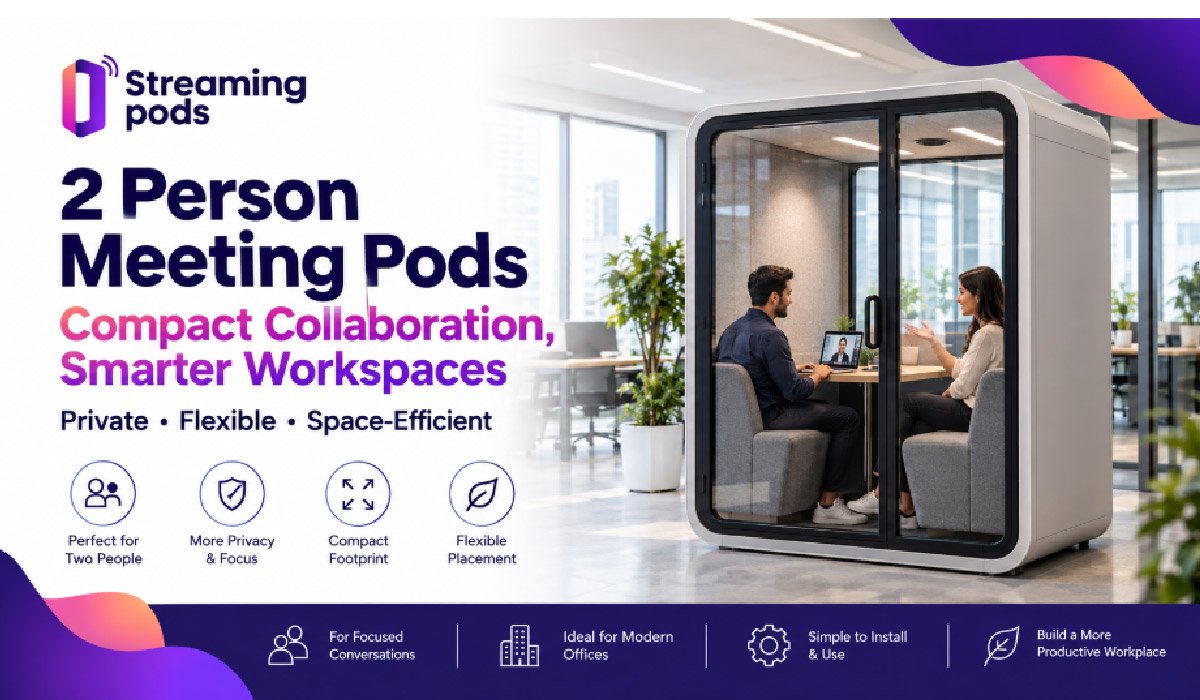
Walk through almost any open-plan office mid-morning, and you’ll notice the same scene. Someone is on a video call, someone else is whispering through a sensitive conversation, and a third person has headphones on to block out both. Open layouts were meant to encourage teamwork, but they’ve made private, focused conversation surprisingly hard to find. That’s why the 2-person meeting pod has become a serious topic for facilities managers, office designers, and team leads. This article explains why small collaboration spaces are in demand, what separates a good one from a frustrating one, and how to fit them into a flexible office without wasting floor space.
The Rise of Compact Collaboration Spaces
Most offices were planned around a familiar assumption: meetings are big. So they got a few large conference rooms and a lot of open desks. But look at how a typical week goes. Most conversations involve just one or two people: a manager checking in with a direct report, a designer getting quick feedback, a recruiter screening a candidate by video.
Hybrid work has made this mismatch more obvious. On in-office days, employees often join calls with remote colleagues, and those calls add up quickly on a crowded floor. Booking an eight-person conference room for a fifteen-minute chat feels wasteful, and having the conversation at a desk feels awkward. Small, enclosed spaces fill the gap, and many organizations are adding them as part of a broader effort to give employees more choice in where and how they work.
Benefits of a 2 Person Meeting Pod
The appeal is mostly practical. A compact pod tends to offer:
- A better fit for the task. Two people get a private space sized for their conversation, with no need to heat, cool, and light a large room.
- Less noise on the open floor. Moving calls and side conversations into an enclosed space lowers distraction for everyone nearby.
- Easier access. Because pods are small and often unbooked, people can use them spontaneously instead of hunting for a free conference room.
- Flexible placement. Many freestanding models don’t require construction, so they can be moved as team layouts change.
Picture a customer success team that holds weekly coaching sessions between managers and reps. At a desk, both people tend to hold back because colleagues are within earshot. Put a pod at the edge of the team area, and the conversation gets more honest. The manager and rep can replay a call recording together, take notes, and talk through what went well without an audience.
Privacy Without Building Walls
Privacy is often the strongest reason to add compact enclosed spaces. HR conversations, salary discussions, legal updates, and client calls all need more confidentiality than an open floor allows. Full-height walls solve the problem but cost more and lock you into a layout. A pod offers a middle path.
Acoustic performance is the key thing to examine. Sound isolation depends on wall construction, glass thickness, door seals, and interior materials that absorb sound. Ask any supplier for tested acoustic ratings, and don’t rely on marketing language alone. If you can, try a unit in your own office at a busy time of day. A pod that feels quiet in a showroom may behave differently next to a bustling kitchen or a row of sales phones.
There’s a human side to privacy as well. People speak more freely when they trust the space, so visual privacy matters too. Frosted or partially frosted glass can protect a conversation while still letting light through and keeping the space from feeling like a closet.
Design and Usability Details Worth Checking
A pod that looks sleek but feels stuffy will sit empty. Before you commit, walk through these details:
- Ventilation. Fresh air is non-negotiable in a small enclosed room. Look for a quiet system that exchanges air regularly, and ask how it’s powered and serviced.
- Lighting. Soft, even lighting is kinder on video calls than harsh overhead glare. Adjustable settings help across morning and afternoon.
- Seating and table space. Two adults with two laptops need real elbow room. If it’s cramped, people won’t stay.
- Power and connectivity. Outlets, USB charging, and strong Wi-Fi coverage turn a quiet corner into a usable workspace.
- Accessibility and safety. Check door widths, interior clearances, and fire and building code requirements in your area before installing anything.
- Cleaning and durability. Shared spaces get heavy use, so choose surfaces that wipe down easily and fabrics that hold up.
Providers such as StreamingPods offer compact pod designs built around these everyday concerns. Whichever supplier you consider, ask for specifications on ventilation, acoustics, and materials, and compare them against your own priorities.
Pods vs. Traditional Meeting Rooms
This isn’t a contest. Conference rooms remain the right choice for workshops, presentations, client visits, and any session with more than a handful of people. The useful question is which space matches the moment.
A 2 person meeting pod earns its place when the conversation is short, private, and involves one or two people. It’s also a smart way to protect your larger rooms. In many offices, big conference rooms get booked by pairs, which leaves teams that need the space scrambling for alternatives. Shifting those small meetings into pods can free larger rooms for larger groups.
Cost and flexibility also differ. Building a permanent room takes time, budget, and planning. A freestanding pod can often be placed and later moved with far less disruption, which suits companies whose headcount or team structure shifts from quarter to quarter. Actual costs and lead times vary, so request clear quotes.
Where a 2 Person Phone Booth Fits In
You’ll often hear the terms “pod” and “phone booth” used interchangeably, but there’s a subtle difference in emphasis. A 2 person phone booth is typically designed around calls and brief conversations, with modest seating and a small ledge or table. A meeting pod usually offers a proper table and more comfortable seating for working sessions such as document reviews or interviews.
Think of it as a matter of intent. If most of your employees just need a quiet spot to take a call, a phone-booth-style unit near open desks may be enough. If teams need to spread out notes or share a screen, a pod with more work surface will serve them better. Plenty of offices mix both and let actual usage guide the ratio.
Planning a Flexible, Space-Efficient Office
Flexible offices work best when the space can change as the team does. Pods support that, but only if they’re placed with care.
Start by watching. Spend a couple of weeks noticing where people take calls, where impromptu meetings happen, and which rooms sit empty. Those patterns show where a pod would relieve pressure.
Place them where people already are. A pod tucked in a far corner tends to gather dust. Near collaboration zones and team areas, it gets used.
Protect circulation and safety. Leave enough clearance around each unit, keep walkways open, and avoid blocking exits or emergency equipment. Confirm requirements with your local authorities and your facilities team.
Pilot before you scale. Try two or three units, gather feedback after a month, and adjust. Employees will quickly tell you if the lighting is off, if the door is hard to open, or if a pod is in the wrong spot.
Set simple etiquette. Encourage short sessions, ask people to tidy up after use, and decide whether pods are first-come or bookable. A few clear norms keep them available for everyone.
What’s Next for Compact Collaboration
Office design is heading toward variety: quiet zones, open collaboration areas, focus rooms, and small enclosed spaces all sitting side by side. Rather than one format serving every purpose, companies are building a menu of spaces that people can choose from.
Expect compact pods to keep evolving along a few lines. Acoustic materials are improving, occupancy sensors and booking tools are becoming easier to integrate, and more manufacturers are paying attention to sustainable materials and repairability. Wellbeing will keep shaping the conversation, too. Good air quality, comfortable lighting, and pleasant interiors are quickly becoming baseline expectations, not luxuries.
Conclusion
Compact collaboration spaces exist because of how people really work: in pairs, on short calls, and in conversations that deserve privacy. A thoughtfully chosen 2 person meeting pod can lower noise in open areas, protect sensitive discussions, and keep larger rooms free for the teams that truly need them. The best results come from observing your own workplace, checking acoustics, ventilation, and code requirements, and starting with a small pilot. Get those pieces right and a small space can make a big difference in everyday work.
Frequently Asked Questions
How much floor space does a compact pod need?
It depends on the model, but a pod generally takes up far less room than a conference room. Leave extra clearance for doors, airflow, and walkways, and confirm exact requirements with the manufacturer.
Can a pod be installed without construction?
Many freestanding designs can be placed without major building work, though electrical connections and local fire or building regulations may still apply. Check with your facilities team before purchase.
How soundproof are these spaces?
Sound isolation varies with construction, door seals, and materials. Ask for tested acoustic data, and try to test a unit in your own office to see how it performs in real conditions.
Who benefits most from small enclosed meeting spaces?
Hybrid teams, HR and recruiting staff, sales and support teams, and anyone who regularly takes video calls tend to get the most value.
How should we manage pod usage?
Some offices keep pods first-come, first-served, while others use a simple booking tool. Setting a soft time limit and posting basic etiquette helps keep them available for everyone.
