


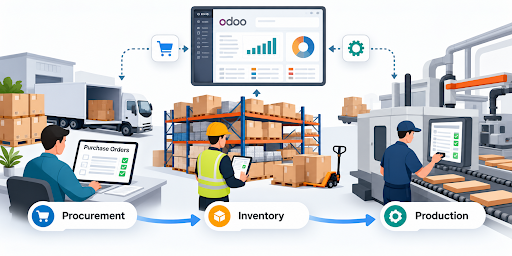
Procurement, inventory, and production are closely connected functions in any manufacturing business. Yet when each operates with separate data, processes, or systems, even small gaps in coordination can lead to excess inventory, material shortages, production delays, and unnecessary purchasing costs. A procurement team may not have a clear view of upcoming production requirements, while production teams may lack accurate information about incoming materials or current stock levels.
Connecting these functions gives manufacturers greater control over how materials move from purchasing to the warehouse and ultimately into production. It also creates a clearer relationship between what the business needs to buy, what it already has, and what production actually requires. For companies looking for Odoo ERP implementation for manufacturing businesses, this connected approach can provide a structured way to bring procurement, inventory, and production workflows into a single operational environment.
The Cost of Disconnecting Procurement, Inventory and Production
When procurement, inventory, and production operate independently, problems rarely stay within one department. A purchasing decision can affect stock levels, while an inventory shortage can disrupt production schedules and ultimately delay customer orders.
- Purchasing without accurate inventory visibility: Procurement teams may order materials that are already available, while critical items that are running low go unnoticed.
- Material shortages and production delays: When inventory information does not reflect actual production requirements, essential materials may not arrive before they are needed on the shop floor.
- Excess inventory and tied-up capital: Buying without considering current stock, future requirements, and production schedules can leave manufacturers holding more materials than necessary.
- Unplanned production interruptions: Missing components can force production teams to reschedule jobs, change production sequences, or keep equipment and workers waiting.
- Higher operating costs: Expedited purchasing, emergency deliveries, excess storage, and idle production capacity can increase costs without adding value to the finished product.
- Limited visibility for decision-makers: When procurement, inventory, and production data sits in separate systems or spreadsheets, management has a harder time identifying where delays, shortages, or unnecessary spending originate.
The result is not simply an inefficient purchasing or inventory process. It is a manufacturing operation where decisions are made with incomplete information, making production performance harder to predict and control.
How Procurement, Inventory and Production Work as One Process
A connected manufacturing process is not just about moving information between departments. It is about making sure each decision supports the next stage of production. When procurement, inventory, and production work from the same operational picture, manufacturers can respond faster and make better use of materials, capacity, and working capital.
- Production requirements trigger timely purchasing: Production plans give procurement teams a clearer view of upcoming material requirements, helping them purchase what is needed before shortages affect the shop floor.
- Inventory visibility prevents unnecessary purchasing: Knowing what is available, reserved, incoming, or already committed helps businesses avoid buying materials they do not need while keeping critical items available.
- Supplier lead times support realistic production schedules: Connecting purchasing timelines with production requirements helps planners account for expected deliveries and reduce schedule changes caused by late materials.
- Material availability keeps production moving: When inventory is aligned with production requirements, teams can identify potential shortages earlier and take corrective action before they become production interruptions.
- Actual consumption improves future purchasing decisions: Production data provides a clearer picture of how materials are actually being consumed, allowing procurement teams to make future purchasing decisions based on operational demand rather than assumptions.
The result is a more predictable flow from purchasing to inventory and finally to production. With Odoo manufacturing ERP implementation services, manufacturers can connect these processes within a unified system, helping teams improve material availability, reduce unnecessary inventory, and maintain more reliable production schedules.
Business Benefits of Connected Operations
Connecting procurement, inventory, and production changes how manufacturers manage their day-to-day operations. Instead of reacting to shortages, excess stock, or production disruptions after they occur, teams can use shared information to identify issues earlier and coordinate decisions across the workflow.
One of the biggest benefits is better inventory control. When purchasing decisions are based on actual stock levels, production requirements, and incoming materials, manufacturers can reduce unnecessary inventory without compromising material availability. This helps free up working capital while reducing the risk of obsolete or slow-moving stock.
Connected processes also improve production reliability. Production planners can see whether required materials are available or expected to arrive on time before finalizing schedules. Procurement teams, in turn, have better visibility into upcoming requirements, allowing them to address potential shortages before they interrupt manufacturing.
The impact extends to supplier and cost management as well. With procurement activity connected to inventory and production demand, businesses can identify recurring delays, unnecessary purchases, and material-related cost increases more easily. Management gains a clearer view of where operational inefficiencies are occurring and how they affect overall manufacturing performance.
Most importantly, connected operations create a more predictable manufacturing environment. Procurement knows what production needs, inventory reflects what is actually available, and production planning is based on realistic material availability. That alignment helps manufacturers improve efficiency without treating each department as a separate operation.
Building an Integrated Procurement and Production Workflow
Technology alone does not solve disconnected manufacturing operations. Before integrating procurement, inventory, and production, manufacturers need to establish a few operational foundations that determine whether the system will actually deliver better results.
1) Start with reliable data: Incorrect stock quantities, outdated supplier lead times, duplicate product records, or incomplete bills of materials can undermine purchasing and production decisions regardless of the software being used. Data accuracy needs to be treated as an operational requirement.
2) Define ownership across departments: Procurement, warehouse, and production teams should have clear responsibility for updating and acting on operational information. When ownership is unclear, important decisions can still depend on manual follow-ups even after processes are digitized.
3) Standardize purchasing and material planning rules: Manufacturers should establish how reorder levels, minimum quantities, supplier lead times, and production requirements influence purchasing decisions. Consistent rules make the process more predictable and easier to automate.
4) Measure the areas that matter: Integration should have clear performance targets, such as reducing stockouts, lowering excess inventory, shortening procurement cycles, or minimizing production downtime caused by material shortages.
Once these foundations are in place, an integrated ERP system can support the process more effectively. The technology becomes the framework for applying consistent processes and turning operational data into better purchasing, inventory, and production decisions.
Measuring the Business Impact
The value of connecting procurement, inventory, and production should be visible in operational performance. Manufacturers can track a focused set of metrics to determine whether integration is actually reducing inefficiencies and improving production reliability.
| Metric | What It Shows |
| Inventory turnover | Whether materials are being used efficiently or excessive stock is accumulating. |
| Stockout frequency | How often production or operations are affected by unavailable materials. |
| Material availability | Whether required materials are available when production needs them. |
| Procurement cycle time | How quickly purchase requirements move from identification to completed procurement. |
| Supplier delivery performance | Whether suppliers consistently deliver materials according to agreed timelines. |
| Production downtime from shortages | The amount of production capacity lost because required materials were unavailable. |
| Procurement and inventory costs | Whether purchasing and stock-related expenses are moving in the right direction over time. |
Tracking these metrics before and after process improvements gives manufacturers a clearer view of the financial and operational impact. Instead of judging integration by whether a new system has been implemented, businesses can evaluate it through measurable improvements in inventory efficiency, material availability, purchasing performance, and production continuity.
This measurement-based approach also helps management identify where further improvements are needed. If stock levels improve but production downtime remains high, for example, the issue may lie in supplier reliability, planning accuracy, or material lead times rather than inventory quantity alone.
Conclusion
Manufacturing performance depends on how well procurement, inventory, and production work together. When these functions operate with disconnected information, manufacturers face avoidable material shortages, excess inventory, purchasing delays, and production interruptions.
Connecting these processes creates a more coordinated operating model where purchasing decisions reflect actual production requirements, inventory supports material availability, and production planning is based on reliable information. The result is better control over working capital, fewer material-related disruptions, and more predictable manufacturing performance.
For businesses evaluating Odoo ERP solutions for manufacturing operations, the value lies in connecting these critical processes within a unified system rather than managing them as separate functions. When supported by accurate data, clear processes, and measurable performance goals, this integration can become a practical foundation for improving efficiency and controlling manufacturing costs.
